Construction And Transport Department Of The Canton Of Basel-Stadt: Light Frieze
The Construction and Transport Department of Basel-Stadt needed to communicate the Kunstmuseum Basel's exhibitions to the public. They sought a solution for the new extension that avoided traditional, unsightly banners, aiming instead for a sophisticated architectural integration that would respect the building's materiality while serving as a dynamic communication tool for the urban environment.
Creative Idea
Transformed building masonry into a responsive digital screen using hidden LEDs and shadows.
The Kunstmuseum Basel extension replaced traditional advertising banners with a 'shadow display' frieze integrated into the masonry, using LEDs and sensors to create a silent, architectural dialogue between the museum's internal life and the city.
The 210,000 LED Screen Hidden Inside a Brick Wall
Six Years of Prototyping
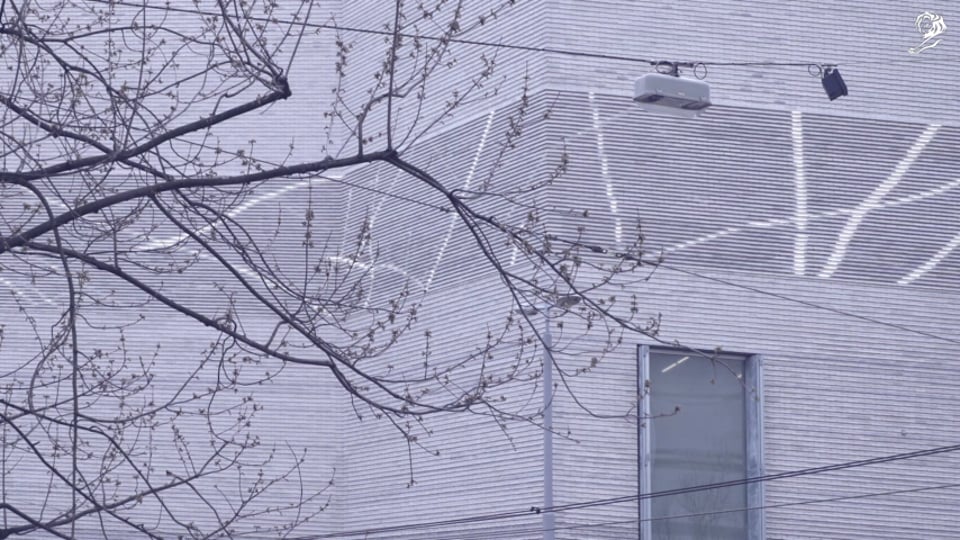
The project required a six - year development cycle to perfect the symbiosis of masonry and electronics. Unlike standard digital signage, the technology is entirely invisible from the street. The team utilized 4,500 meters of linear luminaires tucked into the horizontal joints of the building. These LEDs do not shine directly at the viewer; instead, they illuminate the concave fillets of custom - molded bricks, using the stone itself as a reflector. This "shadow display" ensures the building’s texture remains the primary focus.
The Physics of Negative Light
To maintain legibility during the day, the system employs a "negative" display mode. Because the brick joints naturally sit in shadow, the LEDs illuminate the surrounding areas to match the ambient brightness of the facade, leaving the text to appear as natural shadows. At night, the system reverses to a "positive" display where the LEDs outshine the dark stone. To manage this delicate balance, light sensors on the roof monitor ambient conditions every second, automatically adjusting the intensity so the light always feels like an "integral part of the stone."
A 115 Meter Typographic Canvas
The frieze spans 115 meters in length and stands 3 meters high, encircling the building at a height of 12 meters. Because the resolution is a non - standard 1306 x 40 pixels, typographer Ludovic Balland had to develop a custom typeface specifically for the project. This ensures that exhibition announcements and artist quotes remain legible despite the unique "pixel brick" texture. Architect Christoph Gantenbein describes the result as a "pragmatic, modern building" that replaces the clutter of traditional museum banners with a silent, architectural dialogue.
Creative Strategy Deconstructed
Company
A government department overseeing a world-class art museum's expansion.
Category
Museums typically use temporary banners and flags to announce exhibitions, cluttering the architecture.
Customer
Citizens want a sophisticated urban environment where culture feels integrated, not advertised.
Culture
The rise of media architecture allowed for a seamless fusion of masonry and digital technology.
Company
A government department overseeing a world-class art museum's expansion.
Category
Museums typically use temporary banners and flags to announce exhibitions, cluttering the architecture.
Strategy:
Transform architectural permanence into a dynamic media channel to eliminate the need for temporary promotional clutter.
Customer
Citizens want a sophisticated urban environment where culture feels integrated, not advertised.
Culture
The rise of media architecture allowed for a seamless fusion of masonry and digital technology.
Strategy:
Transform architectural permanence into a dynamic media channel to eliminate the need for temporary promotional clutter.
Results
The video highlights the successful integration of technology and architecture, resulting in a dynamic facade that communicates the museum's activities to the public. While specific numerical metrics like reach or impressions are not explicitly stated, the campaign demonstrates a high level of architectural innovation and urban engagement. The project is presented as a landmark achievement in digital craft and experiential design, effectively bridging the gap between a traditional cultural institution and the modern urban environment.
2016
Opening year of the new building
12m
Height of the LED frieze
3m
Height of the frieze band
Strategy Technique
Break a Category Convention
Instead of cluttering a historic city with temporary posters and flags, the museum integrated its communication directly into the architecture, turning the building itself into a permanent, dynamic media channel.
Explore Technique
Creative Technique
Technology
It utilizes a bespoke 'shadow display' system where LEDs illuminate concave brick fillets, allowing the building's facade to function as a low-resolution screen that reacts to real-time ambient light conditions.
Explore Technique
Craft Breakdown
The campaign's craft is exceptional due to its seamless integration of ancient building materials with cutting-edge digital technology, creating a living architectural sculpture.
The use of sensors and LEDs to create a responsive, 'breathing' facade is a masterclass in digital integration.
The visual harmony between the gray brickwork and the subtle light patterns is perfectly executed.
The aerial and time-lapse shots effectively capture the building's scale and its relationship with the city.
The voiceover script is poetic yet clear, effectively communicating the complex concept of 'symbiosis of stone and light'.
“The magic arises from the synergy between the physical architecture and the digital lighting system, turning a static building into a dynamic medium.”