Telenor: Naming the Invisible Pakistanis
Telenor Pakistan tasked Ogilvy Pakistan with improving brand perception while driving social impact. They needed to address the fact that 60 million Pakistanis lacked official identities, preventing them from accessing healthcare and education. The goal was to expand digital birth registration to rural villages, targeting low-income parents in Sindh and Punjab to register 500,000 children and significantly reduce the time-consuming application process.
Creative Idea
Empowered trusted local health workers to register births instantly using a simple Android application.
Telenor transformed mobile phones into registration hubs by creating a digital birth registration app, empowering local health workers to provide 1.2 million invisible children with legal identities and access to fundamental human rights through a simplified, mobile-led process.
Giving Identity to the Invisible Millions
The 4,210 Minute Shortcut
The project achieved a staggering reduction in bureaucratic friction, slashing the birth registration timeline from 4,230 minutes (roughly 3 days) to a mere 10 to 20 minutes. By replacing a cumbersome paper - based system with a lightweight Android application, Telenor scaled the pilot from two districts to 426 rural villages, a 1,083% increase over the original scope. This efficiency resulted in over 1.3 million children being "made visible" to the state, with a critical 50% of registrations being girls, a major shift in regions where female births are historically under - reported.
Gatekeepers and Friday Sermons
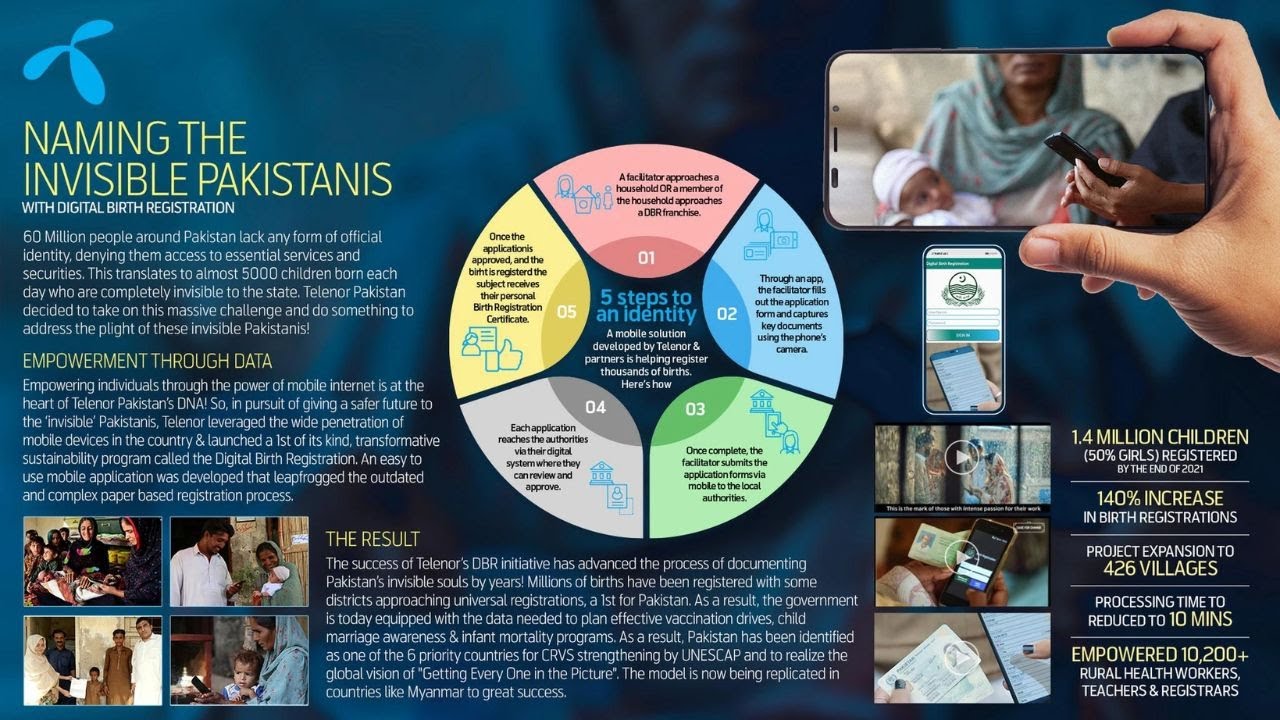 The production's success relied on a unique "Gatekeeper" strategy. Ogilvy Pakistan and Telenor empowered 10,200 community leaders, including Lady Health Workers (LHWs) who had the necessary domestic access to conservative households. To further dismantle cultural barriers, the team collaborated with local religious clerics who used Friday sermons to advocate for the legal protection of children. This grassroots approach turned a telecommunications brand into a provider of fundamental human rights, ensuring children could finally access vaccines and schooling.
A Homegrown Global First
Led by Creative Director Hamza Amjad and Telenor CEO Irfan Wahab Khan, the campaign marked a watershed moment for the Pakistani creative industry. It was the first time a Pakistani agency won a Grand Prix at Cannes, proving that "home - grown resources," as noted by Ogilvy CEO Asim Naqvi, could compete at the highest global level. The project was eventually featured in the GSMA Case for Change series, highlighting how mobile technology can solve the world's most "intractable" social problems.
Creative Strategy Deconstructed
Company
Telenor's vast mobile network and high Android penetration in rural Pakistan enabled a scalable digital solution.
Category
Telecom brands usually focus on data plans, connectivity speeds, and lifestyle-oriented marketing for urban users.
Customer
Rural parents wanted a better future for their children but faced insurmountable, expensive bureaucratic barriers.
Culture
The systemic exclusion of millions of children due to an archaic, paper-based national registration system.
Company
Telenor's vast mobile network and high Android penetration in rural Pakistan enabled a scalable digital solution.
Category
Telecom brands usually focus on data plans, connectivity speeds, and lifestyle-oriented marketing for urban users.
Strategy:
Leverage existing mobile infrastructure to bypass bureaucratic friction and provide essential civil services to marginalized populations.
Customer
Rural parents wanted a better future for their children but faced insurmountable, expensive bureaucratic barriers.
Culture
The systemic exclusion of millions of children due to an archaic, paper-based national registration system.
Strategy:
Leverage existing mobile infrastructure to bypass bureaucratic friction and provide essential civil services to marginalized populations.
Results
The initiative successfully registered 1,225,143 births. The program was implemented across 426 rural villages in Pakistan. It received significant international media coverage from outlets including The Telegraph, BBC News, and The Express Tribune. The project provided a legal path to birth certificates for children who were previously 'invisible' to the state, granting them access to fundamental human rights like education and medical care.
1.22M+
birth registrations
426
rural villages reached
60M
target population identified
Strategy Technique
Build an Utility, Not an Ad
Rather than just talking about social inclusion, Telenor built a functional digital infrastructure that bridged the gap between remote citizens and the state, creating long-term brand value through service.
Explore Technique
Creative Technique
Unexpected Utility
Telenor turned a standard telecommunications tool into a life-changing administrative utility, solving a complex bureaucratic problem by placing the solution directly in the hands of trusted community health workers.
Explore Technique
Craft Breakdown
The campaign's excellence lies in its seamless integration of mobile technology with existing social infrastructure to solve a massive human rights crisis.
The creation of a lightweight, offline-capable Android app that bridges the gap between rural citizens and government bureaucracy.
The high-quality drone and handheld footage provides a sense of scale and intimacy that humanizes the data.