2026Huashan Literature and Art Publishing HouseMedia & EntertainmentVideo ad
Huashan Literature and Art Publishing House: Notes on Embroidery Memories
Huashan Literature and Art Publishing House commissioned design studio xiongqiong+machengji to create a book documenting antique folk embroidery. The design aimed to rescue these historical artifacts from obscurity by reimagining them as a wearable, tactile, and modern fashion accessory.
Creative Idea
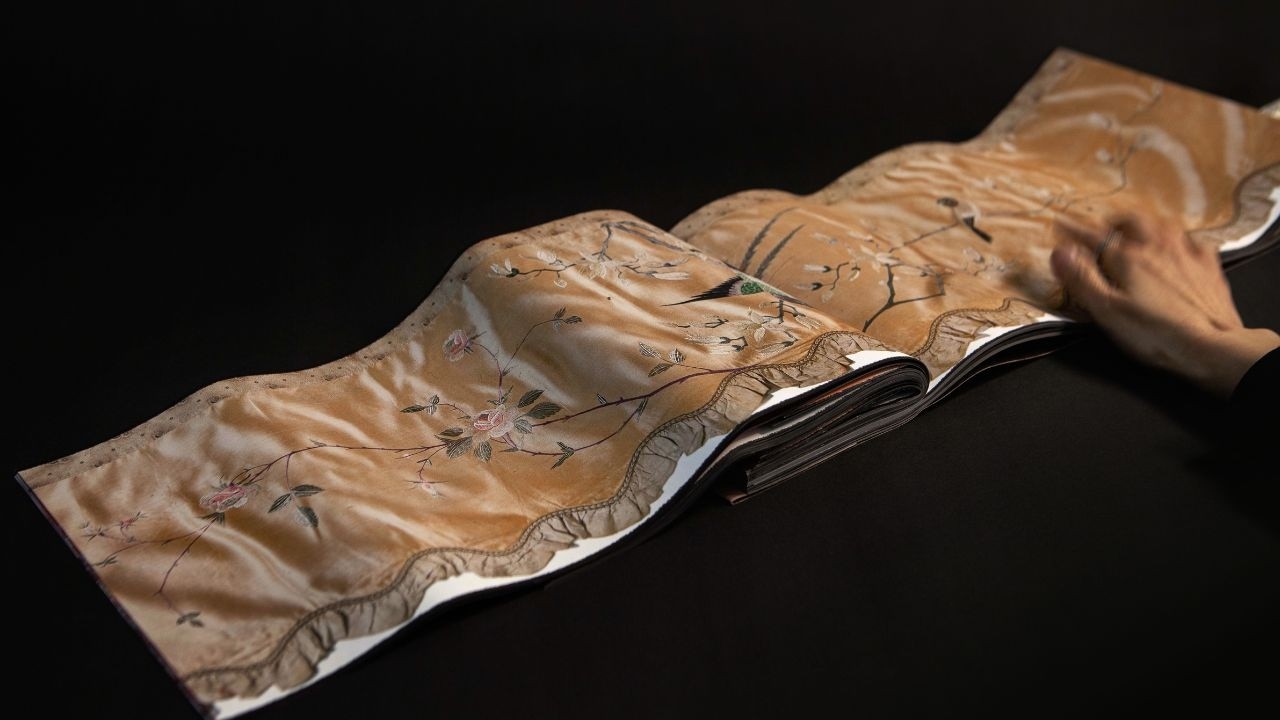
The book was designed as a wearable cloth-roll to make history physically accessible.
By transforming a traditional archive into a wearable cloth-roll book, the design bridges a 300-year gap, allowing young readers to physically interact with and wear antique embroidery, turning historical preservation into a modern, tactile fashion statement.
From Dusty Warehouse to Wearable Fashion Accessory
Engineering a Tactile Archive
The design team at xiongqiong+machengji moved away from traditional book architecture to solve the problem of displaying embroidery pieces of varying sizes. By implementing a three-section, spineless, thread-locked structure, the book allows for an unrolled, flat display that honors the original dimensions of the artifacts. To further heighten the sensory experience, the production utilized a deliberate mix of semi-coated paper and rugged, environmentally friendly classic paper. This contrast mirrors the tactile nature of folk embroidery, ensuring the reader feels the weight and texture of the historical materials.
Lighting the Threads
To capture the intricate details of 300-year-old craftsmanship, the photography team employed strategic side-lighting. This technique was essential to emphasize the three-dimensional depth of individual threads, which often appear flat in standard documentation. These high-craft images were paired with black-and-white photography that depicts the original locations and working environments of the embroiderers. This juxtaposition provides a humanistic context, helping modern readers visualize the daily lives and working methods of the women who created these pieces centuries ago.
Commercial and Cultural Reception
The project successfully bridged the gap between academic archiving and modern consumer interest. Upon its release, the book generated significant momentum, securing 2,000 pre-orders within the first month. By transforming a static encyclopedia into a portable, buttoned, and wearable object, the designers established a new blueprint for preserving minority craftsmanship. The work effectively repositioned historical artifacts as a desirable lifestyle asset, proving that traditional culture can thrive in a mass consumer market when presented through a lens of modern, interactive design.
4C Framework deconstruction
Company
Huashan Literature and Art Publishing House leveraged its editorial expertise to curate and present historical folk embroidery archives.
Category
Traditional publishing usually presents historical archives as static, dry, and purely academic reference materials for limited audiences.
Customer
Young, design-conscious readers sought meaningful, tactile, and fashionable connections to heritage that fit their contemporary lifestyle.
Culture
A growing cultural trend of reviving traditional craftsmanship through modern, interactive, and highly aestheticized design objects.
Company
Huashan Literature and Art Publishing House leveraged its editorial expertise to curate and present historical folk embroidery archives.
Category
Traditional publishing usually presents historical archives as static, dry, and purely academic reference materials for limited audiences.
Strategy:
Reframe historical artifacts as interactive, wearable objects to bridge the gap between heritage and modern lifestyle.
Customer
Young, design-conscious readers sought meaningful, tactile, and fashionable connections to heritage that fit their contemporary lifestyle.
Culture
A growing cultural trend of reviving traditional craftsmanship through modern, interactive, and highly aestheticized design objects.
Strategy:
Reframe historical artifacts as interactive, wearable objects to bridge the gap between heritage and modern lifestyle.
Strategy Technique
Make the Invisible Visible
The design shines a light on forgotten folk embroidery by elevating it from dusty warehouse artifacts to a desirable, modern lifestyle accessory that resonates with contemporary aesthetic preferences.
Explore Technique
Creative Technique
Turn Message into Product
The book functions as a wearable accessory rather than a static catalog. This physical transformation turns historical content into a tangible, fashionable object that invites direct interaction.
Explore Technique
Craft Breakdown
This work excels through exceptional book design and typography, turning a publication on traditional embroidery heritage into an interactive physical object.
The publication integrates complex accordion folds, translucent overlays, dynamic ribbon fastenings, and material tactile variety to honor traditional embroidery craftsmanship.
The editorial typography balances clean classic Chinese letterforms with modern grid layouts to complement historical visuals seamlessly.
“The combination of tactile physical book construction and refined modern typography transforms historical craft documentation into a contemporary artistic artifact.”