Omni: Omnilivery
Omni needed to challenge the pervasive societal belief that wheelchair users lack autonomy. Saatchi & Saatchi France was tasked with increasing brand awareness and proving the efficacy of their electric wheelchair attachment. The goal was to shift public perception from pity to empowerment by demonstrating the product's real-world performance in a demanding, high-visibility environment, ultimately driving both social change and commercial growth.
Creative Idea
Wheelchair users became delivery riders to prove their independence through real-world performance.
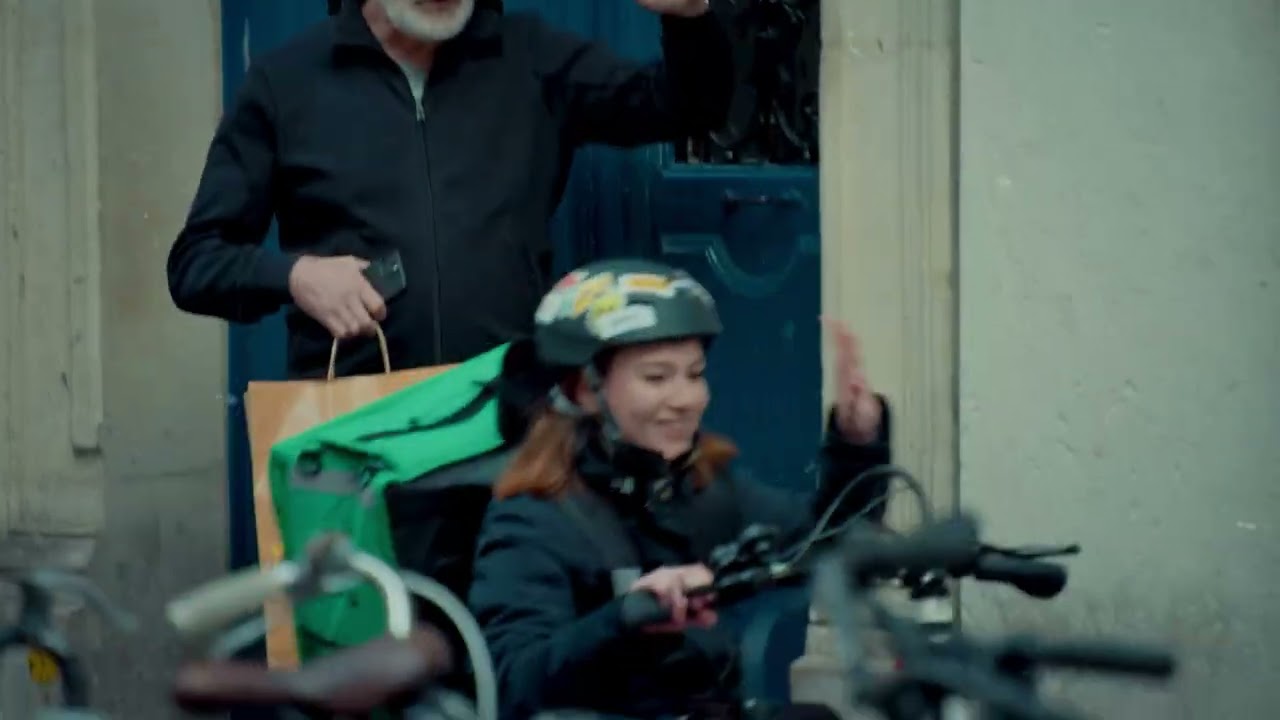
Omni hacked the Uber Eats platform by registering wheelchair users as delivery riders to prove that their electric scooter attachment provides total urban autonomy, effectively shattering the societal stereotype that people with reduced mobility lack independence.
Hacking the Gig Economy for Total Autonomy
The Speed of the Streets
The campaign relied on a high-stakes, real-world stress test rather than a controlled studio environment. By integrating into the Uber Eats ecosystem, the team proved that the Omni attachment was not just a mobility aid, but a high-performance vehicle. Riders reached speeds of up to 25 km/h, navigating Paris's notoriously difficult cobblestones and steep inclines with such efficiency that they frequently outperformed able-bodied bicycle couriers. This operational success turned every delivery into a live, undeniable product demonstration.
A Radical Shift in Tone
Founder Charlotte Alaux insisted on avoiding the "medical" aesthetic that dominates disability-focused advertising. Under the guidance of Pierre Viallaneix at Saatchi & Saatchi France, the team pivoted toward the visual language of board sports and skate culture. By utilizing vibrant brand colors and custom-designed over-bags, the campaign replaced tropes of pity with a narrative of speed, pride, and urban grit. This aesthetic choice was instrumental in securing the brand's identity as a lifestyle-tech innovator rather than a medical supplier.
From Viral PR to Policy Change
The project operated with €0 in paid media, relying entirely on the organic reach generated by the riders' presence on the streets. This grassroots approach triggered a +700% spike in web traffic and a +450% increase in sales. Beyond the commercial metrics, the campaign’s visibility forced a legislative shift. The French government officially recognized the device's utility, leading to a 50% reimbursement policy for the attachment. This transformed the campaign from a marketing stunt into a permanent, state-subsidized improvement for the lives of thousands of citizens.
Creative Strategy Deconstructed
Company
Omni possessed a unique electric attachment that converted manual wheelchairs into high-performance, agile electric vehicles capable of navigating dense urban environments.
Category
Disability-focused advertising typically relies on medical tropes, pity, or passive narratives that emphasize limitations rather than active, high-energy capability.
Customer
Wheelchair users desired genuine autonomy and freedom, while the public held a deep-seated, incorrect belief that disability inherently meant a lack of independence.
Culture
The rise of the gig economy and food delivery culture provided the perfect, high-visibility stage to challenge urban accessibility norms in real-time.
Company
Omni possessed a unique electric attachment that converted manual wheelchairs into high-performance, agile electric vehicles capable of navigating dense urban environments.
Category
Disability-focused advertising typically relies on medical tropes, pity, or passive narratives that emphasize limitations rather than active, high-energy capability.
Strategy:
Demonstrate capability through real-world performance to dismantle deep-seated societal prejudices against a marginalized group.
Customer
Wheelchair users desired genuine autonomy and freedom, while the public held a deep-seated, incorrect belief that disability inherently meant a lack of independence.
Culture
The rise of the gig economy and food delivery culture provided the perfect, high-visibility stage to challenge urban accessibility norms in real-time.
Strategy:
Demonstrate capability through real-world performance to dismantle deep-seated societal prejudices against a marginalized group.
Results
The campaign generated massive awareness and business growth with 0 media investment. It achieved 8.2M media impressions, a +700% increase in website traffic, and a +450% surge in Omni sales. Deliveries maintained a 97% to 100% on-time rate, earning an average rider rating of 4.92 stars.
+450%
increase in Omni sales
8.2M
media impressions
+700%
website traffic increase
Strategy Technique
Turn Weakness Into Strength
The brand transformed the perceived limitation of disability into a demonstration of professional capability. By embracing the challenge of delivery, they reframed the product as an empowering tool for high-speed urban mobility.
Explore Technique
Creative Technique
Conduct a Product Trial
The campaign turned a real-world job into a high-stakes product demonstration. By putting the device to work in a demanding environment, it proved its reliability and performance through direct, undeniable action.
Explore Technique
Craft Breakdown
This campaign excels by transforming a product demonstration into a high-stakes, real-world social activation. The seamless integration of a functional product with a major delivery platform elevates it from a simple ad to a powerful cultural statement.
Designing a real-world utility partnership that serves as both a live product test and a social statement.
The bold, kinetic typography and punchy framing of 'delivering freedom, not just food' creates a powerful narrative.