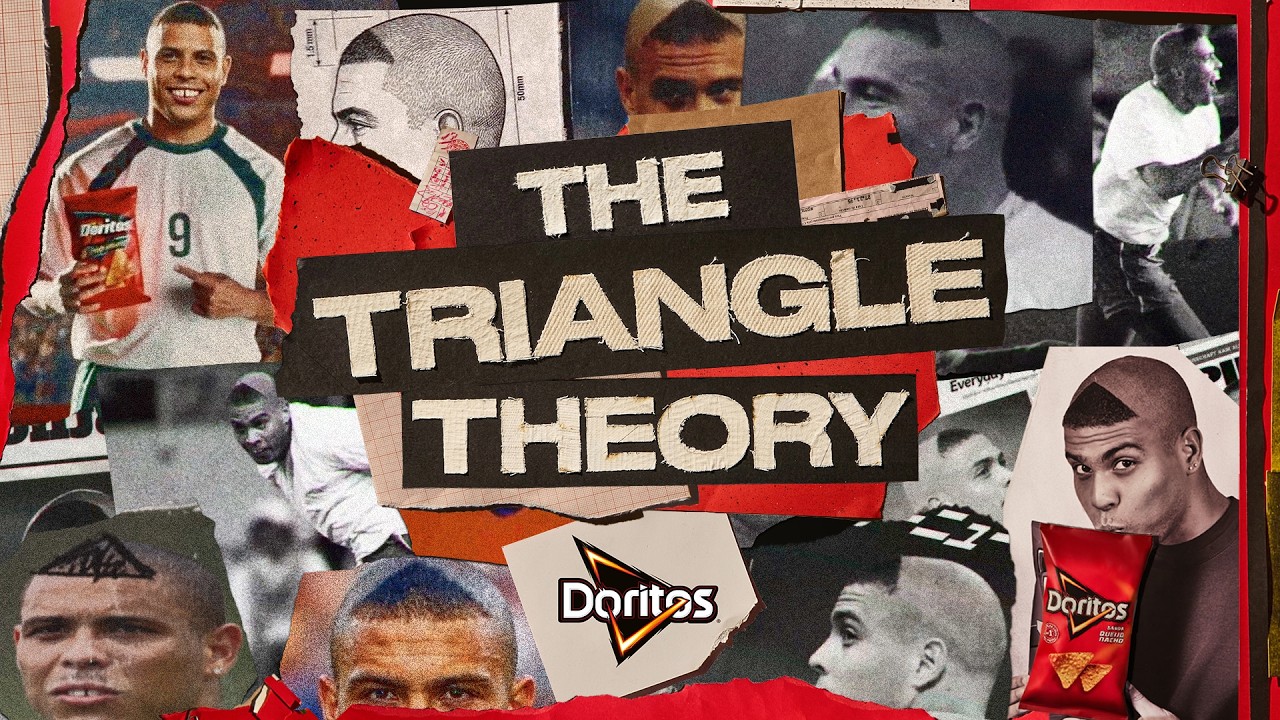
Doritos: The Triangle Theory
Doritos and AlmapBBDO sought to increase brand relevance among Brazilian consumers by connecting the product to a legendary cultural moment. The objective was to create a viral, conversation-driving campaign that moved beyond traditional advertising. The client required a strategy that leveraged existing pop-culture nostalgia to position the brand as an integral, albeit hidden, part of football history.
Creative Idea
The brand reframed a famous 2002 haircut as a secret, unfinished Doritos advertisement.
Doritos hacked football history by framing Ronaldo’s iconic 2002 haircut as a secret, unfinished marketing stunt. This mockumentary-style campaign turned a legendary cultural mystery into a branded conspiracy, driving massive organic engagement through nostalgia and playful, investigative storytelling.
The Secret History Behind the Haircut
Engineering a Digital Conspiracy
The campaign’s success hinged on a meticulously crafted "digital archeology" strategy. To make the conspiracy feel authentic, the team seeded anonymous, grainy "leaked" sketches on Reddit weeks before the official launch. This grassroots approach forced the public to treat the narrative as a genuine historical mystery rather than a polished corporate advertisement. By the time the 12-minute mockumentary—directed by The Youth—was released, the audience was already primed to accept the premise that Ronaldo’s 2002 haircut was actually a failed, top-secret brand activation.
Orchestrating the Viral Echo Chamber
The agency leveraged a massive influencer network to sustain the momentum. Over 150 content creators were recruited to act as "investigators," each producing content that analyzed the "evidence" from different angles. This was bolstered by a strategic partnership with TNT Sports Brasil, which treated the campaign as a legitimate news story. By having sports journalists debate the "Triangle Theory" on live television, the brand effectively blurred the line between entertainment and reality, turning a fictional narrative into a national conversation.
Technical Craft and Historical Precision
To sell the illusion, the production team went to extreme lengths to replicate the aesthetic of the early 2000s. Dopo VFX and COLOSSAL were tasked with aging modern footage and integrating archival clips to ensure the "lost" commercial felt authentic to the era. The use of AI-generated imagery by Boson Post allowed for the creation of convincing, period-accurate "leaked" documents that appeared to come from a 2002 marketing archive. This commitment to visual fidelity was the linchpin that allowed the campaign to bypass traditional ad-blocking mentalities and achieve deep organic penetration.
Creative Strategy Deconstructed
Company
Doritos leveraged its iconic triangular shape as a unique visual asset that could be retroactively inserted into famous cultural moments.
Category
Snack brands typically rely on generic celebrity endorsements rather than weaving themselves into the fabric of historical, non-branded cultural events.
Customer
Fans crave deeper, more entertaining connections to their sports heroes and enjoy participating in collaborative, internet-driven conspiracy theories.
Culture
The rise of 'cultural hacking' and the internet's obsession with re-examining 2000s pop-culture nostalgia created the perfect environment for this narrative.
Company
Doritos leveraged its iconic triangular shape as a unique visual asset that could be retroactively inserted into famous cultural moments.
Category
Snack brands typically rely on generic celebrity endorsements rather than weaving themselves into the fabric of historical, non-branded cultural events.
Strategy:
Retroactively claim cultural icons to transform brand identity into a shared historical legend.
Customer
Fans crave deeper, more entertaining connections to their sports heroes and enjoy participating in collaborative, internet-driven conspiracy theories.
Culture
The rise of 'cultural hacking' and the internet's obsession with re-examining 2000s pop-culture nostalgia created the perfect environment for this narrative.
Strategy:
Retroactively claim cultural icons to transform brand identity into a shared historical legend.
Results
The campaign generated massive cultural engagement by tapping into a 20-year-old football mystery. It successfully connected the Doritos brand to one of the most iconic moments in sports history, generating widespread conversation across social media platforms like Reddit and Twitter. The video achieved high engagement rates and positive sentiment by blending sports nostalgia with investigative storytelling.
100%
organic cultural relevance
20 years
of sports mystery resolved
Strategy Technique
Turn Weakness Into Strength
The campaign takes a bizarre, widely mocked historical haircut and reframes it as a deliberate, genius brand placement. By owning the absurdity, the brand transforms a historical anomaly into a powerful, ownable asset.
Explore Technique
Creative Technique
Detective-story
The campaign uses a mockumentary investigative format to uncover 'evidence' of a lost marketing stunt. This detective-story structure keeps the audience engaged by treating a pop-culture mystery as a serious, unfolding investigation.
Explore Technique
Craft Breakdown
This campaign brilliantly uses a mockumentary format to turn a legendary sports mystery into a highly engaging brand story. The meticulous attention to detail in creating fake historical evidence elevates the narrative.
The script perfectly mimics the dramatic, suspenseful tone of investigative journalism, keeping viewers hooked until the playful reveal.
The creation of authentic-looking 2002 storyboards, technical drawings, and retro packaging seamlessly blends fiction with reality.
“The magic comes from the seamless blend of convincing mockumentary art direction and witty copywriting, making the absurd conspiracy theory feel entirely plausible.”