Charité: Printed By Parkinsons
Charité's neurology department needed to raise awareness about Parkinson's disease, its rapid progression, and the urgent need for research and understanding. They aimed to educate the public on symptoms and treatments, break the stigma, and inspire patients to speak up, targeting a broad audience including medical professionals and the general public.
Creative Idea
Patient tremor data was used to 3D-print art, visualizing Parkinson's impact.
Printed by Parkinson's transformed patient tremor data into unique 3D-printed art objects, visualizing the disease's daily impact and reigniting global debate on Parkinson's understanding and research, effectively making the invisible struggle visible and tangible.
The Machine That Caught a Human Disease
Infecting the 3D Printer
To visualize the invisible, Innocean Berlin and MediaMonks recorded kinetic and neurological data from six patients using EEG systems and accelerometers. This data was used to "infect" a 3D printer, forcing the machine to mimic the specific tremors and neurological fluctuations of each individual. The printer was marketed as the first machine affected with a human disease, turning clinical data into a physical struggle. While the technology was complex, the team noted that the greatest hurdle was navigating GDPR and data protection laws to use personal neurological data for an art project.
From Lost Hobbies to Bronze
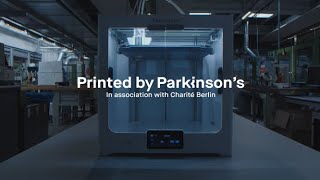 Patients selected objects that represented personal losses due to the disease, such as a camera for a photographer who could no longer hold it steady, or a nutcracker representing lost fine motor skills. The resulting 3D prints were distorted, jagged versions of these items. To give the "invisible" disease a heavy, permanent form, the final pieces were cast in bronze. The campaign intro even referenced Muhammad Ali - "the greatest fighter" - as a reminder that the disease can defeat even the strongest individuals.
Beyond the Gallery Walls
The project bridged the gap between advertising and medical science, resulting in a peer-reviewed paper in Neurological Research and Practice. Beyond its digital reach and national TV coverage in Germany, the collection found a permanent home as an exhibition at the Neurology Department of Charité Berlin. According to Creative Director Marlon von Franquemont, the goal was to create a conversation between those who are suffering and those who do not yet understand the daily reality of the condition.
Creative Strategy Deconstructed
Company
Charité could credibly deliver by leveraging its neurology department's access to patient data and medical expertise to create impactful visualizations.
Category
Healthcare campaigns often rely on statistics or direct emotional appeals, but this campaign broke norms by using art and technology to convey impact.
Customer
The audience wanted a deeper, more tangible understanding of Parkinson's daily impact, beyond statistics or abstract medical descriptions.
Culture
A cultural moment of increasing awareness for neurological disorders and the power of art to humanize complex medical conditions made this resonate.
Company
Charité could credibly deliver by leveraging its neurology department's access to patient data and medical expertise to create impactful visualizations.
Category
Healthcare campaigns often rely on statistics or direct emotional appeals, but this campaign broke norms by using art and technology to convey impact.
Strategy:
Transform abstract medical data into tangible, emotionally resonant experiences to foster empathy and drive action.
Customer
The audience wanted a deeper, more tangible understanding of Parkinson's daily impact, beyond statistics or abstract medical descriptions.
Culture
A cultural moment of increasing awareness for neurological disorders and the power of art to humanize complex medical conditions made this resonate.
Strategy:
Transform abstract medical data into tangible, emotionally resonant experiences to foster empathy and drive action.
Results
The video states that the campaign was successful in "Reigniting an international debate on the importance of more understanding and research" regarding Parkinson's disease. The collection is now "permanently exhibited at the Neurology Department of Charité," inspiring patients to speak up and break the stigma.
Strategy Technique
Turn Data Into Drama
By transforming raw patient tremor data into tangible 3D-printed objects, the campaign dramatically visualized the invisible struggle of Parkinson's. This made the abstract impact of the disease emotionally resonant and undeniable.
Explore Technique
Creative Technique
Make the Invisible Visible
The campaign made the unseen tremors of Parkinson's visible through 3D-printed art. This tangible representation allowed audiences to grasp the profound daily impact of the disease on patients' lives.
Explore Technique
Craft Breakdown
This campaign's exceptional craft lies in its innovative use of data and technology to create a tangible, emotionally resonant representation of Parkinson's disease, coupled with powerful storytelling that highlights individual experiences and global impact.
The core innovation of translating neurological data from patients into physical, distorted 3D prints using a modified 3D printer is a groundbreaking application of technology, directly visualizing an abstract medical condition in a powerful, artistic way.
The aesthetic execution of the 3D-printed objects, from their textured, layered appearance to their presentation in stark, gallery-like settings, effectively communicates the disease's impact with dignity and visual intrigue.
The narrative structure, moving from a universal icon (Ali) to personal patient stories, then to a tangible artistic expression of their struggle, creates a compelling and deeply human connection with the audience.
The transformation of complex kinetic and neurological data into visually striking, tactile art objects provides an unprecedented and impactful way to understand the effects of Parkinson's on daily life.
“The true magic of this campaign comes from the seamless integration of cutting-edge digital craft and data visualization to create poignant art, which then serves as a powerful storytelling device for an often-misunderstood disease.”