Sakker El Dekkene: Anti-Corruption Campaign
Activists in Lebanon needed Wiktor Leo Burnett to create a campaign that would dramatically raise public awareness about the pervasive corruption plaguing the country. The goal was to empower tired Lebanese citizens to actively report corruption, initiating a movement towards accountability and state-building.
Creative Idea
The campaign created a fake shop openly selling illegal services to expose Lebanon's pervasive corruption.
The campaign created "The Lebanon4Sale Shop," a physical and online store openly selling illegal services like diplomas and jobs, to dramatically expose the pervasive, business-like nature of corruption in Lebanon and empower citizens to report it, making the problem undeniable.
Closing the Shop Where Rights Were for Sale
Turning a Country into a Storefront
The campaign’s title, Sakker El Dekkene, utilized a sharp linguistic provocation by comparing the Lebanese state to a failing corner shop. To bring this metaphor to life, the agency deployed the "Kabseh" (The Raid) car, a vibrant vehicle covered in traditional proverbs about bribery. It functioned as a mobile reporting station, parking directly outside notoriously corrupt government buildings to shame officials and provide citizens a safe space to report bribes on the spot. This was supported by a teaser-reveal strategy where mysterious posters advertised "Official Papers for Sale." Callers reached a recorded message detailing the true societal cost of these "purchases."
Data Driven Reform and Digital Fines
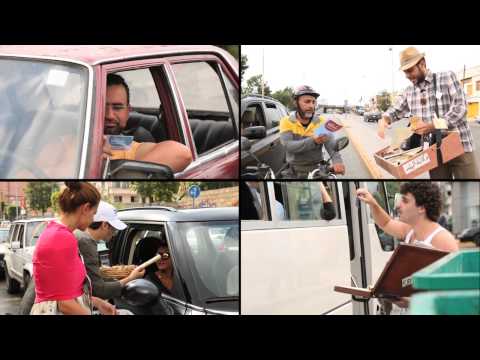 The initiative moved beyond awareness into tangible state-building. The Sakkera mobile app recorded 1,598 reports of bribery totaling 3.4 billion LBP ($2.2 million). This data was so undeniable that it forced the Ministry of Finance to implement reforms in land registration. On April Fool’s Day, the team distributed 150,000 fake traffic fines to protest the "joke" of road safety laws. The momentum eventually led to the 2015 establishment of a fully digitized, corruption-free police station in Ras Beirut and an MOU with the Ministry of Economy to monitor institutional integrity.
The Sound of the Street
Creative Director Areej Mahmoud specifically chose the Ruq’ah script for the campaign’s visual identity to capture the urgency of handwritten street protest. The movement’s emotional core was anchored by independent singer Tania Saleh, who wrote and performed the theme song. Directed by Wissam Smayra and produced by Clandestino, the campaign generated $2.6 million in earned media, proving that a local NGO could spark a national shift in consciousness.
Creative Strategy Deconstructed
Company
The activists, supported by Wiktor Leo Burnett, possessed the creative courage to confront systemic corruption directly and provocatively.
Category
Anti-corruption efforts often relied on traditional PSAs or protests, failing to capture the public's imagination or provide actionable solutions.
Customer
Lebanese citizens were exhausted and felt powerless against pervasive corruption, yet yearned for a tangible way to fight back and build a state.
Culture
Lebanon's long history of political turmoil and deep-seated corruption had normalized illegal practices, creating a fertile ground for this shocking intervention.
Company
The activists, supported by Wiktor Leo Burnett, possessed the creative courage to confront systemic corruption directly and provocatively.
Category
Anti-corruption efforts often relied on traditional PSAs or protests, failing to capture the public's imagination or provide actionable solutions.
Strategy:
Expose the normalized absurdity of systemic corruption to catalyze citizen action and demand institutional reform.
Customer
Lebanese citizens were exhausted and felt powerless against pervasive corruption, yet yearned for a tangible way to fight back and build a state.
Culture
Lebanon's long history of political turmoil and deep-seated corruption had normalized illegal practices, creating a fertile ground for this shocking intervention.
Strategy:
Expose the normalized absurdity of systemic corruption to catalyze citizen action and demand institutional reform.
Results
The campaign achieved 51 million social media impressions. Reports against corruption reached 2.1 billion Lebanese pounds. The campaign garnered 434 volunteers in one month. It also generated $2.51 million in earned media.
51M
social media impressions
2.1B LBP
reports against corruption (value)
2.51M USD
earned media
Strategy Technique
Exaggerate to Reveal the Truth
The campaign exaggerated the transactional nature of corruption by creating a literal "shop" for illegal services. This amplified the uncomfortable truth of pervasive bribery, making it impossible for citizens to ignore.
Explore Technique
Creative Technique
Analogy for the Problem
The campaign created "The Lebanon4Sale Shop" as a literal analogy for how corruption operates like a business in Lebanon. By openly "selling" illegal services, it made the abstract problem tangible and shocking.
Explore Technique
Craft Breakdown
This campaign's craft is exceptional in its art direction and Art Direction, which powerfully conceptualize corruption as a tangible business. The use of traditional advertising formats to sell corruption creates a stunning, provocative contrast that deeply resonates.
The visual representation of the 'Lebanon4Sale Shop' with its authentic, worn facade, hand-painted signs, and mundane-yet-disturbing offerings, perfectly encapsulates the casual normalization of corruption in society.
The slogans and promotional materials for the 'shop' are cleverly crafted to mimic real advertisements, highlighting the absurdity of corruption while drawing people in.
“The campaign's strength lies in the synergy between its brilliant core idea, provocative art direction, and clever copywriting, all of which worked together to create a memorable and effective social commentary that spurred real-world action and reporting.”