2025DistanceTravel, Leisure, Retail & RestaurantsCase video
Distance × Strava: The CatRace
Distance and BETC Paris sought to challenge the fashion industry's appropriation of sportswear during Paris Fashion Week. The goal was to reclaim the brand's identity as a serious running retailer by creating a high-impact, disruptive event that resonated with the global running community, proving that sportswear belongs to athletes, not just models.
Creative Idea
Athletes replaced models in a high-speed, 57-second sprint race during Paris Fashion Week.
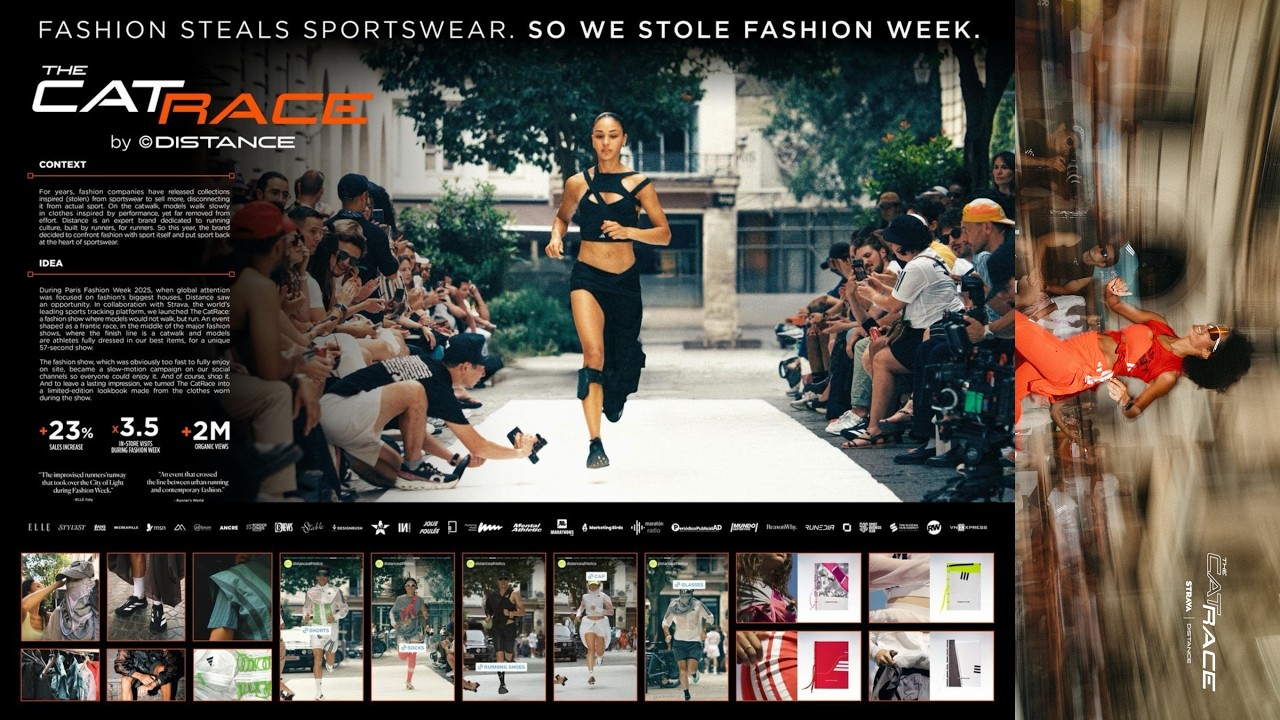
Distance and Strava hijacked Paris Fashion Week with a 57-second high-speed sprint race featuring elite athletes instead of models. This reclaimed the authenticity of sportswear by forcing the fashion industry to confront the reality of sweat and performance.
The Fastest Fashion Show In History
Reclaiming Sportswear From The Runway
The campaign was a direct critique of how haute couture has historically appropriated the aesthetics of athletic gear while ignoring the functional reality of sport. By replacing traditional models with elite runners, the team ensured that the clothing was presented in its intended environment: drenched in sweat and pushed to the point of physical exhaustion. This guerrilla approach turned the 2nd Arrondissement of Paris into a 1-kilometer track, forcing the fashion elite to witness the raw intensity of a sprint rather than a choreographed walk.
Production Through A Kinetic Lens
The production, led by Soldats Films, required a departure from traditional fashion film aesthetics. Director Guillaume Allantaz and cinematographer Stephan Mühlau focused on capturing the visceral, high-speed nature of the event. Because the live show lasted only 57 seconds, the team relied on high-resolution photography and slow-motion video replays to allow the audience to actually inspect the technical details of the garments. These assets were later compiled into a digital lookbook, bridging the gap between the fleeting live experience and the detailed requirements of a fashion showcase.
Haute Couture Meets Technical Nylon
Fashion stylist Stephy Galvani spearheaded the design process, creating custom silhouettes that utilized technical nylon, tulle, polyester, and performance straps. By reworking iconic Adidas pieces, the team created a collection that felt at home on a track yet maintained the visual language of a high-fashion runway. As Grégory Vermersch of Strava noted, the collaboration was designed to build a bridge between the creative worlds of fashion and the rigorous, data-driven community of endurance athletes, effectively challenging the industry to stop treating activewear as a static aesthetic choice.
4C Framework deconstruction
Company
Distance leveraged its authority as a premier running boutique to bridge the gap between high fashion and authentic athletic performance.
Category
Luxury fashion houses frequently appropriate sportswear aesthetics for the runway while ignoring the functional reality of the sport itself.
Customer
Sports enthusiasts felt alienated by the fashion industry's superficial commodification of their culture and gear.
Culture
The convergence of Paris Fashion Week provided the perfect stage to expose the disconnect between luxury trends and real-world athleticism.
Company
Distance leveraged its authority as a premier running boutique to bridge the gap between high fashion and authentic athletic performance.
Category
Luxury fashion houses frequently appropriate sportswear aesthetics for the runway while ignoring the functional reality of the sport itself.
Strategy:
Expose the superficiality of aesthetic trends by forcing a direct collision with functional reality.
Customer
Sports enthusiasts felt alienated by the fashion industry's superficial commodification of their culture and gear.
Culture
The convergence of Paris Fashion Week provided the perfect stage to expose the disconnect between luxury trends and real-world athleticism.
Strategy:
Expose the superficiality of aesthetic trends by forcing a direct collision with functional reality.
Results
The campaign achieved impressive commercial and media outcomes: x3.5 in-store visits during Fashion Week, +25% increase in sales, and over +2 million organic views across social media platforms, along with extensive coverage across major fashion and culture publications including Elle, Marathons.com, and prominent social creators.
x3.5
in-store visits during Fashion Week
+25%
increase in sales
+2M
organic views
Strategy Technique
Break a Category Convention
The campaign challenged the fashion industry's habit of using sportswear as a hollow aesthetic. By replacing passive models with sweating athletes, it forced a re-evaluation of what sportswear actually represents.
Explore Technique
Creative Technique
Hijack the Medium
The campaign literally hijacked the Paris Fashion Week runway, replacing traditional models with athletes. This subverted the fashion show format to force a direct confrontation between luxury aesthetics and actual athletic performance.
Explore Technique
Craft Breakdown
The campaign excels through brilliant Experiential Design that hijacked Paris Fashion Week, seamlessly integrated with high-end Production Design that repurposed athletic gear directly into physical lookbooks.
Transforming a Parisian street amidst high-fashion shows into a 57-second real-time athlete sprint catwalk brilliantly subverted fashion week norms.
Crafting limited-edition lookbooks encased in actual technical sports apparel worn by the runners elevated the tangible artifact value of the event.
“The seamless combination of a physical live stunt, social-first interactive e-commerce, and tangible print craft created a complete multi-touchpoint brand experience.”