The New York Times: The Displaced
The New York Times aimed to maintain its leadership in news consumption and expand its digital presence. They needed to launch the NYTVR app, engaging subscribers by making the global refugee crisis tangible and demonstrating VR's potential in journalism.
Creative Idea
NYT distributed VR viewers to immerse millions in the refugee crisis, fostering profound empathy.
The New York Times leveraged VR technology and mass distribution of Google Cardboards to immerse over one million subscribers directly into the global refugee crisis, transforming an abstract humanitarian issue into a deeply personal, empathetic experience and establishing VR journalism's mainstream arrival.
One Million Cardboard Boxes and an Empathy Machine
The 8-GoPro Rig and Hiding in Ruins
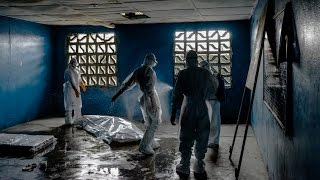
To capture the 360 degree stereoscopic 3D video, directors Imraan Ismail and Ben C. Solomon utilized a custom built rig featuring eight GoPro cameras mounted on a single pole. The production process required a unique "invisible" approach; because the cameras captured every angle simultaneously, the crew had to physically hide behind ruins, trees, or in trenches hundreds of yards away to avoid appearing in the frame. This was most notable during the South Sudan food drop scene, where the camera was left alone in an open field to capture the authentic, frantic scramble of refugees without the presence of a film crew disrupting the moment.
A Massive Communal Screening
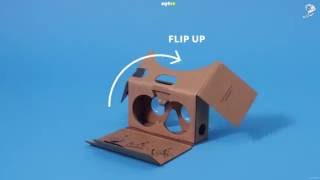
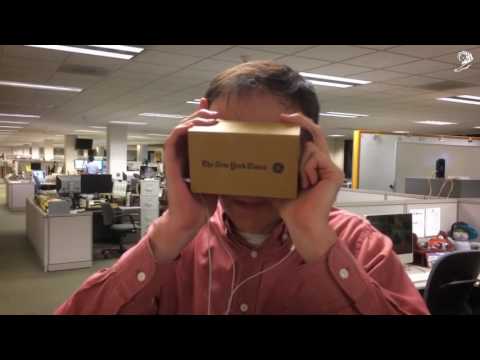 The campaign served as a massive "jump-start" for the consumer VR market by distributing between 1.1 million and 1.3 million Google Cardboard viewers to Sunday home - delivery subscribers. While many readers initially mistook the polybagged viewers for promotional toys, the impact was immediate. The NYT VR app became the most successful launch in the company’s history, with users spending an average of 6 to 14.7 minutes per session. Remarkably, 92% of viewers who started the film watched it to its conclusion, a retention rate nearly unheard of for digital news content.
From Newsprint to Narrative TV
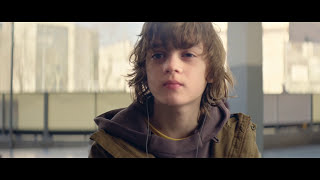
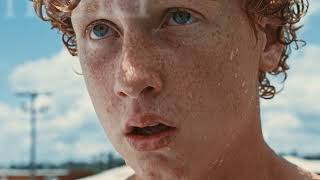
The project’s cultural footprint extended far beyond journalism. Jake Silverstein noted that the distribution created the largest communal screening of a VR film in history, while the industry began referring to the medium as an "empathy machine." The stories of the three children - Oleg, Chuol, and Hana - resonated so deeply that by 2016, a dramatic narrative TV series based on their lives was put into development by Killer Content.
Creative Strategy Deconstructed
Company
The New York Times had a legacy of journalistic authority and a commitment to innovation, plus the capability for mass content and hardware distribution.
Category
Traditional news often reported on global crises abstractly, relying on text and 2D images, which could create emotional distance for audiences.
Customer
Audiences wanted to understand overwhelming global events more deeply but struggled to connect emotionally with distant, abstract humanitarian crises.
Culture
The advent of accessible virtual reality technology and a growing cultural desire for immersive, authentic experiences made this approach timely.
Company
The New York Times had a legacy of journalistic authority and a commitment to innovation, plus the capability for mass content and hardware distribution.
Category
Traditional news often reported on global crises abstractly, relying on text and 2D images, which could create emotional distance for audiences.
Strategy:
Leverage immersive technology to transform abstract global issues into deeply personal, empathetic experiences.
Customer
Audiences wanted to understand overwhelming global events more deeply but struggled to connect emotionally with distant, abstract humanitarian crises.
Culture
The advent of accessible virtual reality technology and a growing cultural desire for immersive, authentic experiences made this approach timely.
Strategy:
Leverage immersive technology to transform abstract global issues into deeply personal, empathetic experiences.
Results
In April 2015, the New York Times declared that VR journalism would have the same bright future as photography did 119 years ago. The campaign involved the debut of their first virtual reality experience, 'Walking New York.' For the launch of the NYTVR app, the New York Times premiered 'The Displaced' at a mass demo in November. The following Sunday, over 1 million subscribers received complimentary New York Times branded Google Cardboards with their Sunday paper. This gave them the opportunity to empathize and experience the devastation of the refugee crisis first-hand. "Millions of people both young and old" were exposed to their first VR film, and through this timely convergence of technology and journalism, gained an entirely new perspective on a pivotal event. "Thousands shared the experience on social media with the hashtag #NYTVR." Media outlets worldwide praised the film and its creators, declaring "VR's arrival into the mainstream." Within the first three days of its release, the NYTVR app had been downloaded "more times than any other app in the publication's history."
1M+
Google Cardboard viewers distributed
Most downloaded app
in NYT history (within 3 days)
Thousands
social media shares (#NYTVR)
Strategy Technique
Make the Invisible Visible
The campaign transformed the abstract concept of the global refugee crisis into a tangible, personal experience. By placing viewers directly into the lives of displaced children, it made a distant tragedy intimately real.
Explore Technique
Creative Technique
Empathize
The campaign directly placed viewers inside the global refugee crisis, fostering a deep emotional connection. Distributing VR viewers enabled millions to experience the devastation firsthand, building profound empathy.
Explore Technique
Craft Breakdown
This campaign's craft is exceptional for pioneering a powerful new form of empathetic journalism through virtual reality, leveraging a brilliant strategic idea alongside innovative digital and visual execution to achieve unprecedented scale.
The creation of the NYTVR app and the technical execution of the immersive, journalistic virtual reality experiences pushed the boundaries of digital storytelling.
The sensitive and skilled 360-degree filming in challenging, real-world conflict zones created a uniquely immersive and powerful visual narrative.
“The profound impact of the campaign emerged from the synergistic combination of a brilliant strategic idea, cutting-edge VR technology, and deeply human storytelling delivered at scale.”