Unicef: The Worst Soap Opera
UNICEF tasked Pagés BBDO with ending the cultural normalization of child marriage in the Dominican Republic. Despite high prevalence, the issue remained invisible to the middle class and ignored by legislators. The goal was to spark a national conversation and pressure the government to change the law, targeting the entire Dominican population through a medium they could not ignore.
Creative Idea
Created a fake, disturbing soap opera that revealed its plotlines were actually real-life testimonies.
UNICEF launched a 10-episode telenovela depicting the harrowing reality of child marriage, initially outraging viewers with its disturbing plot before revealing the stories were real to turn public anger into a national demand for legislative reform.
The Script That Outraged a Nation
From Backlash to Legislation
The campaign achieved a staggering 20.9 million impressions in a country of only 10.6 million people, effectively reaching the entire population twice over. This massive saturation shifted public sentiment from 30% to 63% positive regarding the need for legal reform. The ultimate success came in January 2021, when President Luis Abinader signed Law 1-21, officially banning child marriage without exceptions - a direct result of the pressure cooker environment created by the campaign.
The Trojan Horse Strategy
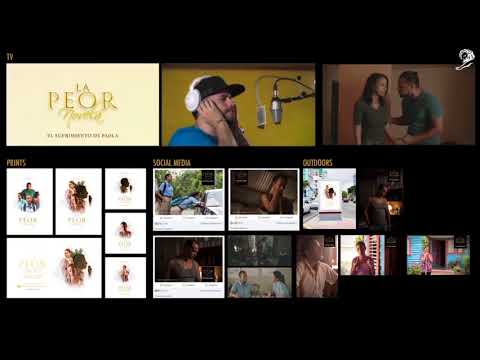 To ensure the "soap opera" felt authentic, the production team worked with Communication for Development (C4D) experts to embed psychological triggers that challenged social norms. Lead creative Rodolfo Borrell noted that the project only worked because it initially invited "hate-watching." Viewers were so disgusted by the "bad writing" and the depiction of adult men with girls like Paola (16) and Kenia (14) that they took to social media to demand the show be canceled. This organic outrage was the perfect setup for the reveal that the scripts were actually real-life testimonies.
A Landmark for Caribbean Creativity
Beyond its social impact, the project was a watershed moment for the Dominican Republic’s creative industry, securing the country’s first-ever Cannes Lion. It is now a staple in advertising textbooks as a masterclass in Entertainment-Education (EE). The production featured high-profile support from the Vice President, Margarita Cedeño de Fernández, and used photography by Jochy García to mirror the high-gloss aesthetic of commercial telenovelas, making the eventual pivot to harsh reality even more jarring for the middle and upper classes.
Creative Strategy Deconstructed
Company
UNICEF's authority as a global child rights advocate and its deep understanding of local social issues.
Category
Non-profits often use guilt-tripping ads or statistics that people easily tune out or ignore.
Customer
Dominicans love telenovelas but were culturally blind to the systemic abuse of child marriage in their own backyards.
Culture
The cultural obsession with soap operas provided a Trojan Horse to deliver a harrowing message to the masses.
Company
UNICEF's authority as a global child rights advocate and its deep understanding of local social issues.
Category
Non-profits often use guilt-tripping ads or statistics that people easily tune out or ignore.
Strategy:
Leverage high-engagement entertainment tropes to Trojan Horse a disturbing social reality into the national conversation.
Customer
Dominicans love telenovelas but were culturally blind to the systemic abuse of child marriage in their own backyards.
Culture
The cultural obsession with soap operas provided a Trojan Horse to deliver a harrowing message to the masses.
Strategy:
Leverage high-engagement entertainment tropes to Trojan Horse a disturbing social reality into the national conversation.
Results
The campaign achieved significant impact, including over $1,048,278 in earned media within the first two weeks. It garnered more than 6,000,000 views on YouTube and Facebook in a country with a population of only ten million. Additionally, the campaign generated over 20,900,000 organic impressions. Most importantly, it led to public commitments from congressmen and the Vice President to modify the law and eradicate child marriage in the Dominican Republic.
$1.04M+
earned media in 2 weeks
6M+
social media views
20.9M+
organic impressions
Strategy Technique
Attack a Cultural Blind Spot
It forced a society that normalized child marriage to confront the practice's ugliness by presenting it as a primetime drama, shattering the collective silence surrounding the issue.
Explore Technique
Creative Technique
Borrow a Familiar Format
By using the telenovela, the country's most-consumed media format, the campaign reached the entire population through a familiar lens, making a hidden social issue impossible to ignore.
Explore Technique
Craft Breakdown
The campaign's brilliance lies in its subversion of a popular cultural format (the telenovela) to force a national conversation on a taboo subject through high-quality narrative production.
The script perfectly mimics the dramatic tropes of a soap opera while weaving in devastating truths about child abuse and legal loopholes.
The visual language effectively bridges the gap between commercial entertainment and gritty documentary-style realism.
Placing a subversive, dark narrative in primetime soap opera slots was a masterstroke of disruptive media placement.
The performances are visceral and convincing, essential for making the 'soap opera' feel like a real, disturbing drama.
“The synergy between the subversive media placement and the authentic narrative execution turned a piece of 'entertainment' into a powerful political tool.”