Tipping Point Community: Poverty Line Prices
Tipping Point Community needed to dramatically increase public awareness and empathy for the severe financial burdens faced by low-income individuals in the Bay Area. They sought a campaign to make this abstract struggle tangible for a broad audience, ultimately driving support for their poverty-fighting initiatives.
Creative Idea
Inflated grocery prices in a hidden camera experiment made poverty's burden viscerally real.
Tipping Point Community staged a hidden camera grocery store experiment, charging customers "poverty line prices" - five times the normal cost - to viscerally demonstrate the financial struggle of low-income individuals and spark empathy for their daily economic burden.
The Five Hundred Percent Grocery Bill
The Nob Hill Math
To bridge the empathy gap, the strategy team at Goodby Silverstein & Partners utilized behavioral economics rather than traditional charity tropes. They calculated that the median San Francisco household income was approximately five times the federal poverty line. By applying this 500% multiplier to everyday goods, they transformed a $4.80 gallon of milk into a $24.00 luxury and a Thanksgiving turkey into a $114.00 expense. This "sticker shock" was designed to simulate the disproportionate weight of basic survival on a low-income budget.
Hidden Cameras in Nob Hill
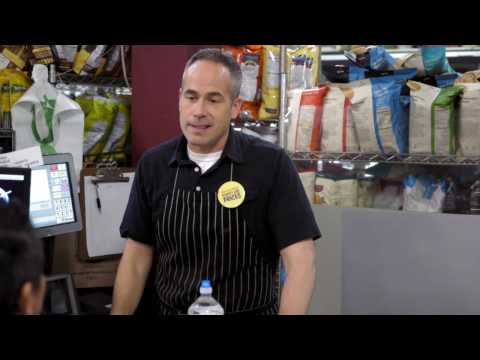 The production team took over a grocery store in Nob Hill, one of the city's wealthiest enclaves where median rents exceeded $5,000. To ensure the stunt felt authentic, the agency hired professional sign artist Jeff Marshall to hand-paint "sale" banners and shelf tags that mimicked standard retail branding. Unsuspecting shoppers were filmed via hidden cameras as a straight-faced cashier processed their orders. The resulting film captured the visceral confusion of residents realizing their "life hours" didn't stretch nearly as far as they assumed.
Impact Beyond the Register
The campaign, timed for the November 2016 holiday season, triggered a 500% spike in web traffic to Tipping Point within 48 hours. Beyond the digital engagement, the effort raised $1.5 million in direct donations. Creative Co-Chairman Rich Silverstein noted the project was a "tale of two cities," aiming to make the abstract struggle of the "have-nots" tangible for the "haves." The initiative also included contextual print media, such as fake coupon inserts in the San Francisco Chronicle that featured the inflated prices to reach residents in their own homes.
Creative Strategy Deconstructed
Company
Tipping Point Community could credibly deliver impactful social awareness campaigns by leveraging real-world scenarios to highlight societal issues.
Category
Charity campaigns often use statistics or emotional appeals, but rarely create direct, immersive experiences for the general public.
Customer
The audience often struggles to truly grasp the daily financial strain of poverty, needing a tangible experience to foster genuine empathy.
Culture
A growing awareness of economic inequality and the cost of living crisis made the campaign's message about financial hardship highly relevant.
Company
Tipping Point Community could credibly deliver impactful social awareness campaigns by leveraging real-world scenarios to highlight societal issues.
Category
Charity campaigns often use statistics or emotional appeals, but rarely create direct, immersive experiences for the general public.
Strategy:
Translate abstract societal burdens into visceral, real-world experiences to cultivate profound empathy and understanding.
Customer
The audience often struggles to truly grasp the daily financial strain of poverty, needing a tangible experience to foster genuine empathy.
Culture
A growing awareness of economic inequality and the cost of living crisis made the campaign's message about financial hardship highly relevant.
Strategy:
Translate abstract societal burdens into visceral, real-world experiences to cultivate profound empathy and understanding.
Strategy Technique
Make the Invisible Visible
It transformed the abstract concept of poverty's financial burden into a concrete, shocking experience. By inflating prices, the campaign made the invisible daily struggle of low-income individuals viscerally apparent.
Explore Technique
Creative Technique
Dramatize the Problem
The campaign made the abstract concept of poverty tangible by forcing customers to confront exorbitant prices for basic necessities. This direct experience highlighted the daily financial struggle faced by low-income individuals.
Explore Technique