Toyota: Humanity
Toyota aimed to differentiate its vehicles by highlighting the meticulous human engineering and thoughtful design that went into them. The client wanted to communicate this "human touch" to car buyers, moving beyond purely functional benefits to foster a deeper emotional connection with the brand.
Creative Idea
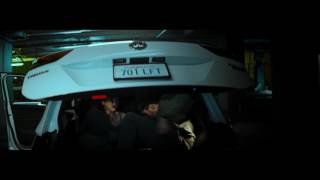
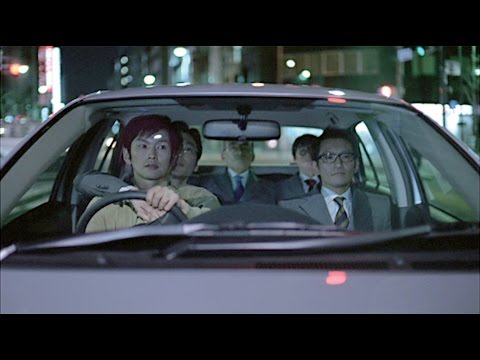
Men literally became car components, embodying Toyota's "human touch."
Toyota's "Humanity" campaign used surreal visual metaphors, literally showing men as car components, to dramatize the hidden "human touch" and thoughtful engineering behind their vehicles, making an abstract benefit tangible and memorable.
The Human Mechanics of the Toyota Way
Practical Magic and Techno-Surrealism
To achieve the ad’s signature "techno-surrealist" aesthetic, the directing duo Ne-O (Jake Knight and Ryoko Tanaka) insisted on a heavy reliance on practical effects. Rather than building the car entirely in post-production, the team utilized real actors interacting with physical vehicle components. The most technically demanding sequence involved the "human airbags," which required meticulous synchronization between the actors blowing up balloons and the camera’s motion to simulate a high-speed impact. These physical performances were later polished by Glassworks London, who handled the seamless VFX integration of the humans into the car's chassis.
A Viral Pioneer in the Pre-Social Era
Launched in 2006, the campaign arrived just as YouTube was beginning to reshape global media consumption. Despite being a regional ad for the Japanese market, "Humanity" became an early viral sensation, amassing millions of organic views at a time when digital "shareability" was not yet a standard KPI. This global reach helped Toyota maintain a "warm" brand image during its rapid expansion into the world’s largest automaker - a transition that often risks making a brand feel cold or overly corporate.
From the Museum to the Super Bowl
The ad’s legacy extends far beyond its initial broadcast. It was honored by the AICP Show for Advertising Excellence and is now part of the permanent collection at the Museum of Modern Art (MoMA). Industry critics, including *Slate’s* Seth Stevenson, praised its "distinctively Japanese" eagerness to meld man and machine. The "Human Touch" concept proved so durable that it served as the creative blueprint for Toyota’s later recovery campaigns in 2010 and even influenced the 2025 "Department of Human Technology" series.
Creative Strategy Deconstructed
Company
Toyota possessed a commitment to thoughtful engineering and design, aiming to infuse human-centricity into every vehicle component.
Category
Car advertising often focuses on performance, luxury, or technology, rarely personifying the meticulous human effort behind design.
Customer
Consumers desired cars that felt intuitively designed and cared for, seeking a deeper connection beyond mere mechanical functionality.
Culture
A cultural appreciation for craftsmanship and the human element in products, amidst increasing automation and mass production, made this resonate.
Company
Toyota possessed a commitment to thoughtful engineering and design, aiming to infuse human-centricity into every vehicle component.
Category
Car advertising often focuses on performance, luxury, or technology, rarely personifying the meticulous human effort behind design.
Strategy:
Visually manifest an intangible brand quality to create a memorable emotional connection with the product.
Customer
Consumers desired cars that felt intuitively designed and cared for, seeking a deeper connection beyond mere mechanical functionality.
Culture
A cultural appreciation for craftsmanship and the human element in products, amidst increasing automation and mass production, made this resonate.
Strategy:
Visually manifest an intangible brand quality to create a memorable emotional connection with the product.
Strategy Technique
Dramatize the Invisible Benefit
The campaign made the abstract "human touch" in car design visible and tangible. By personifying car components, it effectively dramatized an often-overlooked engineering benefit.
Explore Technique
Creative Technique
Break visual expectations
The ad literally transforms men into car parts, subverting reality to illustrate the "human touch." This surreal visual metaphor creates an unexpected and memorable representation of design.
Explore Technique
Craft Breakdown
This campaign's exceptional craft lies in its inventive visual storytelling and seamless integration of surreal elements to convey a brand message. The production design and cinematography work together to make a fantastical concept feel tangible and amusing.
The seamless integration of human actors into car components, making them appear as functional parts of the vehicle, is a testament to inventive and precise production design.
The camera work effectively frames the visual gags, utilizing a variety of shots from wide cityscapes to tight close-ups that highlight the surreal elements and the car's features.
The consistent visual style, color palette, and integration of the human elements into the car's aesthetic create a cohesive and highly creative look and feel.
The clever use of exaggerated 'swoosh' and 'click' sounds synchronized with the human 'car parts' movements significantly enhances the comedic and surreal effect.
“The campaign's magic truly comes from the synergy between production design, cinematography, and sound design, which together transform a simple concept into a memorable and highly creative advertisement.”