Toyota: Landcruiser Network
Toyota Australia needed to deepen its connection with Outback communities and reinforce the LandCruiser's indispensable role beyond transport. They aimed to demonstrate genuine care for remote residents' safety by addressing the critical lack of emergency communication infrastructure, ultimately enhancing brand loyalty and perception.
Creative Idea
Toyota transformed LandCruisers into life-saving emergency communication hotspots in the Outback.
Toyota leveraged the LandCruiser's ubiquitous presence in the Australian Outback to turn each vehicle into a mobile emergency hotspot. This created a life-saving mesh network, transforming a symbol of rugged exploration into a vital communication infrastructure for isolated communities.
Turning the Outback into an Interplanetary Network
From Hong Kong Riots to the Flinders Ranges
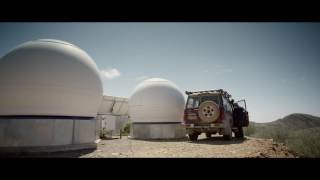
The inspiration for the LandCruiser Emergency Network (L.E.N.) came from an unlikely source: the 2014 Hong Kong pro-democracy protests. Creative lead James Théophane observed how activists used mesh-networking apps like FireChat to communicate after cellular towers were disabled. This sparked the idea to use Toyota’s 90% market share in remote Australian towns to build a "crowdsourced" infrastructure. The production team chose the Flinders Ranges for the pilot because the terrain is so unforgiving that the Mars Society uses it to test space exploration vehicles.
NASA Tech in a 4x4
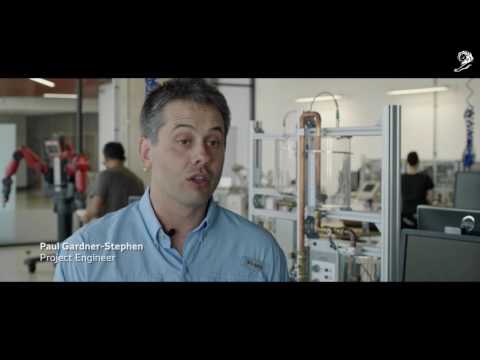 The system utilized Delay Tolerant Networking (DTN), a "store-and-forward" protocol developed by Dr. Paul Gardner-Stephen of Flinders University. This is the exact technology used by NASA on the International Space Station to manage communications across the solar system. By installing these plug-and-play devices, each LandCruiser became a mobile hotspot with a 25km range, passing emergency packets from vehicle to vehicle until they reached a base station.
Engineering a Real World Utility
The project moved beyond traditional advertising into the realm of "Utility as Advertising." National Marketing Manager Brad Cramb pushed the initiative to solve "black spot anxiety," a genuine fear for those traversing the 5 million square kilometers of Australia without signal. While the production was "fraught with obstacle after obstacle" due to the technical requirements of building a functional emergency system, it successfully covered 50,000 square kilometers during its pilot phase. This provided Toyota dealers with a unique selling proposition that reinforced the brand’s "legendary toughness" through tangible public service rather than just a slogan.
Creative Strategy Deconstructed
Company
Toyota leveraged its LandCruiser's unparalleled ubiquity and reliability in the Australian Outback as a trusted vehicle.
Category
The vehicle category typically focuses on performance, durability, or luxury, not on creating emergency communication networks.
Customer
Outback residents felt isolated and vulnerable due to vast mobile black spots, fearing emergencies without communication.
Culture
A cultural emphasis on community resilience and safety in remote areas, especially during natural disasters, resonated strongly.
Company
Toyota leveraged its LandCruiser's unparalleled ubiquity and reliability in the Australian Outback as a trusted vehicle.
Category
The vehicle category typically focuses on performance, durability, or luxury, not on creating emergency communication networks.
Strategy:
Transform existing brand assets into essential community infrastructure to solve critical societal challenges.
Customer
Outback residents felt isolated and vulnerable due to vast mobile black spots, fearing emergencies without communication.
Culture
A cultural emphasis on community resilience and safety in remote areas, especially during natural disasters, resonated strongly.
Strategy:
Transform existing brand assets into essential community infrastructure to solve critical societal challenges.
Results
The LandCruiser Emergency Network launched in August 2015, with an ongoing community pilot in 50,000 km² of remote Outback South Australia. Government agencies and NGOs around Australasia have sought involvement in the project to use the technology in their emergency responses. Toyota's Product Planning Department is currently exploring distribution and integration of L.E.N. into LandCruisers in Australia and around the world.
50,000 km²
pilot area in remote Outback South Australia
Ongoing
community pilot project
Involvement sought
from government agencies and NGOs
Strategy Technique
Build an Utility, Not an Ad
Toyota didn't just advertise a solution; they created a tangible, life-saving communication network. The LandCruiser Emergency Network became a functional product, addressing a critical need in the Outback.
Explore Technique
Creative Technique
Unexpected Utility
The campaign transformed the LandCruiser from just a vehicle into a vital emergency communication hub. This provided an unexpected, life-saving utility in remote, signal-deprived areas of the Outback.
Explore Technique
Craft Breakdown
The campaign's craft excels in engineering a novel, life-saving communication network by transforming existing vehicles into mobile emergency hotspots, supported by robust physical and digital design.
The engineering and development of the mesh network's 'store and forward' communication protocol and geo-tagging capabilities demonstrate exceptional technical innovation to create a functional, life-saving system in remote areas.
The creation of the robust, 'plug-and-play' physical device that seamlessly integrates with LandCruisers to facilitate network connectivity showcases strong functional and industrial design.
The campaign's messaging, including on-screen text and explanations, clearly and persuasively articulates the dire problem of Outback isolation and the elegant, practical solution of the LEN.
The strategic insight to leverage the existing ubiquity of Toyota LandCruisers as the distributed infrastructure for a new emergency communication network represents an innovative use of a pre-existing asset.
“The campaign's genius lies in the synergistic combination of advanced communication technology with a practical, durable device, innovatively deployed using existing vehicle infrastructure to solve a critical real-world problem.”