Cautious brands get backlash at the same rate as bold ones - 20% vs 21%
backlash rate
cautious organizations20%
less cautious organizations21%
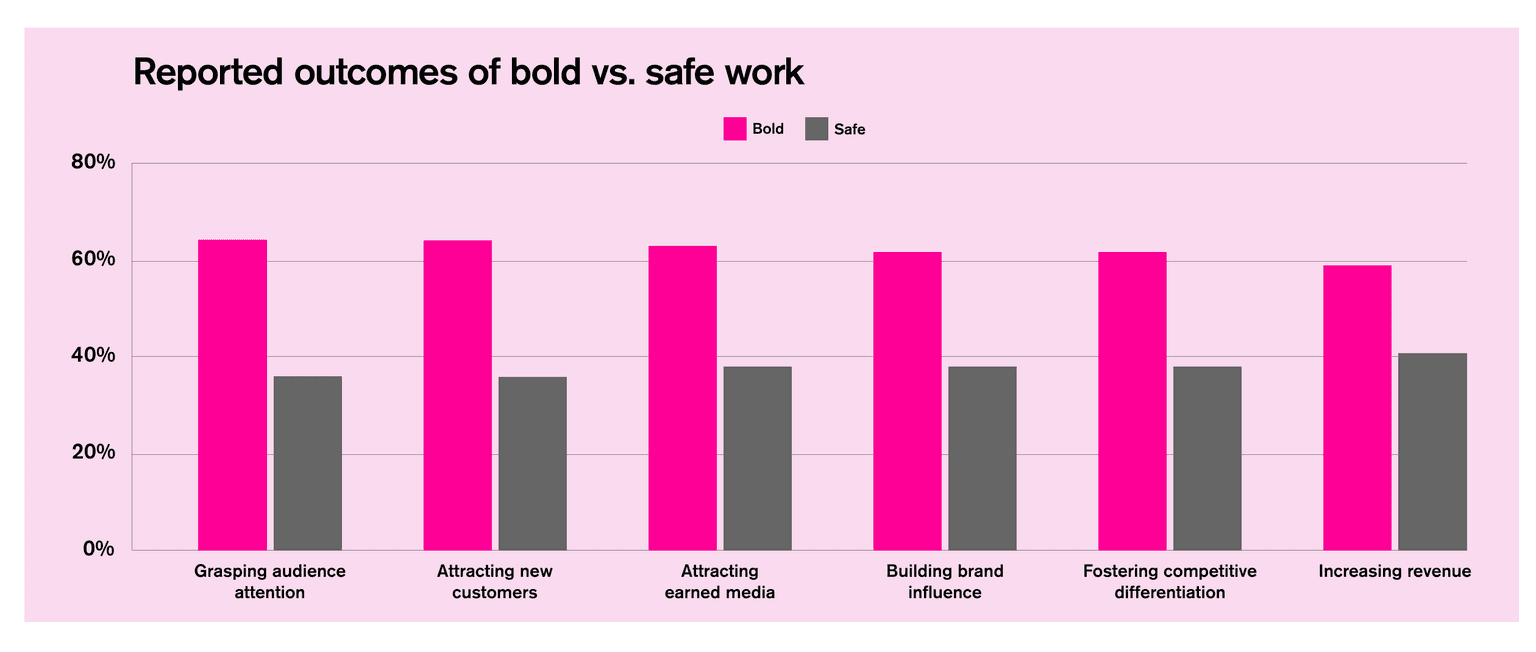
The false-safety paradox: cautious and less cautious organizations attract public backlash at near-identical rates - 20% vs 21%. Silence does not provide the protection it promises, and 58% of leaders say missing opportunities through caution is more common than suffering negative outcomes from boldness.
We wrote about this
More from this source
Stat86% of marketing leaders say the environment is more unpredictable than three years agoStat88% of marketing leaders believe bold work is more effective in uncertain timesStat85% of leaders agree a delayed decision can be more damaging than an imperfect oneStatThe more uncertainty leaders face, the more they say bold work outperforms safe workStat92% of chaos-winning campaigns carried brand-building objectivesStatChaos-winning work leads with owned media and leans on social for amplificationPrincipleIn chaos, information is the attention hook, not the boring partPrincipleThe audience grants the right to participate - it flows from what the brand is known forPrincipleThe top unlock for bold work is evidence it drives commercial resultsPrincipleRight to participate x reason to watch x ability to execute - miss one and the work fails differentlyCaseDove's Real Beauty: one brand idea applied to every new chaos since 2004, $28.34bn incremental revenueStatChaos-winning campaigns measure PR value and brand equity, not short-term ROI