Not all brand assets are created equal
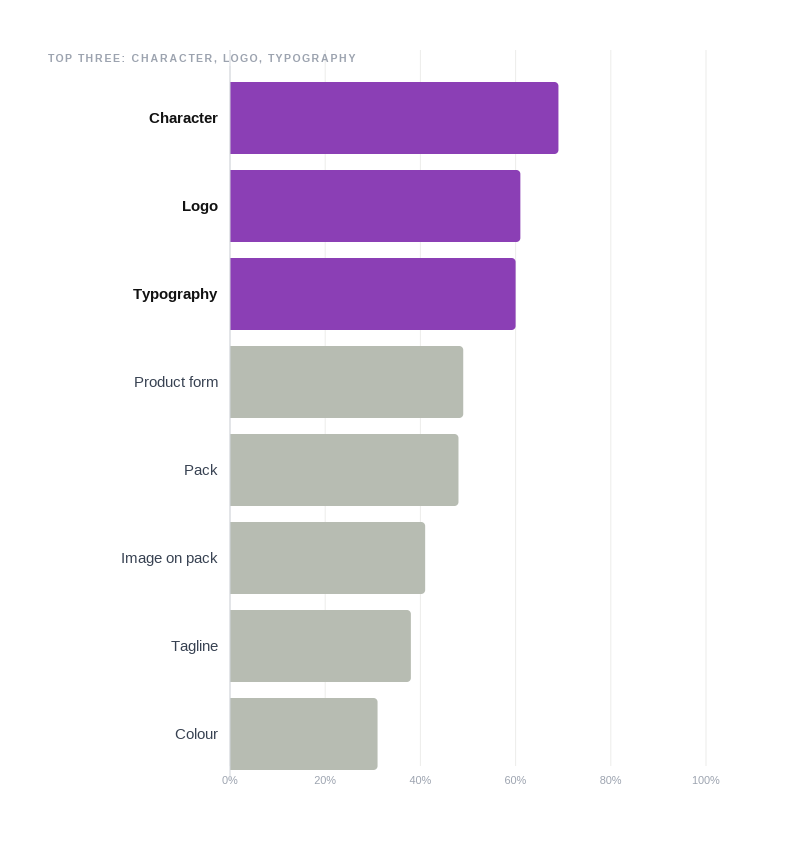
Ehrenberg-Bass tested 1,281 brand identity elements across 13 FMCG categories and 19 countries. Brand characters led on uniqueness with 47% scoring highly, followed by logos at 37%. Colours, taglines and pack images scored lowest. The top three asset types for uniqueness are character, logo and typography.
More from this source
StatSonic cues: the most effective asset for branded attentionStatAudio appears in under 10% of video ads, even though sonic cues are the single most effective asset type for branded attention.StatSonic cues: the most effective asset for branded attentionStatShowing brand assets beats saying the brand nameStatShowing brand assets beats saying the brand nameStatBrands with the strongest distinctive assets are 52% more salient (Kantar) and their campaigns perform 62% better (Ebiquity) than weaker-asset rivals.StatCompanies change brand assets without hard dataStatCampaigns with a recurring "Fluent Device" character are 23% more likely to gain market share.PrincipleThe Distinctive Brand Assets Grid plots every brand element by fame and uniqueness, and crossing 50% on either axis is enough to be reliably linked to - or to dominate recall of - the brand.PrincipleThe Distinctive Brand Assets Grid sorts brand elements into four quadrants: ignore or test, avoid solo use, investment potential, and use or lose.PrincipleBrand distinctiveness comes from the combination of elements together, not from any single element alone.PrincipleBrand assets have to be learned through consistent messaging, which is why they wear out far less often than advertising creative does.