P&G has spent more money making people cry about mothers than most countries spend on opera. Six iconic mom ads that work with the cliche, against it, and around it.
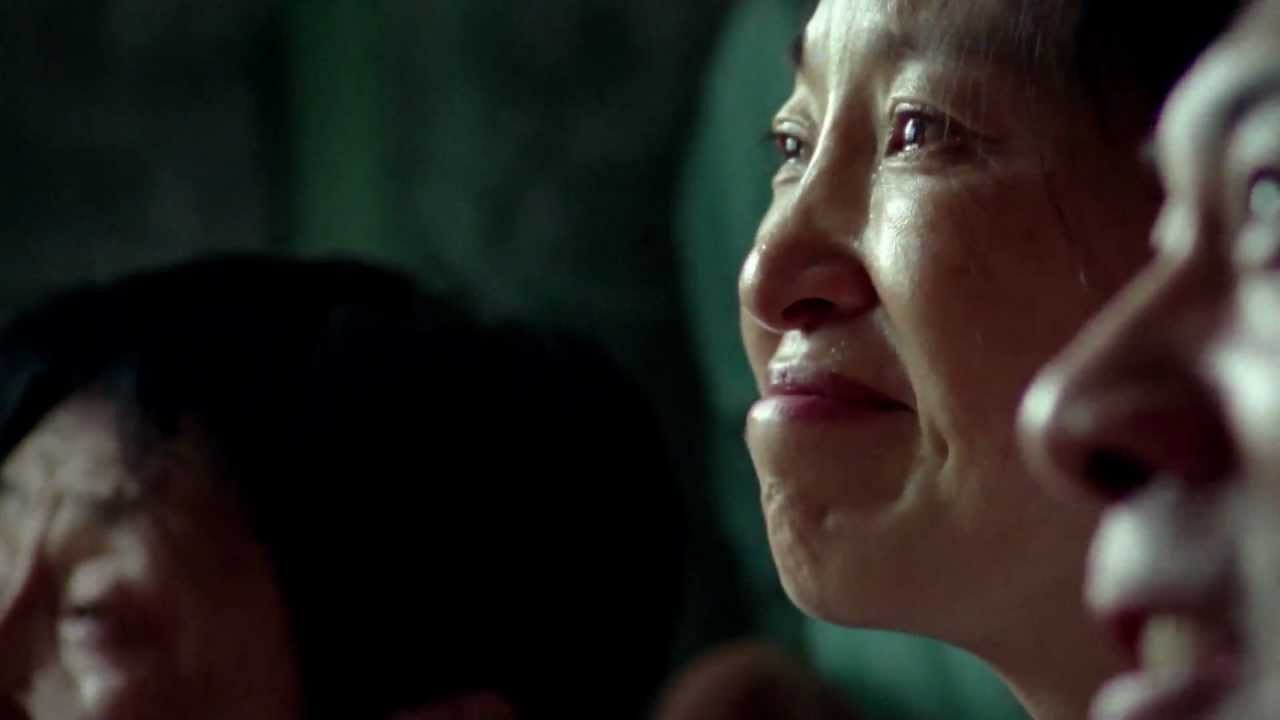
Procter & Gamble has spent more money making people cry about mothers than most countries spend on opera. The math works. The strategy is so dependable that for a decade everyone has copied it: piano in a minor key, slow-motion silver medal, mom in the audience, fade to logo. "Single tear, mom in the stands" became the default mode for any brand selling anything maternal.
The interesting mom ads of the last fifteen years are the ones that figured out what to do with that ceiling. Some go all in on the cry button. Some quietly refuse it. Both can be brilliant. Neither is accidental.
Here are six of them - the famous, the politically improbable, the recent, the irreverent.
1. P&G: Proud Sponsors of Moms (2012)
The Olympic spot that built the playbook everyone has been copying since. Wieden+Kennedy Portland made the case that every Olympic athlete is, in some accountable way, the result of a mother who got up earlier than anyone else for a decade. The ad does not name the brands inside P&G's portfolio. It does not list a single product. It just argues that motherhood is the original endurance sport and Procter & Gamble noticed first.
It is the most efficiently weaponised cry-button in modern advertising. Critique it all you like. It still works in 2025. The thing about cliches is they only become cliches because they had to be invented first, and someone here was first.
2. Colombia Ministry of Defense: You Are My Son (2013)
Lowe-SSP3 Bogota collected childhood photos from the mothers of guerrilla soldiers hiding in the jungle, plastered them on banners along jungle access routes, and signed each one with the same line: "Before being a guerrilla, you are my son." Hundreds of fighters reportedly demobilised in response.
This is not a poster campaign. It is a behavioural-economics paper disguised as a poster campaign. The Ministry had spent years arguing with adults about ideology. The mothers reframed each soldier as an eight-year-old. The ad's job was to retrieve that eight-year-old from the jungle. It worked because no other actor in Colombia had the standing to make that argument.
3. Ariel: Share The Load (2017)
BBDO Mumbai redesigned wash care labels to read that laundry was a job for both partners, not just for women. A symbol on a clothing tag, ratified by manufacturers, became an artefact you could carry home from a store and argue about over dinner.
Sutherland would call this a "the obvious answer is wrong" move. The obvious detergent ad would tell women they deserve better. Ariel went the other way: it tried to update men. The medium was the message - a tag is a tiny instruction manual, and they put a new instruction in it.
4. PENNY: The Wish (2021)
A German mother sits across from her teenage son and admits her Christmas wish for him: that he gets back the messy, rebellious adolescence the lockdowns took from him. Late nights, first kisses, fights with his friends, all the milestones that happen badly the first time. Serviceplan Munich got a discount supermarket to say what every parent felt and could not articulate.
What is interesting is the brand fit. PENNY is the corner discount supermarket nobody romanticises. The ad does not try to make PENNY romantic. It uses the brand's small-scale honesty as the licence to say a small-scale honest thing. A premium brand could not have made this ad without sounding self-important.
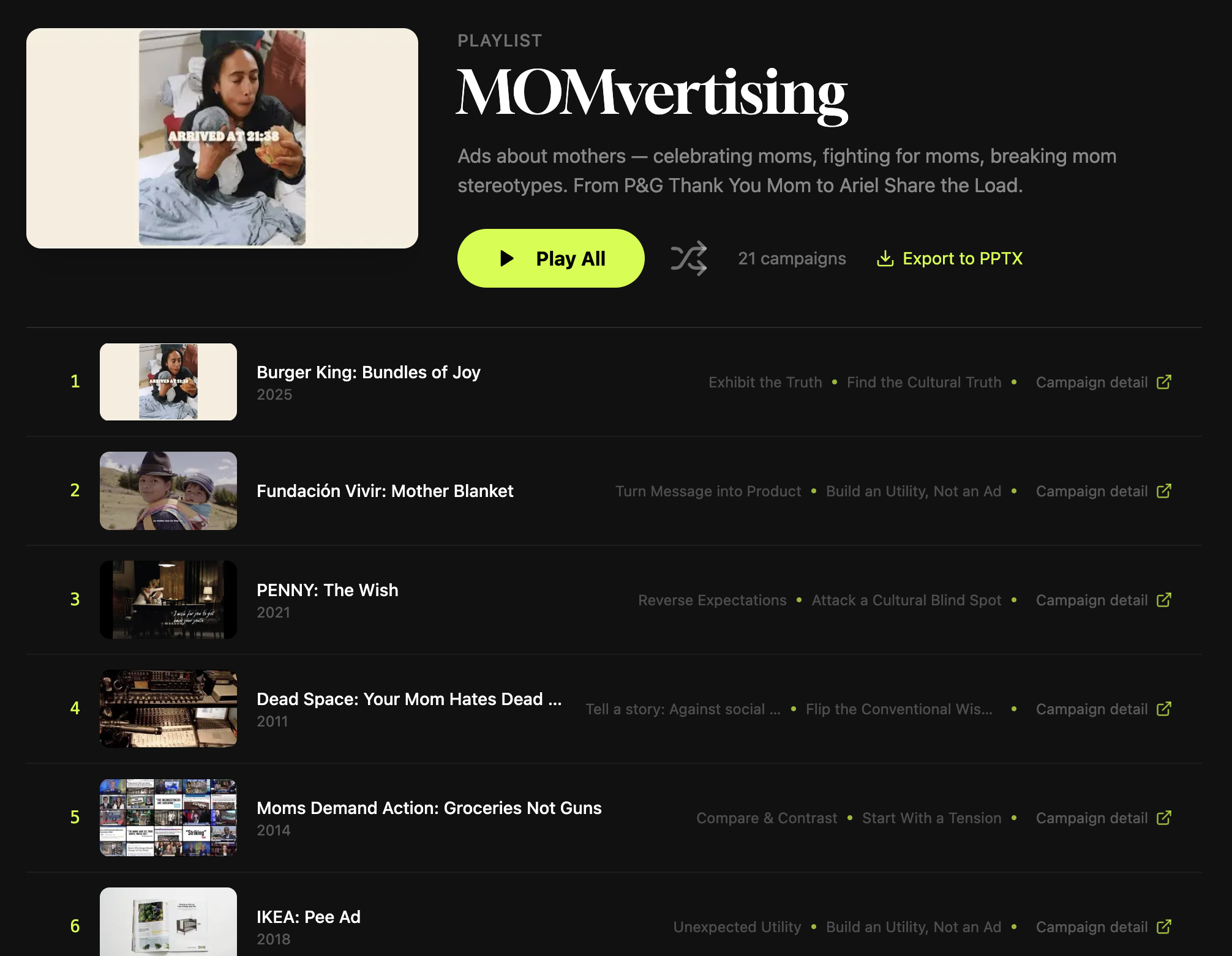
5. Burger King: Bundles of Joy (2025)
A 2025 campaign showing real mothers, hours after giving birth, eating a Whopper in a hospital bed. BBH London understood that the entire genre of post-partum advertising had been hijacked by formula brands and Instagram serenity, and that the actual physical reality of new motherhood includes craving a fast food burger so badly you can taste it before they bring it in.
This is the anti-cliche move. No piano. No silver medal. Just a woman, a burger, an honest hunger nobody had put on screen yet. The category is fast food. The insight is human. Burger King is the only fast-food brand brave enough to pull this off, which is also why every other fast-food brand is going to copy this in the next 18 months and miss what made it land.
6. Liquid Death: Kegs For Pregs (2025)
A limited-edition five-litre mini-keg of mountain water aimed squarely at pregnant women, fronted by Kylie Kelce. Liquid Death's in-house team noticed that pregnancy advertising had decided expectant mothers were either glowing or exhausted, and absolutely never the person at the party holding the keg. So they made the keg, filled it with water, and put a pregnant celebrity's name on the side.
This is reverse expectations as a brand discipline. Every other beverage brand sells pregnancy as a quiet phase you endure with a mug. Liquid Death sells it as a phase you survive by pretending you're still at the tailgate. The water hasn't changed. The cultural permission has. Only a brand whose entire identity is "water that looks like beer" gets to make this ad without being told to sit down.
The pattern that keeps the genre alive
Mom advertising has a structural problem. The default emotional frequency is so wide and so well-mapped that any new ad lands inside someone else's vibration. Most campaigns just retune the same instrument: a mother who sacrifices, a mother who endures, a mother who deserves recognition and almost gets it.
The six ads above each broke a different part of that frame.
P&G owned the cliche by being the first to define it.
Colombia bypassed advertising and turned mothers into negotiators.
Ariel reframed the audience: instead of speaking to mothers, it instructed husbands.
PENNY moved the timeline: not honoring the past, but mourning a stolen present.
Burger King refused the genre's emotional vocabulary entirely.
Liquid Death handed the keg back to the woman everyone assumed had to put it down.
The brief that produces forgettable mom ads is "honour the women who do everything." The briefs that produced these did not start with the mother at all. They started with a specific job to be done - demobilise a soldier, update a domestic norm, validate a craving, mourn a stolen year - and asked what role a mother had to play to make it real.
The full set of 21 mothers, each holding a different job to be done, lives at MOMvertising.