Budweiser - Bring Home The Bud
Budweiser approached Wieden+Kennedy New York + Africa São Paulo with an urgent challenge. Two days before the World Cup, their stadium beer sales were banned, jeopardizing a multi-million dollar sponsorship and leaving thousands of liters stranded. The brand needed to salvage its investment - turning this disaster into a global marketing opportunity and engaging football fans worldwide, transforming a negative situation into positive brand buzz and relevance.
Creative Idea
Budweiser promised its banned World Cup beer to the winning country, turning a disaster into a global fan rallying cry.
Budweiser turned a potential sponsorship disaster into a global marketing opportunity by promising to give away its entire Qatar beer stock to the World Cup winning country, creating a viral #BringHomeTheBud campaign that engaged fans worldwide and transformed a ban into a playful, interactive challenge.
The $75 Million Pivot That Won the World Cup
The 48 Hour Crisis Sprint
When the stadium beer ban was announced just 48 hours before kickoff, the team at Wieden+Kennedy New York and Africa São Paulo scrapped four years of planning in a single weekend. The viral response began with a simple, three - word tweet - "Well, this is awkward..." - which set the tone for the entire pivot. Rather than litigating the ban, the team leaned into the absurdity, transforming thousands of stranded shipping containers into physical "trophies." These containers were dropped into major city squares in London and Buenos Aires as OOH billboards that could only be unlocked by the eventual tournament victor.
Global Reach and Digital Distribution
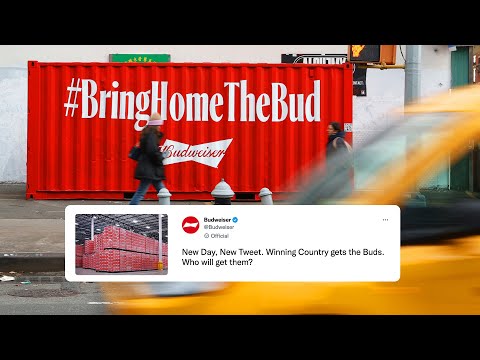 The campaign achieved a staggering 255 billion impressions and generated over $400 million in earned media value. By the end of the tournament, Budweiser owned 70% of all sponsor mentions, effectively drowning out competitors who had access to the stadiums. To fulfill the promise in Argentina, the brand utilized the TaDa delivery app to distribute over 1 million beers and 1.2 million coupons to fans in Buenos Aires, Rosario, and Cordoba. This Direct - to - Consumer (DTC) strategy turned a logistics nightmare into a massive first - party data acquisition play.
Music and Cultural Integration
The campaign was anchored by the anthem "The World Is Yours to Take," produced by Lil Baby and featuring a sample of Tears for Fears. Directed by Director X, the accompanying film was the first music video in history to be filmed on - site during a FIFA World Cup. The content featured global icon Lionel Messi, whose eventual victory in the final provided the perfect narrative conclusion to the #BringHomeTheBud saga.
Creative Strategy Deconstructed
Company
Budweiser possessed a massive, stranded inventory of beer in Qatar and a high-stakes sponsorship suddenly invalidated by local policy. They had the logistical scale and brand irreverence to transform a supply-chain disaster into a global reward.
Category
Sports sponsors typically rely on rigid, pre-planned stadium activations and expensive broadcast spots. The category usually reacts to regulatory setbacks with legal disputes or quiet compliance rather than bold, reactive, and public-facing pivots.
Customer
Fans felt frustrated by the sudden stadium alcohol ban and the friction between football culture and host nation restrictions. They craved a way to express their passion and a tangible reason to root for their country.
Culture
The 2022 World Cup was defined by the tension between local laws and global fan expectations. Budweiser leveraged the reactive social zeitgeist where brands that lean into irony and chaos gain massive cultural resonance.
Company
Budweiser possessed a massive, stranded inventory of beer in Qatar and a high-stakes sponsorship suddenly invalidated by local policy. They had the logistical scale and brand irreverence to transform a supply-chain disaster into a global reward.
Category
Sports sponsors typically rely on rigid, pre-planned stadium activations and expensive broadcast spots. The category usually reacts to regulatory setbacks with legal disputes or quiet compliance rather than bold, reactive, and public-facing pivots.
Strategy:
Transform a sponsorship crisis into a high-stakes reward that makes every fan a stakeholder in the brand's inventory.
Customer
Fans felt frustrated by the sudden stadium alcohol ban and the friction between football culture and host nation restrictions. They craved a way to express their passion and a tangible reason to root for their country.
Culture
The 2022 World Cup was defined by the tension between local laws and global fan expectations. Budweiser leveraged the reactive social zeitgeist where brands that lean into irony and chaos gain massive cultural resonance.
Strategy:
Transform a sponsorship crisis into a high-stakes reward that makes every fan a stakeholder in the brand's inventory.
Results
The campaign achieved: over 4MM+ social mentions, 3.1B social reach, and Budweiser became the #1 World Cup Brand.
4MM+
social mentions
3.1B
social reach
#1
World Cup Brand
Strategy Technique
Celebrate the Super-Fans
Budweiser turned World Cup fans into the heroes of the campaign, promising to give away its entire beer stock to the winning country's supporters. By channeling fan passion and loyalty into a viral global celebration, the brand rewarded its super-fans' devotion and made their enthusiasm the driving force of the entire activation.
Explore Technique
Creative Technique
Challenge
Budweiser created an audacious challenge to give its stranded World Cup beer to the winning nation. This engaged fans globally, turning a disaster into an interactive, playful competition.
Explore Technique
Craft Breakdown
This campaign's craft is exceptional in its quick-thinking strategic idea, transforming a major brand crisis into a global viral success through clever copywriting, expert digital activation, and strategic media planning.
The campaign's core message and the memorable #BringHomeTheBud hashtag were expertly crafted, providing simple, clear, and highly shareable hooks that fueled widespread engagement.
The campaign masterfully leveraged social media platforms and real-time events to cultivate organic conversations and virality, achieving billions in reach and millions of mentions through its agile digital execution.
“The brilliance stemmed from the rapid combination of a timely, bold idea with effective messaging and digital distribution, turning an unforeseen challenge into a brand triumph.”