Coke: Share a Coke
Coke approached Ogilvy & Mather Sydney in 2012. The brand urgently needed to reconnect with young Australian consumers, who were disengaging. The client wanted a campaign that would make the product feel personal and shareable again, driving re-engagement and conversation around Coca-Cola.
Creative Idea
Coke replaced its logo with popular names, turning bottles into personal, shareable connections for youth.
Coca-Cola replaced its iconic logo with 150 popular Australian names on its bottles to personally reconnect with young consumers. The campaign invited people to "Share a Coke" by finding bottles with their name or their friends' names, turning the product into a shareable, personalized experience.
Printing the Unprintable and the Bort Easter Egg
Reversing an Eleven Year Decline
The campaign - known internally as Project Connect - achieved what many thought impossible: it reversed a decade long sales slump. In the United States, soft drink sales rose by 2% during the launch summer, while sales of participating packages surged by 11%. The impact on youth engagement was even more profound, with over 1.25 million more teens trying a Coke in the US during 2014. Socially, the brand saw an 870% spike in Facebook traffic, fueled by over 500,000 photos shared under the #ShareACoke hashtag.
The HP Indigo Printing Challenge
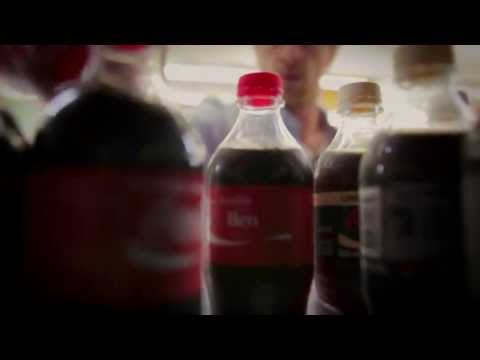 Executing the vision required a massive technical overhaul of global supply chains. Coke partnered with HP to utilize HP Indigo WS6000 series Digital Presses, which ran 24/7 for three months in Europe alone to produce 800 million labels. A bespoke "Coca-Cola Red" digital ink was formulated specifically for this project to ensure the color matched the iconic brand standard across different printing methods. Logistics were equally complex, involving 225 trademark searches and a blacklist of 5,287 blocked words to prevent offensive names from reaching shelves.
From The Simpsons to Gen Z
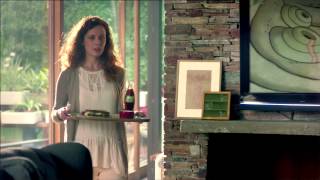
The campaign is filled with cultural nuances and inside jokes. The very first custom can ever printed featured the name "Bort", a nod to a famous *Simpsons* gag. While the US launch featured actress Jessica Lowndes, later iterations evolved to include Tyler, The Creator and a Gen Z relaunch featuring The Temper Trap. Marketing Director Lucie Austin noted the psychological hook of the project, stating that because a name is as personal as a fingerprint, the reaction to seeing it on a bottle is "childlike."
Creative Strategy Deconstructed
Company
Coca-Cola possessed the world's most iconic visual assets and a global distribution engine capable of massive SKU variation. They had the brand equity to temporarily remove their logo because the red-and-white trade dress remained instantly recognizable.
Category
The soft drink category traditionally relied on mass-market, one-size-fits-all advertising focused on refreshment and lifestyle imagery. Packaging was historically treated as a static container for the brand rather than a dynamic tool for consumer self-expression.
Customer
Australian youth viewed Coke as a legacy brand that lacked personal relevance or modern social utility. They craved 'social currency'—tangible items and experiences that allowed them to feel seen and connected within their digital and physical peer groups.
Culture
The rise of the 'Me-centric' social media era made personalization the ultimate form of modern status and self-curation. Culture was shifting from passive consumption of global brands toward active participation in personalized, shareable brand stories.
Company
Coca-Cola possessed the world's most iconic visual assets and a global distribution engine capable of massive SKU variation. They had the brand equity to temporarily remove their logo because the red-and-white trade dress remained instantly recognizable.
Category
The soft drink category traditionally relied on mass-market, one-size-fits-all advertising focused on refreshment and lifestyle imagery. Packaging was historically treated as a static container for the brand rather than a dynamic tool for consumer self-expression.
Strategy:
Sacrifice brand ego for individual identity to transform mass-market packaging into personalized social currency for disconnected youth.
Customer
Australian youth viewed Coke as a legacy brand that lacked personal relevance or modern social utility. They craved 'social currency'—tangible items and experiences that allowed them to feel seen and connected within their digital and physical peer groups.
Culture
The rise of the 'Me-centric' social media era made personalization the ultimate form of modern status and self-curation. Culture was shifting from passive consumption of global brands toward active participation in personalized, shareable brand stories.
Strategy:
Sacrifice brand ego for individual identity to transform mass-market packaging into personalized social currency for disconnected youth.
Results
In the previous month alone, 50% of teens and young adults hadn't tasted a 'COKE'. 870% increase in Facebook traffic. 12,020,000 earned media impressions. 76,000 virtual 'COKE' cans shared. 378,000 custom 'COKE' cans printed. In just 3 short months: Young adult consumption increased 7%. 5% more people were drinking 'COKE'. Transactions grew by 3%. Volume increased by 4%.
870%
increase in Facebook traffic
12,020,000
earned media impressions
7%
increase in young adult consumption
Strategy Technique
Find the Cultural Truth
The campaign tapped into the cultural truth of young consumers desiring personalization and shareable experiences. By making bottles personal, Coke re-engaged a disengaging audience and sparked widespread conversation.
Explore Technique
Creative Technique
Customize and personalize
Coke replaced its logo with 150 popular names, offering mass personalization. This gave consumers the "illusion of choice" by finding their name, making the product feel uniquely theirs.
Explore Technique
Craft Breakdown
The campaign's craft was exceptional in its seamless integration of personalized design onto mass-produced packaging, scaled through sophisticated production techniques and digital platforms to create a widespread, interactive consumer experience.
The meticulous visual integration of diverse names onto the iconic Coca-Cola packaging maintained brand consistency while creating a highly personalized and universally appealing aesthetic across all campaign touchpoints.
The complex logistical and physical engineering involved the mass production of millions of unique labels for bottles and cans, alongside the construction and deployment of custom can kiosks and large-scale interactive outdoor media.
The development of interactive online platforms, including a website for virtual custom can creation and social media voting mechanisms, was complemented by the technology enabling real-time name display on interactive billboards.
The creation of engaging physical touchpoints, most notably the custom can printing kiosks, provided consumers with a hands-on, memorable brand interaction and an immediate personalized product.
“The combination of personalized visual design with large-scale production, digital interactivity, and physical experiential elements created a deeply engaging and highly shareable campaign ecosystem.”