Earth Hour 2007
World Wildlife Fund and the city of Sydney needed to engage citizens in a tangible action against climate change, demonstrating that individual efforts could collectively make a difference. The goal was to create a highly visible, symbolic event to raise awareness and inspire broader participation in environmental conservation.
Creative Idea
One city's symbolic hour of darkness sparked a global movement against climate change.
Earth Hour 2007 transformed a simple act of turning off lights for one hour into a powerful, collective symbol of commitment against climate change, proving that individual actions, when united, could create a significant, measurable impact and spark a global movement.
How The Big Flick Became A Global Blackout
From Despair To Hope
The project was born from a "think tank" at the Sydney Hilton Hotel in 2006, where Andy Ridley and Todd Sampson sought to pivot environmental messaging away from fear - mongering. Originally titled "The Big Flick," the creative team at Leo Burnett famously killed the name because it sounded like a "crappy radio station." The strategy also narrowly avoided a political confrontation; an early draft proposed turning off every light in Sydney except those at Kirribilli House to shame Prime Minister John Howard for his climate inaction. Instead, the team chose an inclusive, "open source" model that allowed the brand to spread without corporate gatekeeping.
The Power Of A Symbolic Hour
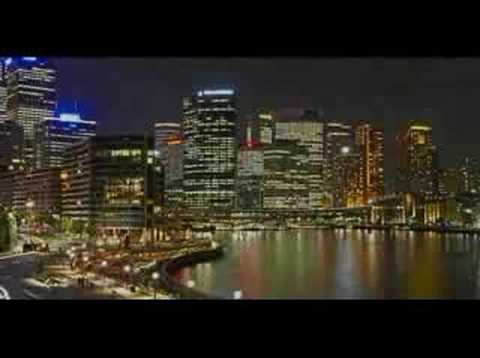 On March 31, 2007, the results were immediate and measurable. Over 2.2 million individuals - roughly 56% of Sydney - participated alongside 2,100 businesses, including McDonald’s, which doused its iconic Golden Arches. The event achieved a 10.2% reduction in energy consumption across the city, removing the equivalent of 48,613 cars from the road for one hour. This success was bolstered by high - profile advocates like Cate Blanchett and Lord Mayor Clover Moore, while the cultural momentum of Al Gore’s An Inconvenient Truth provided the perfect zeitgeist for the launch.
Scaling Beyond The Sixty
What began as a local Sydney activation quickly scaled into a global phenomenon, reaching 50 million people across 35 countries by its second year. A key factor in this growth was the involvement of PricewaterhouseCoopers (PwC), the first major sponsor to lend corporate credibility to the radical idea. While the original logo featured a simple "60" for the minutes, it was later updated to "60+" to encourage participants to look beyond the hour.
Creative Strategy Deconstructed
Company
World Wildlife Fund (WWF) leveraged its global environmental advocacy and partnership capabilities to organize a city-wide climate action.
Category
Environmental activism often felt overwhelming, abstract, or required significant individual sacrifice, leading to public disengagement and inaction.
Customer
People felt powerless against the vastness of climate change, seeking a tangible, easy way to contribute and feel part of a larger solution.
Culture
Growing global awareness of climate change's devastating impacts, highlighted by figures like Al Gore, created urgency for collective action.
Company
World Wildlife Fund (WWF) leveraged its global environmental advocacy and partnership capabilities to organize a city-wide climate action.
Category
Environmental activism often felt overwhelming, abstract, or required significant individual sacrifice, leading to public disengagement and inaction.
Strategy:
Empower collective symbolic action to foster global environmental responsibility and measurable impact.
Customer
People felt powerless against the vastness of climate change, seeking a tangible, easy way to contribute and feel part of a larger solution.
Culture
Growing global awareness of climate change's devastating impacts, highlighted by figures like Al Gore, created urgency for collective action.
Strategy:
Empower collective symbolic action to foster global environmental responsibility and measurable impact.
Results
The Earth Hour 2007 campaign in Sydney, Australia achieved significant results: * 2.2 million people turned off their lights. * It resulted in a 10.2% energy reduction in the city (surpassing the target of 5%). * This energy reduction was equivalent to taking 48,000 cars off the road. * 2,100 corporations joined the movement, indicating substantial corporate action and engagement. * The campaign entered popular culture and social activism, generating widespread media coverage (newspapers, websites). * It led to a positive tipping point, expanding globally in 2008 to include cities like Melbourne, Brisbane, Manila, Tel Aviv, Copenhagen, Toronto, Chicago, Atlanta, Phoenix, and San Francisco.
2.2M
people turned off lights
10.2%
energy reduction in Sydney
48,000
cars off the road equivalent
Strategy Technique
Turn the Brand Into a Movement
Earth Hour successfully transformed a local event into a global movement against climate change. It empowered individuals and communities to collectively take action, fostering widespread participation and advocacy.
Explore Technique
Creative Technique
Amplify the Small
The campaign amplified the small, symbolic act of turning off lights for one hour into a powerful, collective statement. This demonstrated how a seemingly minor individual effort could contribute to a significant, measurable impact.
Explore Technique
Craft Breakdown
This campaign's craft is exceptional in its ability to translate an abstract global issue into a tangible, participatory, and visually compelling call to action, effectively leveraging design and strategic dissemination to achieve widespread engagement.
The core of the campaign, which is the collective act of turning off lights, created a powerful, shared global experience that made participants feel part of a larger movement and witness its immediate impact.
The '60 Earth Hour' logo, incorporating the Earth's texture within the numbers, provided an instantly recognizable and iconic visual identity that effectively communicated the campaign's message and duration.
The concise and impactful messaging, from framing the problem ("What can one person do?") to the clear call to action ("Turn out for Earth Hour"), powerfully articulated the campaign's purpose and inspired participation.
The strategic outreach and coordination across a single city initially, then globally, effectively mobilized diverse audiences, corporations, and media outlets, amplifying the campaign's reach and impact.
“null”