Omo: Dirt is Good
Omo needed to shift parental perceptions around children’s messy play. The client observed parents increasingly restricting kids due to dirt concerns. The brand wanted a campaign that celebrated getting dirty as essential for childhood development and learning. The goal was to encourage parents to let children explore freely, positioning Omo as a supportive ally in their kids' growth, thereby strengthening brand loyalty.
Creative Idea
Omo told parents messy play and dirt helped children learn and grow.
Persil's "Dirt is Good" campaign celebrates children's messy play and learning through outdoor experiences, arguing that getting dirty is a natural and important part of childhood development. The campaign aims to encourage parents to let their kids explore, play, and get messy, positioning Persil as a supportive brand that understands and values children's natural curiosity and growth through play.
Turning Stains into a Four Billion Euro Miracle
From Chemicals to Human Development
The campaign’s shift from functional stain removal to "human development" triggered a commercial transformation. Global sales skyrocketed from €400 million in 2004 to over €4.3 billion by 2023. In Vietnam, the brand achieved a dominant 70% market share, and the campaign’s message was so culturally resonant that the Vietnamese government reportedly restructured the national school curriculum to prioritize outdoor play. This success was fueled by the "Play Deficit" insight - the alarming reality that children in some regions spend less time outdoors than high-security prisoners.
Soluble Tags and Dirt Sculptures
Production often pushed technical boundaries to prove the "Dirt is Good" philosophy. In Lebanon, TBWA\RAAD developed the Omo Tag, a 100% water-soluble clothing label made of detergent that dissolved in the wash. For the "Futures" print series, world-champion sand artist JooHeng Tan used 18 tons of dirt to craft massive sculptures of children as doctors and astronauts. Another initiative, the Book of Dirt, featured a physical story that remained invisible until children rubbed dirt onto the pages to "unlock" the narrative.
Global Icons and Local Icons
While the campaign is anchored by global ambassadors like Usain Bolt, Bukayo Saka, and Vini Jr., its strength lies in local adaptation. In India, the slogan was localized to "Daag Acche Hain" (Stains are Good), becoming a permanent part of the national lexicon. Despite initial internal resistance in Asia - where dirt was historically linked to poverty - the agency successfully reframed mess as a "sacrifice" for learning. Today, the brand sustains this through Outdoor Classroom Day, a movement engaging over 3 million children across 100 countries.
Creative Strategy Deconstructed
Company
Omo possesses a high-performance formula capable of removing the toughest stains, giving the brand the functional authority to stop talking about the 'how' of cleaning. This technical superiority allows them to shift the conversation toward the emotional value of the mess itself.
Category
The laundry category traditionally focused on the 'war on dirt,' using sterile settings and portraying stains as failures of parenting or hygiene. Most competitors competed on the aggressive removal of stains, reinforcing a culture of anxiety and domestic perfectionism.
Customer
Parents experience a tension between wanting to protect their children's clothes and wanting to encourage their curiosity and development. They feel a deep-seated guilt that modern life is too sanitized, depriving their children of the raw, tactile experiences they had growing up.
Culture
A rising cultural movement against 'helicopter parenting' and screen-time dominance created a desire for more experiential, outdoor childhoods. Society began to value 'resilience' and 'discovery' over pristine appearance, making the 'messy' child a symbol of a healthy life.
Company
Omo possesses a high-performance formula capable of removing the toughest stains, giving the brand the functional authority to stop talking about the 'how' of cleaning. This technical superiority allows them to shift the conversation toward the emotional value of the mess itself.
Category
The laundry category traditionally focused on the 'war on dirt,' using sterile settings and portraying stains as failures of parenting or hygiene. Most competitors competed on the aggressive removal of stains, reinforcing a culture of anxiety and domestic perfectionism.
Strategy:
Reframe dirt as a badge of healthy development to transform Omo into a partner in experiential childhood growth.
Customer
Parents experience a tension between wanting to protect their children's clothes and wanting to encourage their curiosity and development. They feel a deep-seated guilt that modern life is too sanitized, depriving their children of the raw, tactile experiences they had growing up.
Culture
A rising cultural movement against 'helicopter parenting' and screen-time dominance created a desire for more experiential, outdoor childhoods. Society began to value 'resilience' and 'discovery' over pristine appearance, making the 'messy' child a symbol of a healthy life.
Strategy:
Reframe dirt as a badge of healthy development to transform Omo into a partner in experiential childhood growth.
Strategy Technique
Reframe the Problem
The campaign reframed "dirt" from a parental concern to an essential part of childhood development. This shifted perception, encouraging messy play.
Explore Technique
Creative Technique
Celebrate an Attitude
The campaign promotes an ethos that messy play is vital for child development. Omo becomes a symbol for this positive attitude towards dirt and exploration.
Explore Technique
Craft Breakdown
This campaign's craft is exceptional due to its masterful combination of visual effects, particularly the seamless transformation, and evocative music, which together create a deeply emotional and memorable narrative.
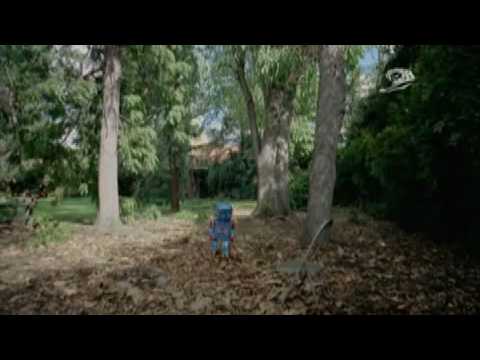
The transformation of the robot's hand into a human hand, and the subsequent morphing of the robot into a boy, is executed with incredible seamlessness and visual grace, making the magical transition utterly believable and impactful.
The original score is perfectly tailored to the emotional arc, beginning with curiosity, evolving into whimsical exploration, and culminating in a soaring, hopeful melody that underscores the profound transformation and joy of childhood.
The stark contrast between the dark, confined closet and the vibrant, sun-drenched natural environment powerfully enhances the narrative of liberation and discovery, effectively using color and light to convey emotion.
The camera work fluidly captures the robot's perspective and eventual transformation, utilizing a variety of shot types from intimate close-ups to expansive wide shots, enhancing both the emotional depth and the sense of scale in the journey.
“The true magic of this campaign comes from the powerful synergy between the visual effects and the music, which together elevate the narrative of transformation into an emotionally resonant and unforgettable experience.”