The Millennium School: The Open Door Project
The Millennium School tasked FCB Delhi with addressing India's national education emergency. With millions of children out of school, the brand wanted to leverage its premium infrastructure to provide elite-level education to underprivileged communities. The goal was to create a sustainable model that bridged the gap between India's wealthy and poor, positioning the school as a leader in social responsibility and educational equity.
Creative Idea
Repurposed empty private school classrooms after hours to provide elite education for slum children.
The Millennium School addressed India's education crisis by opening their elite private infrastructure for a "second shift," providing underprivileged children the same high-quality facilities and teachers that usually sit idle after 2 PM, effectively turning underutilized assets into a social revolution.
The Second Shift for Eighty Four Million Children
The Kamathipura Connection
To capture the raw reality of India's education gap, director Anaam Mishra filmed on-site in the narrow, high - pressure alleys of Kamathipura, Mumbai’s red - light district. The production team spent two years researching the behavioral patterns of underprivileged children to ensure the "second shift" curriculum was inclusive. The casting of the protagonist, Abishek, was the result of a nationwide search for a child who could balance a specific "North - Eastern facial appeal" with fluent Hindi. To maintain authenticity, several production members and the casting team worked pro - bono, viewing the project as a mission rather than a commercial assignment.
Repurposing the Shared Economy
The campaign applied the logic of Uber and Airbnb to social infrastructure. By utilizing high - end private school facilities that typically sit empty after 3:00 PM, the project turned underutilized assets into a solution for the 8.4 crore children out of school. While the pilot launched with 80 children in Noida, the model was designed to scale across all 55 Millennium Schools, targeting a reach of 9,000 students.
A Global Creative Benchmark
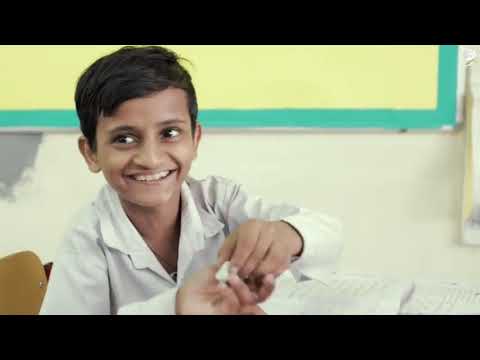
The centerpiece film, *Bhukkad* (The Hungry One), reframed the concept of hunger from a physical need to an intellectual one. This narrative approach caught the attention of David Droga, who noted that the project succeeded by "repurposing the privileges" of the elite. CCO Swati Bhattacharya penned the script to challenge the social taboos that prevent children from red - light areas from entering private spaces, effectively turning a brand campaign into a national conversation on the Right to Education.
Creative Strategy Deconstructed
Company
A national chain of elite private schools with high-end facilities that remained vacant every afternoon.
Category
Private education often remains an exclusive bubble, ignoring the massive population of out-of-school children just outside their gates.
Customer
Underprivileged families want quality education for their children but are barred by the high cost and exclusivity of private institutions.
Culture
The "shared economy" trend proved that underutilized assets like cars or rooms could be repurposed to solve systemic inefficiencies.
Company
A national chain of elite private schools with high-end facilities that remained vacant every afternoon.
Category
Private education often remains an exclusive bubble, ignoring the massive population of out-of-school children just outside their gates.
Strategy:
Repurpose underutilized private infrastructure as a scalable public utility to bridge systemic social inequality.
Customer
Underprivileged families want quality education for their children but are barred by the high cost and exclusivity of private institutions.
Culture
The "shared economy" trend proved that underutilized assets like cars or rooms could be repurposed to solve systemic inefficiencies.
Strategy:
Repurpose underutilized private infrastructure as a scalable public utility to bridge systemic social inequality.
Results
In just 3 months, 55 schools have opened their doors to underprivileged children. The project has successfully partnered with 6 of the biggest NGOs in India, including Teach India, Learning Links Foundation, AIDNOIDA, Salaam Baalak Trust, and Kolkata Rista. The campaign has received significant media attention, with quotes from Muse by Clio calling it 'A love letter to curious souls' and The Times of India stating 'The open door film opens hearts.'
55
schools opened in 3 months
6
major NGO partners
35,000
children in the Millennium Schools network
Strategy Technique
Build an Utility, Not an Ad
Instead of just raising awareness through a traditional commercial, the brand created a functional "second shift" system that physically solved the problem of infrastructure scarcity for underprivileged education.
Explore Technique
Creative Technique
ESG
The campaign directly addresses the UN Sustainable Development Goal for Quality Education by repurposing private infrastructure for public good, creating a sustainable, scalable model for social impact within the school's existing operations.
Explore Technique
Craft Breakdown
The campaign's strength lies in its simple yet profound logistical innovation, brought to life through compelling storytelling that bridges two disparate worlds of Indian society.
The core of the craft is the strategic repurposing of existing infrastructure (schools and buses) during 'dead time' to solve a massive social issue.
The visual contrast between the slums and the schools is handled with dignity and cinematic beauty, avoiding 'poverty porn' in favor of vibrant realism.
The narrative is framed powerfully as a 'national emergency' and a 'revolution,' using clear, impactful language to explain a complex logistical shift.
The use of the school's physical space as a character in the story—from silent halls to buzzing classrooms—is central to the campaign's message.
“The magic comes from the synergy between the logistical 'Media Planning' of school hours and the 'Cinematography' that makes the transition between these two worlds feel seamless and inevitable.”