Fairphone: The World's First Modular Smartphone
Fairphone tasked Seymourpowell London with designing a smartphone that could prove a fairer, more sustainable electronics industry was possible. They needed to move beyond a niche activist audience to reach conscious mainstream consumers. The goal was to create a high-performance device that prioritized longevity, repairability, and ethical material sourcing, challenging the industry's standard 24 - month replacement cycle.
Creative Idea
Engineered a modular smartphone that users could repair and upgrade themselves without tools.
Fairphone challenged the electronics industry's planned obsolescence by designing a fully modular, ethically sourced smartphone. By making repairability the core product feature, they transformed a complex device into a transparent, long-lasting tool for social and environmental change.
The Smartphone Designed to be Opened
17,418 Pre-orders for a Prototype
The campaign successfully proved that a market existed for ethical electronics by securing 17,418 pre-orders before mass production even began. Over its lifecycle, the Fairphone 2 reached 114,835 units sold. More impressively, the device’s longevity defied industry norms; by 2019, 40% of devices remained in active use, far outlasting the standard 18 - 24 month upgrade cycle. This durability contributed to a 30% reduction in CO2 emissions over the phone's five-year use scenario.
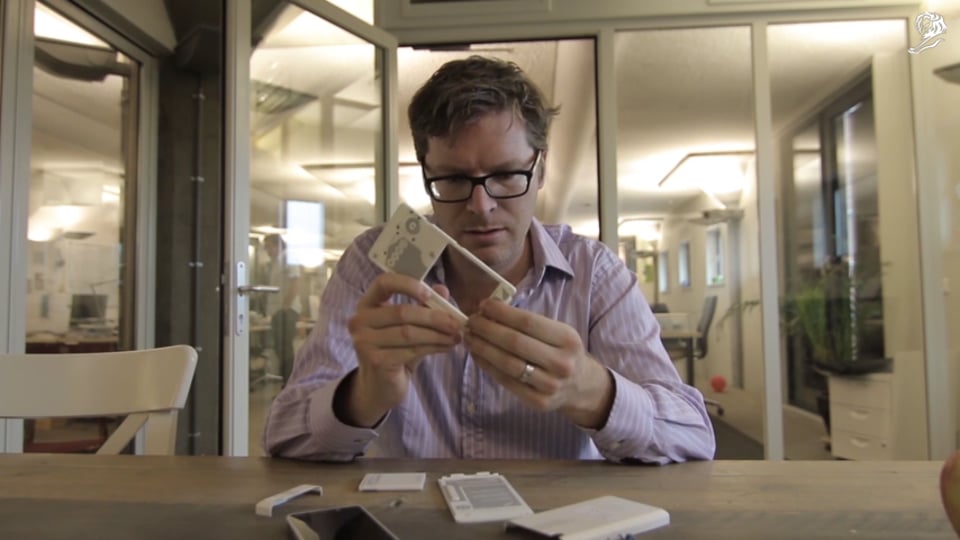
Seven Modules and a Dutch Standard
Tracing Conflict-Free Supply Chains
The production went beyond hardware design to address the "hidden" side of tech. The team traced supply chains to secure Fairtrade-certified gold from Peru and conflict-free tin and tantalum from the Democratic Republic of Congo. Founder Bas van Abel noted that the goal was to combat the lack of transparency in the industry, stating that when consumers don't understand how a product is made, they lack the power to change the system. This transparency extended to a full Life Cycle Assessment and a public cost breakdown of the €525 retail price.
Creative Strategy Deconstructed
Company
A social enterprise committed to ethical sourcing and long-lasting hardware design.
Category
The electronics industry relies on planned obsolescence and opaque, often exploitative supply chains.
Customer
Conscious consumers frustrated by fragile devices and the environmental cost of constant upgrades.
Culture
Growing global awareness of electronic waste and the 'Right to Repair' movement.
Company
A social enterprise committed to ethical sourcing and long-lasting hardware design.
Category
The electronics industry relies on planned obsolescence and opaque, often exploitative supply chains.
Strategy:
Materialize ethical values into a modular product architecture to disrupt the cycle of planned obsolescence.
Customer
Conscious consumers frustrated by fragile devices and the environmental cost of constant upgrades.
Culture
Growing global awareness of electronic waste and the 'Right to Repair' movement.
Strategy:
Materialize ethical values into a modular product architecture to disrupt the cycle of planned obsolescence.
Results
The Fairphone 2 was the first smartphone to receive a 10/10 repairability score from iFixit. The campaign helped Fairphone reach over 100,000 devices sold, proving market demand for ethical electronics. It successfully raised €9 million in crowdfunding and investment during the development phase. The project also established a more transparent supply chain, impacting over 10,000 workers in the electronics industry through improved labor standards and conflict-free mineral sourcing.
10/10
iFixit repairability score
100k+
devices sold
€9M
funding raised
Strategy Technique
Turn Brand Values Into Action
Fairphone didn't just talk about ethics; they engineered a physical product that embodied them. Every design choice, from conflict-free minerals to modular parts, serves as tangible proof of their mission.
Explore Technique
Creative Technique
Expose the Hidden
The campaign pulls back the curtain on the secretive smartphone supply chain and internal hardware. By showing exactly how the device is built and repaired, it turns transparency into a competitive advantage.
Explore Technique
Craft Breakdown
The campaign's craft is defined by its exceptional industrial design and transparent storytelling, showcasing the physical reality of making a complex electronic device.
The modular architecture of the phone itself is a masterclass in functional and ethical industrial design.
The tactile, close-up photography effectively communicates the physical quality and repairability of the components.