Ubisoft: Amazing Street Hack
Ubisoft needed to launch its new game, Watch Dogs, and convey the unique, empowering experience of its hacking gameplay to a skeptical gaming audience. The goal was to generate significant pre-release buzz and drive pre-orders by demonstrating the game's core mechanic in an unforgettable, authentic way.
Creative Idea
Unsuspecting customers experienced real-world hacking, dramatically revealing the game's power.
Ubisoft secretly installed a "hacking" app on unsuspecting customers' phones, orchestrating a series of escalating street pranks and a fake police confrontation, dramatically revealing the immersive power of the Watch Dogs game by letting people experience its core mechanic firsthand.
The App That Turned Los Angeles Into a Playground
4 Million Sales in Seven Days
The campaign’s impact on the bottom line was immediate and historic. By bridging the gap between digital gameplay and physical reality, BETC Paris helped *Watch Dogs* sell 4 million copies in its first week, making it the fastest-selling new IP in the history of the video game industry at that time. The digital footprint was equally massive, generating over 23 million views on YouTube and sparking more than 30 million Google search results as the "prank-vertising" trend reached its cultural zenith.
Orchestrating Chaos in a Repair Shop
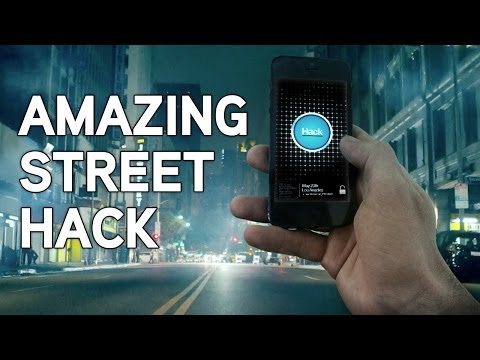 To pull off the illusion, director Cécilia Verheyden and the production team at Rita Films converted a real storefront in Los Angeles into a fake smartphone repair shop. While customers believed they were receiving a simple software "upgrade," a hidden production crew was manually triggering a series of high-stakes practical effects. These included street lights changing on command, ATMs "spewing" cash into the street, and a meticulously timed car crash that culminated in a staged police intervention.
The Fine Line of Authenticity
Account Director Thomas Boutte noted that the success of the stunt relied entirely on "attention to detail" to ensure the participants didn't "give the game away." This commitment to realism extended to the broader marketing ecosystem, which included the "WeAreData" website. That platform mapped real-time public data from major European cities, reinforcing the campaign's central, chilling message: the hyper-connected world of the game was already a reality. Despite industry debates regarding how much of the "reality" was staged, the cinematic execution set a new benchmark for experiential branded content.
Creative Strategy Deconstructed
Company
Ubisoft needed to launch Watch Dogs, a game centered on the unique and powerful mechanic of hacking, and generate significant pre-release excitement.
Category
Video game marketing typically relies on trailers and controlled demos, often failing to convey the visceral thrill of unique gameplay mechanics.
Customer
Gamers crave authentic, immersive experiences and the feeling of power, often skeptical of traditional marketing that merely describes gameplay.
Culture
A cultural appetite for viral content, hidden camera pranks, and experiential marketing made authentic, surprising real-world reactions highly shareable.
Company
Ubisoft needed to launch Watch Dogs, a game centered on the unique and powerful mechanic of hacking, and generate significant pre-release excitement.
Category
Video game marketing typically relies on trailers and controlled demos, often failing to convey the visceral thrill of unique gameplay mechanics.
Strategy:
Transform an abstract game mechanic into a tangible, surprising real-world experience to generate authentic excitement.
Customer
Gamers crave authentic, immersive experiences and the feeling of power, often skeptical of traditional marketing that merely describes gameplay.
Culture
A cultural appetite for viral content, hidden camera pranks, and experiential marketing made authentic, surprising real-world reactions highly shareable.
Strategy:
Transform an abstract game mechanic into a tangible, surprising real-world experience to generate authentic excitement.
Strategy Technique
Dramatize the Invisible Benefit
The campaign made the abstract concept of "hacking" tangible and thrilling by letting unsuspecting people experience its dramatic effects. This powerfully showcased the game's core appeal - the feeling of immense power and control.
Explore Technique
Creative Technique
Prank
The campaign secretly installed an app on customers' phones and orchestrated staged events, surprising them with "hacking" capabilities. This created genuine, unscripted reactions to the game's core mechanic in a real-world setting.
Explore Technique
Craft Breakdown
The campaign's craft is exceptional in its meticulous design and execution of an elaborate real-world experiential stunt, employing practical effects and convincing performances to create a believable illusion of hacking, captured authentically by hidden cameras.
The entire sequence of the prank, from the initial phone install to the escalating hacks and the final dramatic reveal, was brilliantly designed to immerse participants and elicit genuine reactions.
Crafting believable physical manipulations like sparking streetlights, responsive car alarms, the money-dispensing ATM, and the staged car crash required precise practical effects and environmental setup.
The charismatic shop owner and the convincing 'police' officers delivered performances critical to maintaining the prank's realism and escalating the tension for the unwitting participants.
The strategic placement and operation of hidden cameras were essential to authentically capture raw, unfiltered reactions and chaotic events, forming the core visual evidence of the campaign's success.
“The campaign's magic truly emerges from the seamless integration of a meticulously designed interactive experience with compelling practical effects and expert acting, all documented through authentic hidden-camera cinematography.”