WWF: Ant Rally
WWF needed to dramatically raise awareness for rainforest devastation and species protection on its 50th birthday. The goal was to engage a broad audience, including zoo visitors and online communities, to protest deforestation and inspire support for their mission, ultimately driving donations.
Creative Idea
Leaf-cutter ants carried laser-cut protest messages, turning their routine into viral activism.
WWF leveraged leaf-cutter ants' natural foraging routine, turning them into "ant-activists" carrying laser-cut protest messages for rainforest protection. This unexpected, organic demonstration for their 50th birthday went viral, transforming advertising into "antvertising" by making the message itself a living, marching spectacle.
The 500,000 Tiny Activists Who Went Viral
Laser Etched Leaves and Natural Instincts
To pull off the world's first "ant-vertising" stunt, BBDO Germany partnered with the Cologne Zoo to recruit a colony of 500,000 leafcutter ants. The production team, including production house Parasol Island and photographer Jochen Manz, utilized high - precision laser-cutting technology to etch slogans like "Save Trees" and "Ban the Saw" into real leaves. Because the ants naturally harvest and carry foliage back to their nests, no training or coercion was required. The insects simply performed their daily routine, effectively marching for five days through their terrarium in front of 30,000 zoo visitors.
From Zoo Exhibit to Global News
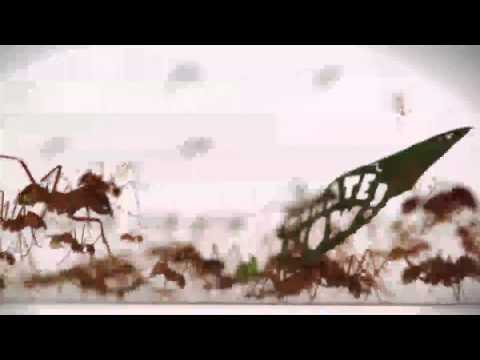 The campaign's genius lay in its documentation. By filming the tiny protest, the agency bypassed "charity fatigue" and reached a global audience. The case study video was picked up by major outlets like Newsweek and Gizmodo, turning a local ambient stunt into a viral sensation. Wolfgang Schneider, Chief Creative Officer, noted that this was the first time in history insects "stood up, marched out, and went viral." The Red Dot Jury later praised the work for underlining the sense of urgency in habitat loss more effectively than traditional media ever could.
A Tool for Political Lobbying
While many ambient stunts are one - off events, the Ant Rally proved its functional utility years later. In 2015, the concept was revived to target German Chancellor Angela Merkel during a high - stakes meeting with the Brazilian President. By staging a new rally specifically focused on Amazon conservation, WWF demonstrated that "bugvertising" was not just an award - winning creative gimmick, but a legitimate tool for political lobbying and environmental advocacy.
Creative Strategy Deconstructed
Company
WWF, a leading conservation organization, credibly orchestrated a unique, large-scale protest to protect endangered rainforests and species.
Category
Nature conservation campaigns often rely on traditional appeals, celebrity endorsements, or human-led protests, lacking a truly unexpected, organic voice.
Customer
Audiences sought novel, shareable ways to engage with environmental causes, feeling desensitized by conventional activism and seeking impactful, unique stories.
Culture
A culture valuing viral content, social media activism, and unexpected, authentic stories amplified the ants' unique protest into a global phenomenon.
Company
WWF, a leading conservation organization, credibly orchestrated a unique, large-scale protest to protect endangered rainforests and species.
Category
Nature conservation campaigns often rely on traditional appeals, celebrity endorsements, or human-led protests, lacking a truly unexpected, organic voice.
Strategy:
Leverage an overlooked natural phenomenon to create an unexpected, viral protest for environmental advocacy.
Customer
Audiences sought novel, shareable ways to engage with environmental causes, feeling desensitized by conventional activism and seeking impactful, unique stories.
Culture
A culture valuing viral content, social media activism, and unexpected, authentic stories amplified the ants' unique protest into a global phenomenon.
Strategy:
Leverage an overlooked natural phenomenon to create an unexpected, viral protest for environmental advocacy.
Results
The video states that the message reached 30,000 zoo visitors who saw the Ant Rally in person. The campaign gained significant media attention, being carried by online news, the bloggersphere, social networks (Twitter mentions with quotes like "World's biggest #riot in the #cologneZoo"), and traditional media (television news clips). It created buzz, with people calling it "Absolutely fascinating!" and "Haha... awesome! #theantrally". The campaign successfully transformed advertising into "antvertising" and went viral.
30,000
zoo visitors reached
500,000
ants participating
viral
media spread
Strategy Technique
Turn the Brand Into a Movement
The "Ant Rally" transformed WWF's message into a tangible, five-day protest march by 500,000 ants. This created a powerful, viral movement that amplified awareness for rainforest devastation and species survival.
Explore Technique
Creative Technique
Turn Message into Product
The campaign literally turned protest messages, laser-cut onto leaves, into the "product" carried by the ants. This made the message an integral, living part of the demonstration, ensuring it was seen and shared.
Explore Technique
Craft Breakdown
This campaign's craft is exceptional in its innovative use of a natural phenomenon for a powerful message, transforming tiny creatures into massive advocates. The core strength lies in its concept and the execution of 'antvertising' as a new media channel.
The campaign ingeniously created a living, moving protest by leveraging the natural behavior of leaf-cutter ants, turning a zoo exhibit into an active, immersive communication channel for a vital environmental message.
The precise laser cutting of messages and logos onto delicate leaves demonstrated meticulous design, ensuring legibility and impact despite the miniature scale and organic medium.
The concise and impactful messages ('SAVE TREES!', 'BAN THE SAW!', 'DONATE NOW!') were crafted to be instantly understandable and emotionally resonant, even when conveyed by ants on leaves.
The strategy to utilize a zoo, a place where people actively engage with nature, as the primary activation point, and then amplify it through diverse online and traditional media channels, was highly effective in generating widespread organic reach.
“The true genius of this campaign comes from the synergy of creating miniature, precise protest signs (Design) and having half a million living creatures carry them in a public, engaging way (Experiential Design), which then captured global attention through clever messaging (Copywriting) and strategic dissemination (Media Planning).”