2026Coca-ColaConsumer GoodsCase video
Coca-Cola: You Must Love Coke
Coca-Cola needed to increase brand presence within highly polarized Argentine football stadiums where their signature red was socially forbidden. The client challenged VML and Grey to find a way to advertise without violating local fan traditions. The goal was to maintain brand visibility and emotional connection with super-fans while navigating strict color-based rivalries in a culturally sensitive manner.
Creative Idea
Optical illusions allowed the brand to appear in forbidden colors using zero red ink.
Coca-Cola used optical illusions to display its branding in rival football stadiums using zero red ink. By relying on the human brain to reconstruct the iconic red, the brand respected fan tribalism while proving its deep cultural ubiquity.
The Illusion That Forced Fans To See Red
Engineering The Afterimage
The technical execution relied on chromatic adaptation, a phenomenon where the human eye adjusts to a color environment. By utilizing specific shades of blue, cyan, and high-contrast grey, the creative team at VML and Grey ensured that when a viewer stared at the OOH installations, their brain naturally compensated for the missing red. This forced the mind to "fill in" the iconic Coca-Cola logo, effectively turning the viewer into a co-creator of the brand’s visual identity. The production process required precise color calibration to ensure that 0% red ink was used in any physical print, a constraint that necessitated rigorous testing by Bumblebeat and The Circle Films to maintain brand recognition without the primary color palette.
Navigating The Rivalry
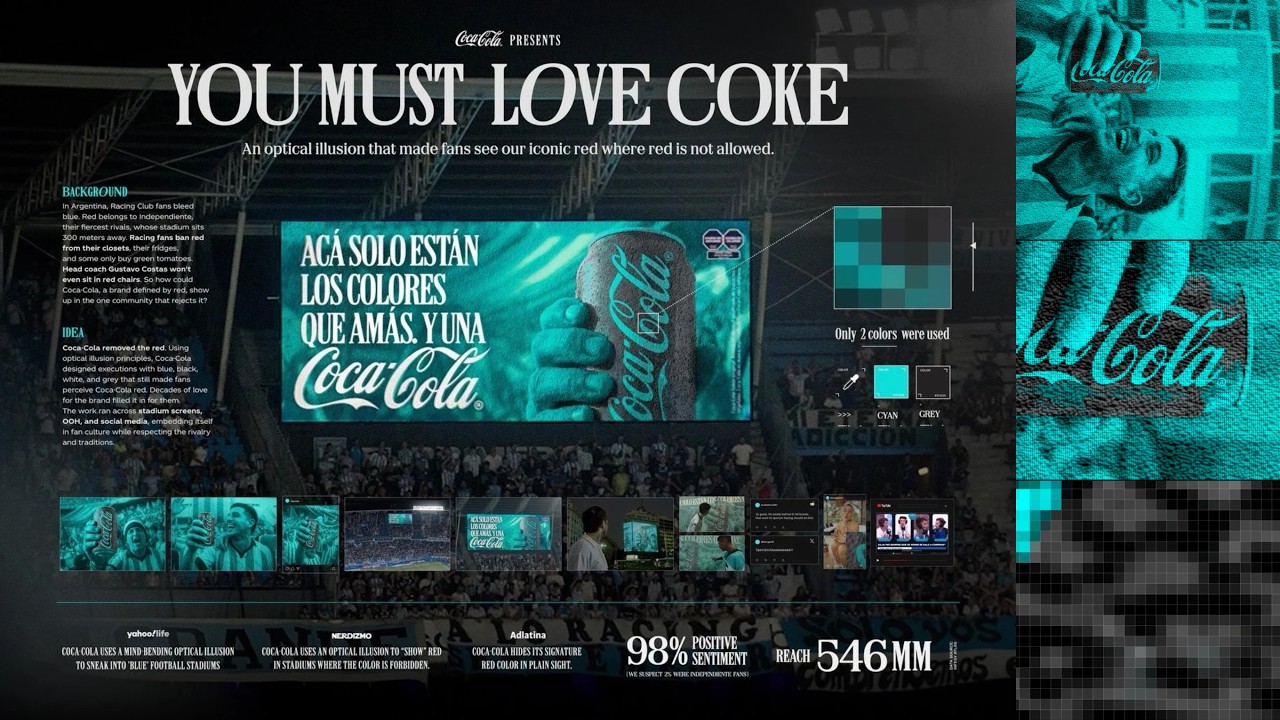
The campaign was strategically deployed in high-tension zones, specifically targeting the Estadio Presidente Perón in Avellaneda and the Arena do Grêmio in Porto Alegre. These locations were chosen for their extreme tribalism, where the color red is synonymous with rival clubs. By choosing to respect these local "no-go zones" rather than forcing the brand into them, Coca-Cola shifted its strategy from traditional interruption to cultural integration. This approach turned the brand into a topic of conversation among fans, who took to social media to verify the color composition of the billboards. The resulting organic engagement saw fans performing their own "pixel audits" in software like Photoshop, proving that the brand’s silhouette and typography are so deeply ingrained in consumer memory that the color red is almost secondary to the brand’s overall equity.
Creative Strategy Deconstructed
Company
Coca-Cola leveraged its massive, globally recognized visual equity and iconic bottle shape to remain identifiable without using its primary color.
Category
Beverage brands typically dominate sports environments with aggressive, loud, and color-saturated advertising that often ignores local fan sensitivities.
Customer
Passionate football fans wanted their intense club loyalty and stadium traditions respected, especially regarding rival colors.
Culture
The rise of hyper-local fan tribalism and the digital trend of fans auditing brand authenticity through social media scrutiny.
Company
Coca-Cola leveraged its massive, globally recognized visual equity and iconic bottle shape to remain identifiable without using its primary color.
Category
Beverage brands typically dominate sports environments with aggressive, loud, and color-saturated advertising that often ignores local fan sensitivities.
Strategy:
Leverage extreme brand recognition to bypass environmental restrictions through cognitive visual reconstruction.
Customer
Passionate football fans wanted their intense club loyalty and stadium traditions respected, especially regarding rival colors.
Culture
The rise of hyper-local fan tribalism and the digital trend of fans auditing brand authenticity through social media scrutiny.
Strategy:
Leverage extreme brand recognition to bypass environmental restrictions through cognitive visual reconstruction.
Results
The campaign achieved a reach of 546MM and generated 98% positive sentiment. It used ZERO red ink while successfully making fans perceive the iconic red Coca-Cola branding, earning massive free publicity across news outlets, YouTube sports shows, and social media platforms globally.
546MM
Total reach
98%
Positive sentiment
0
Red ink used
Strategy Technique
Turn Weakness Into Strength
Coca-Cola transformed the 'weakness' of its forbidden red branding into a creative asset. By embracing the restriction, they turned a potential barrier into a viral, respectful, and highly memorable brand statement.
Explore Technique
Creative Technique
Break visual expectations
The campaign subverts expectations by removing the brand's primary color to navigate a hostile environment. It forces the audience to mentally complete the image, creating a powerful, interactive visual experience.
Explore Technique
Craft Breakdown
This campaign's brilliance lies in leveraging color science and optical illusion to circumvent deep-rooted football rivalries, turning brand color restrictions into a viral artistic flex.
Crafted billboards engineered purely with cyan and gray pixels that trick the brain into seeing Coca-Cola's signature red without using a single drop of red ink.
Seamlessly integrated high-concept chromatic science directly into the hostile physical environment of a football stadium to engage fiercely loyal fans.