Value Ladder

    Most brands have one product and one price, which caps how much a customer can ever be worth and how much you can afford to spend acquiring them. The Value Ladder fixes both: a low-risk entry offer earns trust, then each rung delivers more value at a higher price. Higher lifetime value means you can outbid competitors on the front end, which is decisive in paid social.
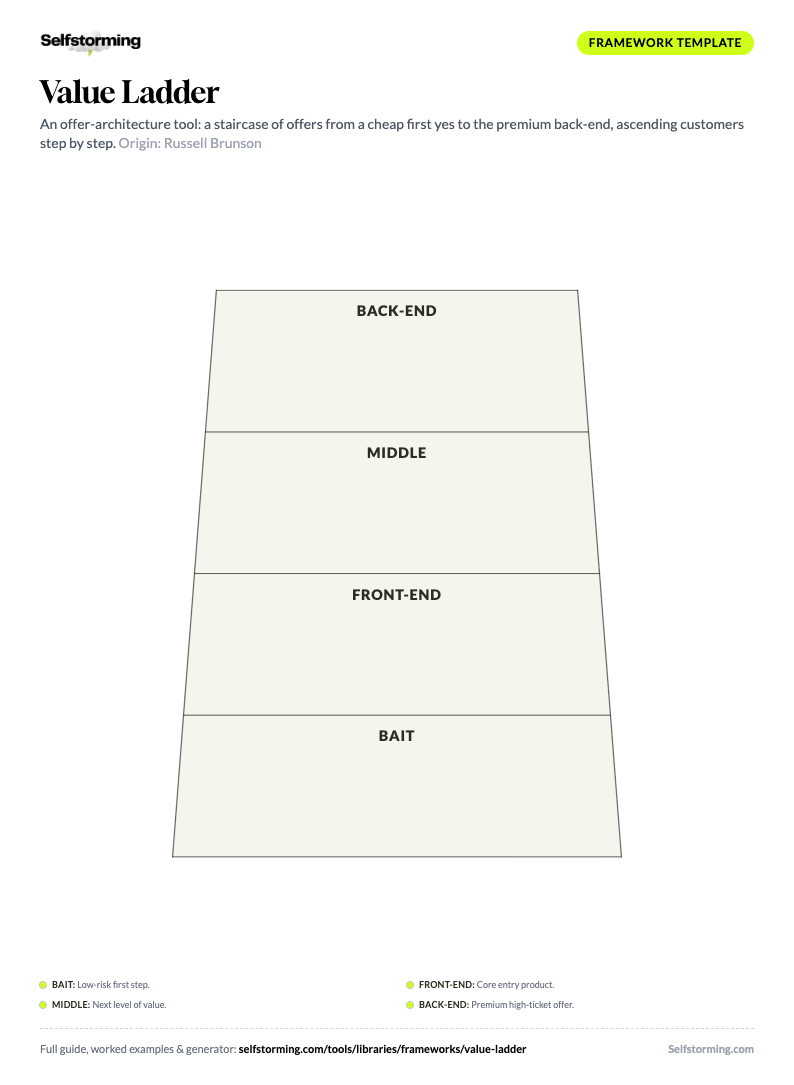
    Bait
    Front-end
    Middle
    Back-end

    VALUE LADDER

    “A staircase of offers, each delivering more value at a higher price, that ascends a customer from first touch to premium.”

    What is Value Ladder?

    Russell Brunson's ascending staircase of offers - from a free or low-ticket bait, up through your core product, to a premium high-ticket offer. Map the rungs and you maximise the lifetime value of every customer, instead of betting everything on one sale.

    Worked Examples

    Three real brands. Different categories, different sizes. Same framework, filled in.

    Example 1

    An online education brand

    Info product

    A four-rung ladder built for lifetime value.

    BaitA free email course that delivers one real win.
    Front-endA $49 self-paced course - the main entry product.
    MiddleA $499 cohort with coaching and community.
    Back-endA $5,000 done-with-you accelerator for serious students.

    The 4 Steps, Step by Step

    Each stage does one job. Here is what it is, what good looks like, and where it tends to leak.

    1. Bait

    What is the low-risk first step?

    A free or low-ticket offer that delivers a quick win and earns trust - a lead magnet, a tripwire, a sample. The goal is a first yes, not profit.

    In practiceA free guide or a $7 sample that proves you deliver before asking for more.

    Common mistakeMaking the first step too big or too risky, so nobody takes it.

    2. Front-end

    What is the core entry product?

    Your main entry product at an accessible price - the natural next step after the bait, where most customers first really buy.

    In practiceThe flagship product or starter plan most new customers begin with.

    Common mistakeA front-end so expensive it scares off the trust you just earned.

    3. Middle

    What is the next level of value?

    A higher-value offer for customers who want more - a bundle, an upgrade, a subscription. More value, more price.

    In practiceA bundle, a pro tier, or a subscription that deepens the relationship.

    Common mistakeNo middle rung, so you jump from cheap to premium and lose people.

    4. Back-end

    What is the premium high-ticket offer?

    Your premium, high-touch, high-ticket offer for your best customers - where much of the profit lives. Few buy it, but they fund everything.

    In practiceA done-for-you service, mastermind, or premium tier for your top customers.

    Common mistakeHaving no back-end, leaving your most willing buyers nothing more to buy.

    Origin & Lineage

    Popularised by Russell Brunson (DotCom Secrets) as the backbone of funnel strategy, building on classic direct-marketing ideas of front-end and back-end offers.

    Critics

    Not every business needs many rungs - some great products are a single, simple offer, and a forced ladder just adds complexity. Built badly it can also feel like a pressure machine that nickel-and-dimes customers up the stairs.

    How To Build It

    A workshop flow that produces a usable v1 in a day - with the right people in the room, or just you and a Selfstorming strategy session right here.

    1

    Design the bait

    Create a low-risk first offer that delivers a fast win and earns trust.

    2

    Set the front-end

    Price the core entry product so the trust you earned converts.

    3

    Add a middle rung

    Give willing customers a higher-value upgrade or bundle.

    4

    Build the back-end

    Create a premium, high-ticket offer for your best customers.

    5

    Connect the rungs

    Make each step the natural next yes, and let higher LTV fund aggressive front-end spend.

    How This Framework Compares

    AspectWhen It WorksWhen It Doesn't
    Marketing FunnelUse the funnel to map the journey to a single conversion.The Value Ladder maps the ascending offers after that first conversion.
    AARRRUse AARRR for growth metrics across the lifecycle.The Value Ladder is specifically about the offer staircase and lifetime value.

    Frequently Asked Questions

    What is the Value Ladder?

    The Value Ladder is Russell Brunson's staircase of offers - from a free or low-ticket bait, up through a core front-end product, to a premium high-ticket back-end. Each rung delivers more value at a higher price, maximising customer lifetime value.

    How do you build a Value Ladder?

    Create a low-risk bait that earns the first yes, set an accessible front-end product, add a higher-value middle rung, and build a premium back-end for your best customers - making each step the natural next yes.

    Why does the Value Ladder matter for paid ads?

    Higher lifetime value lets you spend more to acquire a customer than competitors can, so you can win the front-end auction and still profit on the back end.

    Sources & Further Reading

    DotCom Secrets
    Russell Brunson (2015)