The whole year, the industry braced for AI to make creative directors obsolete. Then D&AD handed out its 2026 Pencils for Film - and the winners were puppets, practical car crashes, and a 17-minute documentary. Here is what the most feared award in advertising rewarded this year, and five films worth your next coffee break.
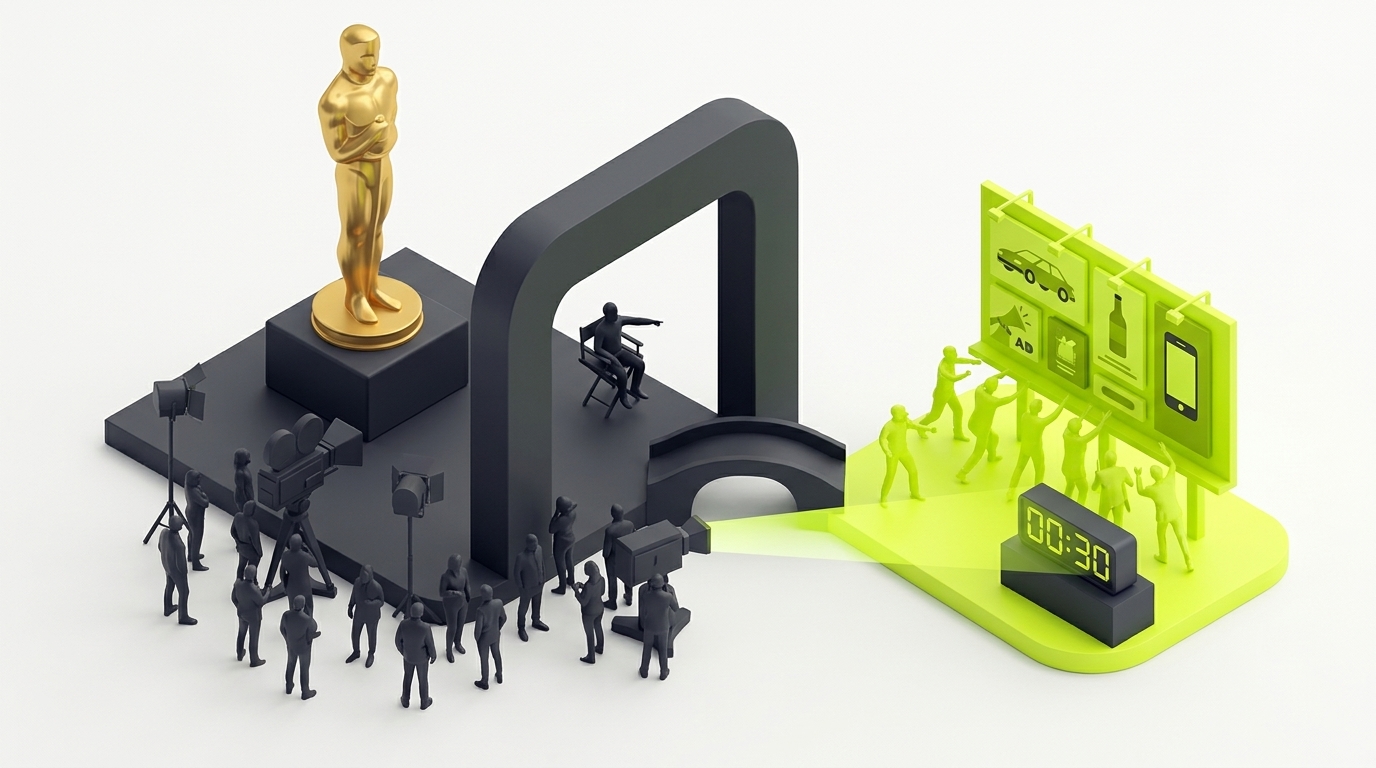
For most of the year, the ad industry braced for the same apocalypse: AI would write the scripts, generate the films, and leave creative directors roughly as employable as a fax repairman. Then D&AD handed out its 2026 Pencils for Film. The work that won was made of handmade puppets, a real car welded on top of another real car, and a 17-minute documentary about a copywriter who died in 2017.
Read that back. In the year of the machine, the hardest jury in advertising rewarded the most stubbornly human work it could find. That is not an accident. That is a verdict.
First, what a D&AD Pencil actually is
If you only know one awards show, you probably know Cannes Lions - the one with the yacht parties and the rosé. D&AD is the other one. British, founded in 1962 by a group that included David Bailey and Alan Parker, run as a non-profit that funnels money back into design education. It does not hand out trophies. It hands out Pencils.
And it is famously, almost theatrically, stingy with them. The tiers climb from Wood to Graphite to the coveted Yellow Pencil, then up to White and the near-mythical Black Pencil that some years simply isn't awarded to anyone. Juries are allowed to give nothing. That is the whole point. A Cannes Lion says "this was a good campaign". A D&AD Pencil says "the most ruthless people in the craft looked at this and could not find the flaw". Winning one is closer to passing a bar exam than collecting a prize.
So when an entire category leans one direction in a year, it is worth reading the tea leaves. In 2026, Film leaned hard into craft you cannot fake with a prompt.
The theme nobody briefed, but everybody felt
The most on-the-nose winner came from, of all places, an AI company. Anthropic's "A Time and a Place" ran during the Super Bowl as a deadpan series of PSAs against ad-supported AI - dramatizing the grim near-future where a chatbot slips a sponsored message into your most vulnerable 2am question. An AI lab spending Super Bowl money to warn you about bad AI is the kind of contradiction that only works if the film itself is impeccably made. It was.
But the clearest signal was in how the rest of the category was built. Not rendered. Built.
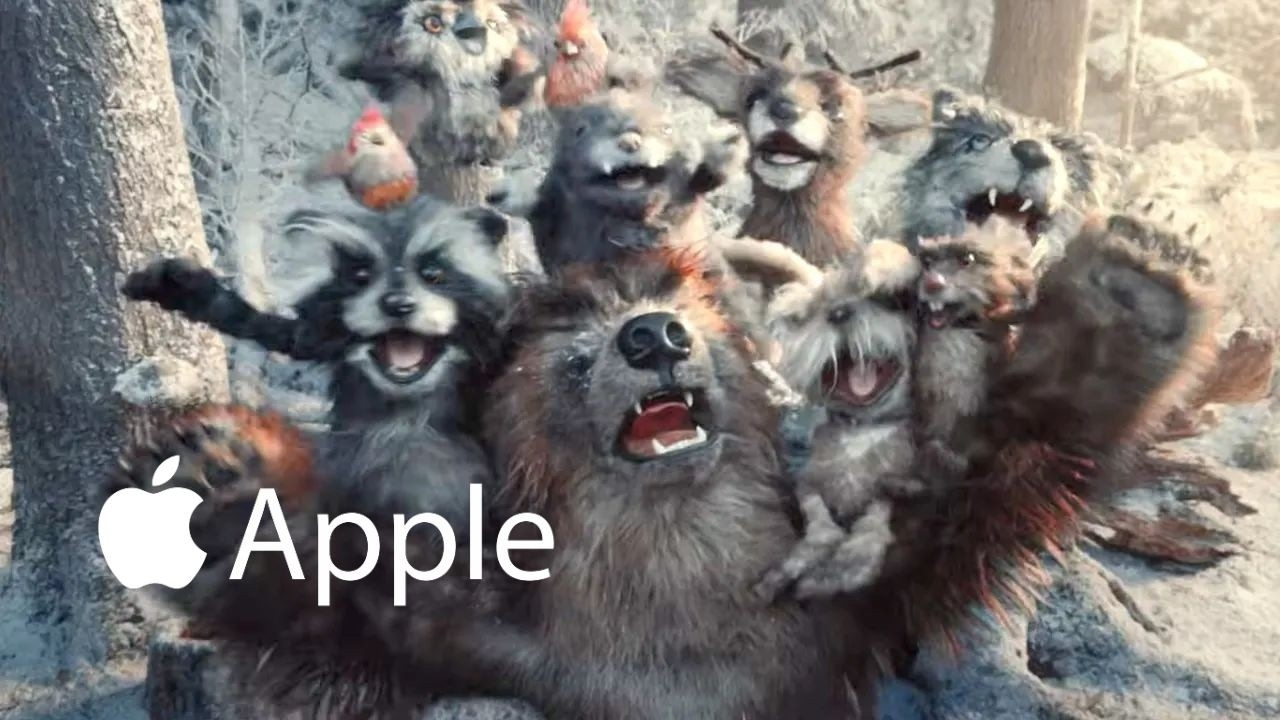
Take Apple's "A Critter Carol", the holiday film shot on an iPhone. In a year when every brand could have generated a cute woodland creature in an afternoon, Apple's team chose handcrafted puppets and practical sets, then made the craft the entire message. The flex isn't the phone. The flex is that humans made this, by hand, on purpose.
Then there is Twix's "Two Is More Than One" from adam&eveDDB, a 1970s-style car chase where the hero vehicle flips and reveals itself to be two cars physically stacked into one absurd double-decker muscle car. They could have done it in post for a fraction of the budget and nobody would have known. They built the thing. You can feel the difference in your gut before you can explain it, which is exactly the point.
LOLA MullenLowe's "Sweeter Than The Sweetest" for Lynx made the no-CGI position explicit: a cast of traditionally sweet things turning violently jealous of a man wearing an even sweeter fragrance, all done in camera with practical effects. In 2026, "we didn't use AI" has quietly become a creative brag. Five years ago it was just Tuesday.
The idea was still the hardest part
Craft fetishism would be hollow if the ideas underneath were thin. They weren't. The film that everyone kept arguing about was "The Final Copy of Ilon Specht" from McCann Paris for L'Oreal Paris - a 17-minute documentary about the woman who, in 1973, wrote "Because I'm Worth It" in a fit of feminist rage at a room full of men. It is less an ad than a short film about authorship, and it became the first piece of branded content ever acquired by TED. A beauty brand made something so good that the internet's seminar people wanted to host it. Sit with how rare that is.
And then there is the quiet one that might outlast all of them. "Caption With Intention", from FCB for the Chicago Hearing Society, reimagined closed captions as actual storytelling - character colours, typography that moves with the emotion, text synced to the performance instead of dumped at the bottom of the screen. It is an open-source design system disguised as an ad, which is the best kind of ad: the one that leaves the world slightly better built than it found it.
What 2026 is quietly telling you
The lesson isn't "AI bad". Half these teams almost certainly used AI somewhere in the process, and the Anthropic film is proof the conversation is more interesting than a moral panic. The lesson is about where the value goes when the floor drops out.
When anyone can generate a competent 30-second film for the price of a sandwich, competent stops being worth anything. The premium moves to the stuff a model can't shortcut: a genuinely strange idea, a director's specific taste, the decision to weld two cars together because the gut-level realness is the message.
D&AD has always rewarded the thing you can't fake. In 2026 it just got a lot more obvious what that thing is.
We have pulled this year's D&AD Film winners into a single playlist - the puppets, the car chase, the flat-earth stunt, the captions, the documentary - so you can watch the industry's highest bar back to back instead of hunting them down one tab at a time. Watch the full D&AD 2026 Film Winners playlist here.
Then go make something a machine couldn't have guessed.