Anzen Health - 855-How-To-Quit-(Opioids)
Anzen Health tasked Serviceplan Group with creating an innovative solution to combat the opioid epidemic. The brand needed to reach individuals struggling with addiction at their most critical moment - when holding a pill - providing immediate, personalized support. The challenge was to turn the object of addiction into a pathway to recovery, connecting users with those who successfully quit the same type of opioid. The desired outcome was to offer a vital, accessible path to recovery nationwide.
Creative Idea
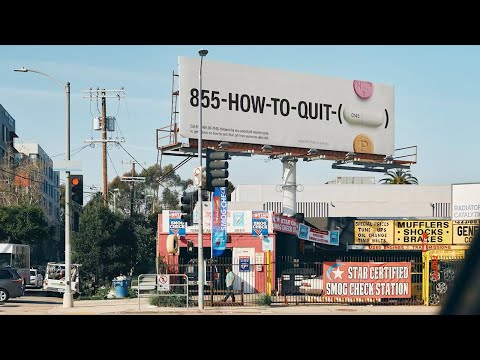
Anzen Health used opioid pill codes as helpline extensions to connect users with survivors.
Anzen Health created a unique helpline that uses the specific pill codes as phone extensions, allowing people struggling with opioid addiction to connect directly with someone who has successfully quit the same type of pill. The campaign aims to provide immediate, personalized support at the critical moment when someone is considering taking an opioid, turning the pill itself into a potential pathway to recovery.
Turning the Object of Addiction into the Key to Recovery
30 Hyper-Realistic Digital Pills
Because high - quality, non - stigmatizing photography of controlled substances was unavailable, the team commissioned CGI artist Roman Tikhonov to create hyper - realistic 3D renders of the 30 most common opioids. These digital assets allowed the campaign to maintain a clinical, "pharmaceutical" aesthetic that mirrored the cold reality of the crisis. To ensure the typography felt authentic to medical packaging while remaining legible on massive billboards, Michael Clasen of Kimera designed a custom typeface featuring specific ligatures tailored for the project.
Hyper-Localized Prescription Data
The media strategy, led by Mediaplus Group and Talon, relied on regional prescription data to ensure the right message reached the right zip code. In Philadelphia, billboards prominently featured Fentanyl codes, while displays in Washington state focused on Hydrocodone. This data - driven approach ensured that the OOH ads functioned as a localized tool rather than a generic PSA.
Direct Human Impact
The initiative reached over 182 million people, but its true success lay in the depth of engagement. Callers spent an average of 4:12 minutes listening to survivor stories, leading to more than 8,600 direct treatment referrals. The authenticity of the project was bolstered by recovery activists like Samuel Huerta (Sober Sammy), who helped the campaign secure $2.3 million in public funding to keep the lines open. As Creative Director Wojciech Zalot noted, the design was intentionally minimalist to ensure the focus remained entirely on the functional goal: beating addiction at the moment of greatest temptation.
Creative Strategy Deconstructed
Company
Anzen Health leveraged its healthcare expertise to create a technical mapping system that turned physical pill identifiers into functional tele-support extensions. They provided the infrastructure to connect a coalition of NGOs and survivors into a single, accessible recovery network.
Category
Traditional addiction services rely on clinical, institutional helplines that often feel detached or judgmental to active users. Most category communication focuses on long-term rehabilitation or prevention rather than providing a tactical intervention at the exact moment of a potential overdose.
Customer
Individuals struggling with addiction feel extreme isolation and often only trust the advice of those who have shared their specific lived experience. They face a moment of maximum vulnerability when they have a pill in their hand, needing immediate, non-clinical empathy.
Culture
The opioid crisis has reached a peak where traditional top-down medical messaging is failing to penetrate high-risk communities. There is a massive cultural movement toward harm reduction and peer-led support as the most effective tools for reaching the hard-to-reach.
Company
Anzen Health leveraged its healthcare expertise to create a technical mapping system that turned physical pill identifiers into functional tele-support extensions. They provided the infrastructure to connect a coalition of NGOs and survivors into a single, accessible recovery network.
Category
Traditional addiction services rely on clinical, institutional helplines that often feel detached or judgmental to active users. Most category communication focuses on long-term rehabilitation or prevention rather than providing a tactical intervention at the exact moment of a potential overdose.
Strategy:
Transform the physical triggers of addiction into direct access points for peer-led recovery at the moment of use.
Customer
Individuals struggling with addiction feel extreme isolation and often only trust the advice of those who have shared their specific lived experience. They face a moment of maximum vulnerability when they have a pill in their hand, needing immediate, non-clinical empathy.
Culture
The opioid crisis has reached a peak where traditional top-down medical messaging is failing to penetrate high-risk communities. There is a massive cultural movement toward harm reduction and peer-led support as the most effective tools for reaching the hard-to-reach.
Strategy:
Transform the physical triggers of addiction into direct access points for peer-led recovery at the moment of use.
Results
The campaign achieved a massive reach, with 137,000,000 people reached. It generated 8,000 calls to the helpline in just 4 weeks. Social media sentiment was notably positive, with users sharing comments like "FOR THE FIRST TIME, I FEEL LIKE I CAN DO IT." and "THIS IS THE SIGN I'VE BEEN WAITING FOR", indicating a shift towards hope and empowerment. Experts and advocates, such as Pamela Smith (Mother of opioid victim) and Flindt Andersen (President & Founder of PAIN), endorsed the helpline, highlighting its potential to "save thousands of lives."
137M
people reached
8,000
calls in 4 weeks
Strategy Technique
Turn Weakness Into Strength
It strategically transforms the object of addiction - the opioid pill - into a direct pathway to recovery. This redefines the pill from a symbol of despair to a source of hope.
Explore Technique
Creative Technique
Unexpected Utility
The campaign transforms a pill code, an identifier of addiction, into an unexpected tool for recovery. It repurposes a mundane detail into a direct, life-saving connection.
Explore Technique
Craft Breakdown
This campaign's craft is exceptional in its brilliant creative strategy, transforming an object of addiction (pill imprints) into a functional symbol of hope and a direct pathway to help, amplified by compelling storytelling and integrated media execution.
The campaign's core idea of using opioid pill imprint codes as phone extensions for a helpline is remarkably innovative and directly ties the source of addiction to the path to recovery.
The visual design of incorporating real pill imprints into the phone number and campaign assets is a powerful, memorable, and highly functional solution that anchors the entire concept.
The use of real survivor stories in an accessible format (split-screen calls, website, social media) creates profound emotional connection and demonstrates the helpline's efficacy and empathy.
The strategic placement of out-of-home ads in relevant environments and the multi-platform approach across TV, digital, and social media ensured broad reach and accessibility for the target audience.
“The true genius lies in the synergy between the creative strategy and design, where a common, overlooked detail (pill imprints) is recontextualized into a lifeline, making the campaign not just innovative but also deeply practical and resonant.”