Audi: Sandbox
Audi sought an innovative campaign to showcase the Q5's Quattro technology. The client wanted to engage a broad audience, including families, through a unique, immersive experience. The challenge was to leverage cutting-edge VR technology to transform the simple act of building a sandbox track into a virtual driving experience - demonstrating Audi's capabilities and progressive brand image.
Creative Idea
Audi turned sandbox tracks into virtual Q5 driving experiences.
Audi created a unique VR experience where people can build their own racetrack in a sandbox and then drive the exact same track in a virtual Audi Q5, transforming childhood play into an immersive brand interaction that showcases the capabilities of their Quattro technology.
Turning a Pile of Sand Into a Virtual Playground
200,000 Points of Infrared Light
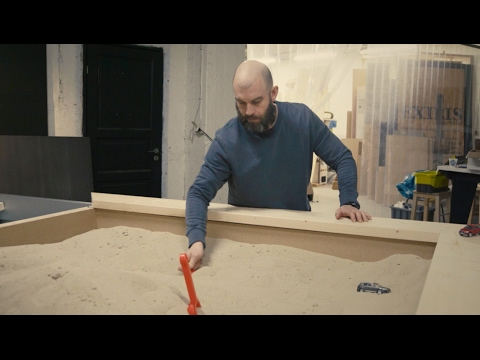
To bridge the gap between physical play and digital simulation, POL and MediaMonks utilized a depth-sensing camera similar to a Microsoft Kinect. This sensor bombarded the sand with infrared light bursts to capture over 200,000 measurement points, creating a real-time 3D topographical map. The "Phygital" tech stack was so sensitive that if a user dug to the very bottom of the box, the software rendered a deep mud pit or pond, specifically designed to demonstrate the Audi Q5’s quattro all-wheel-drive capabilities in extreme conditions.
Spatial Audio and Engine Roars
 Immersion went beyond the Oculus Rift visuals. MediaMonks recorded the authentic engine notes of a real Audi Q5 and processed them through 3D spatial audio software. This ensured the engine roar shifted dynamically based on the driver’s head movements and position on the custom track. Director Tom Rijpert and Creative Director Tom Eriksen focused on "real depth," ensuring the virtual environment felt like a tangible world rather than a flat video game.
The Touring Sandbox 2.0
The installation was engineered for portability, housed in a custom-built crate that allowed it to travel to remote Norwegian dealerships and major sporting events. While the tech was futuristic, the team leaned into nostalgia by providing classic yellow plastic shovels and buckets. This "inner child" strategy paid off - the campaign earned global PR coverage in The Verge and Wired, driving massive dealership foot traffic and positioning the Q5 as a leader in the competitive SUV category through user-generated track designs.
Creative Strategy Deconstructed
Company
Audi leveraged its Quattro all-wheel-drive heritage and engineering prowess to create a custom depth-sensing VR installation. They used the Q5 launch to prove that their technology can master any terrain, even those created by the driver's imagination.
Category
The automotive category usually defaults to passive viewing or controlled, predictable test drives on asphalt. Competitors often struggle to make technical features like traction control feel exciting or personally relevant to the driver's inner sense of adventure.
Customer
Drivers harbor a nostalgic desire for the uninhibited creative play of their youth, specifically the freedom of a sandbox. They seek experiences that turn a functional vehicle into a tool for exploration and personal expression rather than just a utility.
Culture
As VR moved into the mainstream, there was a cultural appetite for 'phygital' experiences that bridge tactile reality with digital immersion. Society was looking for ways to use technology to enhance and gamify physical interaction rather than replace it.
Company
Audi leveraged its Quattro all-wheel-drive heritage and engineering prowess to create a custom depth-sensing VR installation. They used the Q5 launch to prove that their technology can master any terrain, even those created by the driver's imagination.
Category
The automotive category usually defaults to passive viewing or controlled, predictable test drives on asphalt. Competitors often struggle to make technical features like traction control feel exciting or personally relevant to the driver's inner sense of adventure.
Strategy:
Gamify the test drive through tactile sandbox play to position Quattro as the ultimate tool for creative exploration.
Customer
Drivers harbor a nostalgic desire for the uninhibited creative play of their youth, specifically the freedom of a sandbox. They seek experiences that turn a functional vehicle into a tool for exploration and personal expression rather than just a utility.
Culture
As VR moved into the mainstream, there was a cultural appetite for 'phygital' experiences that bridge tactile reality with digital immersion. Society was looking for ways to use technology to enhance and gamify physical interaction rather than replace it.
Strategy:
Gamify the test drive through tactile sandbox play to position Quattro as the ultimate tool for creative exploration.
Strategy Technique
Build an Utility, Not an Ad
Audi created an interactive VR experience, not a passive advertisement. This utility allows users to actively engage with the Q5's Quattro technology in a unique, memorable way.
Explore Technique
Creative Technique
Customize and personalize
Participants build their own unique racetrack in a sandbox. This custom creation is then personalized into a virtual driving experience, directly showcasing Audi Q5's Quattro capabilities.
Explore Technique
Craft Breakdown
This campaign's exceptional craft is defined by its innovative integration of physical interaction with real-time virtual reality, creating a deeply immersive and novel driving experience through groundbreaking digital craft and meticulous production design.
The real-time scanning of a physical sandbox, its dynamic, accurate translation into a VR environment, and the interactive transformation of terrain (like water and mud) represent a remarkable technical achievement.
The meticulous construction of the interactive physical sandbox and the custom driving rig using authentic Audi components crucially enhances the realism and immersion of the VR experience.
“The campaign's immersive power comes from the seamless synergy between its cutting-edge digital craft and the thoughtful, realistic production design of the physical installation.”