2026CathayTravel, Leisure, Retail & RestaurantsCase video
Cathay: Back to Kai Tak
Cathay Pacific needed to celebrate the 100th anniversary of Kai Tak Airport and the opening of the new Kai Tak Sports Park. The client sought to strengthen its connection with Hong Kong residents by honoring the city's aviation heritage. The goal was to boost brand sentiment and civic pride among locals by creating a memorable, high-impact tribute that resonated with the city's unique history.
Creative Idea
The brand recreated a legendary, dangerous flight path to reignite local pride.
Cathay Pacific recreated the legendary low-altitude Kai Tak landing with an A350 to celebrate the airport's 100th anniversary and the new stadium, restoring civic pride by turning a historic aviation memory into a tangible, live-action experience for the city.
Cathay's Sky-High Return to Kai Tak's Aviation Heritage
Connecting Brand Evolution to Cultural Aviation Heritage
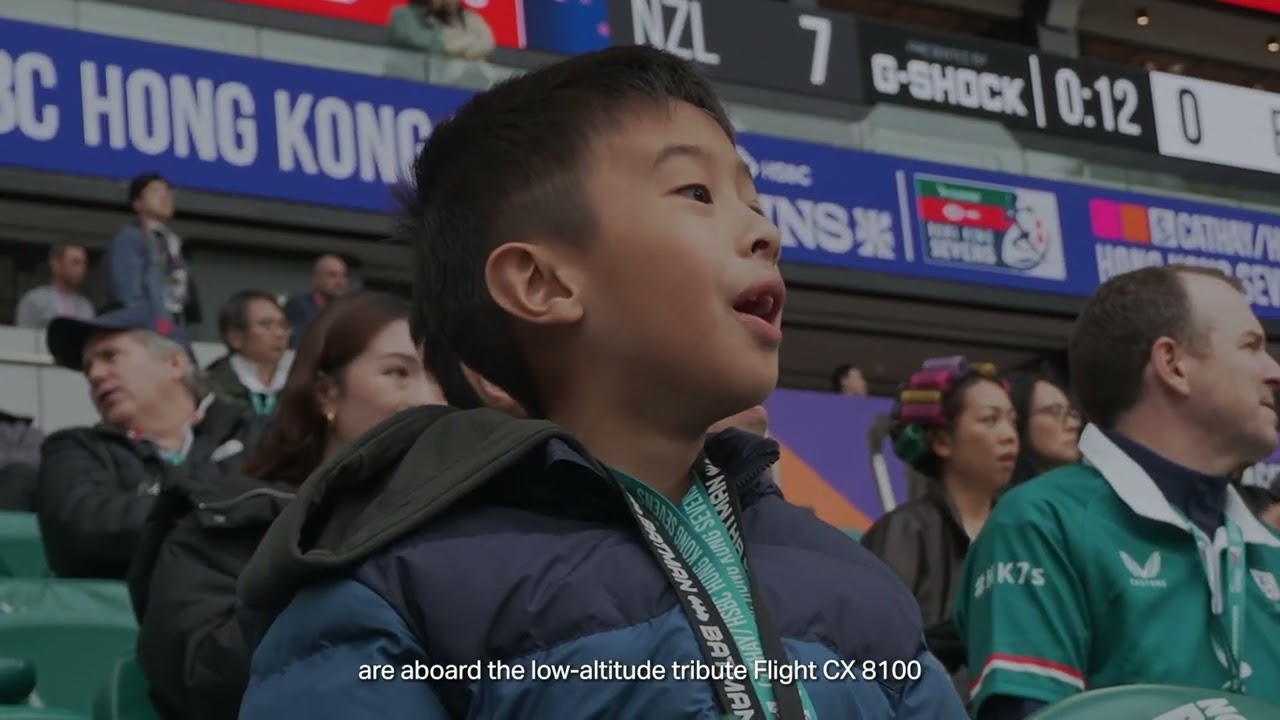
Cathay was named the exclusive Founding Travel Partner of Kai Tak Sports Park on 24 February 2025, ahead of the inaugural Cathay/HSBC Hong Kong Sevens staged at the new 28-hectare venue. The park, which includes the 50,000-seat Kai Tak Stadium, occupies the former site of Hong Kong International Airport. Cathay's chief customer and commercial officer Lavinia Lau noted that the partnership reflects the airline's evolution into a premium travel lifestyle brand.
The campaign aimed to rebuild local affinity as Cathay faced negative brand sentiment in its home market. Located at the site where the airline was originally born, the classic Kai Tak approach famously required a 47-degree turn at 700 feet between dense high-rise buildings before the airport closed in 1998. Older residents cherish memories of planes passing directly over their neighbourhoods, while pilots regarded it as one of the world's most challenging landings. Travel Weekly described the commemorative flight as the airline's return home to Kai Tak after 27 years.
Executing a Strictly Controlled Low-Altitude Fly-Past
On Sunday 30 March 2025, Cathay operated flight CX8100, using an A350 passenger jet, piloted in part by Australian pilot Adrian Scott. Departing just after 4pm on the final day of the Hong Kong Sevens, the aircraft completed a low-altitude route from Hong Kong International Airport past Central, Wan Chai, Kai Tak, and North Point through Victoria Harbour. To enable the maneuver, Cathay collaborated with the Hong Kong SAR Government to establish a temporary restricted flying zone, where the Civil Aviation Department prohibited drones, kites, model aircraft, and balloons.
Publicis Groupe Hong Kong hired photographers renowned for their historical shots of Cathay's classic Kai Tak landings to document the descent alongside live-streamed coverage. Following the event, Cathay and Leo Hong Kong released a behind-the-scenes documentary video detailing the flight's planning on 10 April 2025. An unnamed Hong Kong Government spokesperson stated that the fly-past symbolizes the century-long legacy of the city's aviation history.
Perspectives on Recreating an Aviation Memory
Kai Tak was once the location where Hong Kong met the world and the world came to Hong Kong.
Everyone remembers the stories of Cathay Pacific's aircraft flying in and out of Kai Tak.
Creating a live performance of an aircraft flying past Kai Tak seemed like an audacious feat.
Pyramid of Truth deconstruction
The framework reveals how Cathay turned a technical brand heritage into a shared emotional anchor, healing local brand sentiment through authentic civic pride.
Results
The Back to Kai Tak campaign became the #1 trending topic in Hong Kong and generated over $155M in earned media, securing a 97.3% positive brand sentiment. Cathay reported positive local sentiment for the first time in six years, while the event drew 30,000 spectators inside the stadium and 9 million views for its documentary write-up.
$155M+
Earned media generated
97.3%
Positive brand sentiment achieved
#1
Trending topic status in Hong Kong
30,000
Spectators inside stadium during fly-past
Strategy Technique
Lean Into Nostalgia
By resurrecting a legendary aviation feat, the brand taps into deep-seated civic pride. It transforms a historical memory into a modern emotional touchpoint for the entire city.
Explore Technique
Creative Technique
Retell a Known Story
The campaign revives the iconic, infamous Kai Tak landing experience. It uses the collective memory of the city to turn a modern flight into a powerful, nostalgic spectacle.
Explore Technique
Craft Breakdown
The campaign's exceptional execution lies in its physical scale and experiential design, turning a corporate sponsorship into a massive, emotionally resonant public event.
Recreating a historic flight path over a modern metropolis required unprecedented coordination to deliver a massive shared public experience.
Leveraging live stadium broadcasts, flight-tracking integration, and public viewing spots maximized community engagement.
Questions about Cathay: Back to Kai Tak
What aircraft was used for the Back to Kai Tak fly-past?
Cathay operated flight CX8100 using an Airbus A350 passenger jet.
When did the Back to Kai Tak flight take place?
The flight departed around 4pm on Sunday 30 March 2025 during the final day of the Hong Kong Sevens.
Who directed the creative work for the campaign?
The work was created by Publicis Groupe Hong Kong (Leo Burnett HK), led by Chief Creative Officer Christopher Lee and Global Executive Creative Director Joao Braga.
What awards did Back to Kai Tak win?
The campaign won the Outdoor Lotus Grande in Events, Guerrilla Marketing and Stunts at ADFEST and was featured in the D&AD Awards archive under Experiential: Activation & Participation.
What route did flight CX8100 take?
The flight departed Hong Kong International Airport and flew past Central, Wan Chai, Kai Tak, and North Point through Victoria Harbour.
Why was a restricted flying zone set up in Victoria Harbour?
Cathay worked with the Hong Kong SAR Government to establish the zone so the Civil Aviation Department could restrict drones, kites, model aircraft, and balloons during the low-altitude fly-past.
Who was one of the pilots on board flight CX8100?
Australian pilot Adrian Scott was aboard the flight when it departed.
How many earned media dollars did the campaign generate?
The campaign generated over $155M in earned media.
Credits (7)
| General Manager, Brand, Insights and Marketing Communications | Edward Bell (Cathay) |
|---|---|
| Head of Marketing Communications | Vivian Chan (Cathay) |
| Chief Creative Officer | Christopher Lee (Publicis Groupe Hong Kong) |
| Global Executive Creative Director | Joao Braga (Publicis Groupe Hong Kong) |
| Group Creative Director | Halo Cheng (Publicis Groupe Hong Kong) |
| Creative Director | Wai Wong (Publicis Groupe Hong Kong) |
| General Manager & Executive Creative Officer | Miuson Chi (MSL & Luminous) |
Sources (3)
- Cathay honours Kai Tak's legacy with homecoming fly-past - Marketing-Interactive · marketing-interactive.com
- Back to Kai Tak - D&AD Awards archive · dandad.org
- Cathay joins hands with Hong Kong's new state-of-the-art Kai Tak Sports Park as its exclusive Founding Travel Partner - Cathay news · news.cathaypacific.com