Gesicht Zeigen: Mein Kampf Against Racism
Gesicht Zeigen, an anti-racism organization, wanted to combat rising right-wing extremism. The client needed to engage the public and provoke dialogue against racism, turning a symbol of hate into a tool for social awareness. They sought a campaign that would generate funds for anti-racism associations and actively challenge hate, aiming to transform "Mein Kampf" into an anti-racism statement.
Creative Idea
Gesicht Zeigen republished Mein Kampf with new covers, donating sales to anti-racism.
Gesicht Zeigen, an anti-racism organization, transformed Hitler's controversial book "Mein Kampf" into an anti-racism tool by publishing 11,000 books with different covers and donating one euro from each book sale to an anti-racism association. The campaign aimed to fight rising right-wing extremism by turning a historic symbol of hate into a platform for dialogue and social awareness against racism.
Turning a Symbol of Hate into a Best Seller
Hijacking the Copyright Expiration
The campaign was a masterclass in cultural hijacking, timed to the exact moment Adolf Hitler’s copyright on Mein Kampf expired on January 1, 2016. By launching a counter - book with the same title and a design that mimicked the original typography, Ogilvy Germany ensured that when people searched for the dictator's manifesto, they were met with stories of tolerance instead. Published by Europa Verlag - a house originally founded to publish authors banned by the Nazis - the first print run completely sold out almost immediately, successfully "crowding out" extremist narratives in bookstores.
Eleven Stories of Resistance
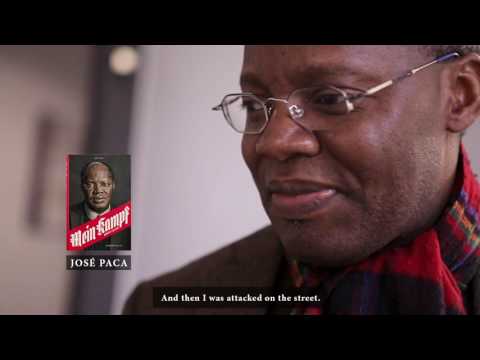 Rather than a political treatise, the book featured 11 real - life activists who have suffered from or fought against right - wing violence. This included José Paca, a survivor of a neo - nazi attack, alongside high - profile supporters like TV presenter Dunja Hayali and actress Iris Berben. One of the most tactile production elements was a "tear - open" mailing that forced recipients to physically rip through the notorious cover to reveal the anti - racist content hidden inside.
From Print to Digital Propaganda
In 2018, the campaign evolved into Hitler goes Social, a film directed by Florian Baeker. It utilized original 1934 footage from Leni Riefenstahl’s Triumph of the Will, but replaced the audio with a voice actor mimicking Hitler’s oratorical style to discuss modern digital manipulation. The agency even created a swastika hashtag - a visual of a hashtag tilted to resemble the forbidden symbol - to illustrate how modern extremism hides behind social media algorithms. This phase was designed specifically to reach young audiences vulnerable to online radicalization.
Creative Strategy Deconstructed
Company
As a leading anti-racism NGO, Gesicht Zeigen possessed the moral authority and creative audacity to confront Germany's darkest history head-on. They leveraged their network of activists and storytellers to transform a symbol of hate into a platform for human rights.
Category
Social activism typically responds to hate speech with protests or calls for bans, which can inadvertently fuel the 'forbidden fruit' allure. The category rarely attempts to 'hack' the branding of extremism to render it powerless.
Customer
The German public faced a visceral tension between the legal re-release of Hitler's manifesto and a desire to prevent the normalization of neo-Nazism. Citizens sought a proactive way to condemn the past while actively protecting the future.
Culture
The 2016 expiration of the 'Mein Kampf' copyright created a high-stakes media moment against a backdrop of rising European populism. This zeitgeist demanded a bold, provocative response to ensure hate did not regain a foothold in bookstores.
Company
As a leading anti-racism NGO, Gesicht Zeigen possessed the moral authority and creative audacity to confront Germany's darkest history head-on. They leveraged their network of activists and storytellers to transform a symbol of hate into a platform for human rights.
Category
Social activism typically responds to hate speech with protests or calls for bans, which can inadvertently fuel the 'forbidden fruit' allure. The category rarely attempts to 'hack' the branding of extremism to render it powerless.
Strategy:
Reclaim the most toxic symbol of hate to transform public fear into a tangible tool for anti-racism education.
Customer
The German public faced a visceral tension between the legal re-release of Hitler's manifesto and a desire to prevent the normalization of neo-Nazism. Citizens sought a proactive way to condemn the past while actively protecting the future.
Culture
The 2016 expiration of the 'Mein Kampf' copyright created a high-stakes media moment against a backdrop of rising European populism. This zeitgeist demanded a bold, provocative response to ensure hate did not regain a foothold in bookstores.
Strategy:
Reclaim the most toxic symbol of hate to transform public fear into a tangible tool for anti-racism education.
Results
The campaign launched 11,000 books with different covers, making them available in every bookstore in Germany. It became a Top 15 Bestseller on Amazon. The campaign generated 645 million contacts and €14.8 million in earned media. It was described by various media outlets as "Hijacking the news" (PSTCOMPANY), "Counter-poison" (DIE ZEIT), "Eyeopening" (BBC World News), "A call for moral courage" (Braunschweiger Zeitung), "Stumbling stone for the mind" (Bild), "The solvent for right-wing ideologies" (Leipziger Volkszeitung), "A manifesto against stupidity" (rbb), "Stories that show moral courage" (DIE WELT), "Shouting out 'No' again and again" (NDR), "A provoking book" (Sächsische Zeitung), "A counterbook, a contradiction, a counterstrike" (Deutschlandradio Kultur), "Incredibly worth reading" (Spiegel Online), and "There's no place for hatred in our society" (ZDF).
645M
contacts
€14.8M
earned media
Top 15
Amazon Bestseller
Strategy Technique
Find an Enemy
The campaign directly targeted rising right-wing extremism, using "Mein Kampf" as a potent symbol of this enemy. This rallied public dialogue and action against a clear adversary.
Explore Technique
Creative Technique
Turn Message into Product
The anti-racism message was physically embodied by transforming "Mein Kampf" into new books. This made the abstract message tangible and actionable.
Explore Technique
Craft Breakdown
This campaign's craft is exceptional in its audacious design, brilliantly subverting a symbol of hate through provocative design and powerful personal narratives, creating a tangible platform for anti-racism.
The powerful visual concept of the book covers, directly mirroring the original 'Mein Kampf' aesthetic while replacing Hitler with diverse faces, creates an immediate and striking visual subversion for the actual product.
The compelling re-appropriation of the title 'Mein Kampf against racism' and its evolution to 'Unser Kampf against racism' is incredibly potent, effectively framing the book's anti-racist message.
“The campaign's magic truly comes from the synergy between its audacious central idea, the provocative visual design of the book's covers, and the deeply human, curated stories presented, all coalescing to create a powerful cultural intervention.”