Jewish Council: The Great Schlep
The Jewish Council sought a 2008 campaign to influence elderly Jewish voters in Florida towards Barack Obama. The challenge was engaging young Jewish people to visit their grandparents and persuade them. The client wanted a humorous, viral approach to motivate these young influencers, ultimately shifting crucial votes for Obama.
Creative Idea
The Jewish Council used Sarah Silverman's video to prompt young Jews to sway their grandparents' vote for Obama.
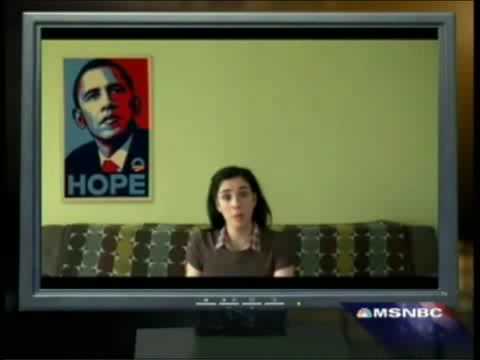
The Jewish Council launched "The Great Schlep" campaign to encourage young Jewish people to visit their grandparents in Florida and persuade them to vote for Barack Obama. The campaign used humor and viral video featuring comedian Sarah Silverman to motivate young people to talk to their elderly relatives about the election and potentially influence their voting decision.
Weaponizing Grandchildren and the Art of the Schlep
The Architecture of Participation
While traditional political ads focused on broadcast interruption, Droga5 and JCER pioneered "participation advertising." The agency recognized that while elderly Jewish voters in Florida were skeptical of Barack Obama, they were uniquely susceptible to the influence of their own grandchildren. By "weaponizing" the Jewish family dynamic, the campaign turned the audience into the medium. This strategy resulted in 25,000 "schleppers" signing up to visit Florida and 1.2 million downloads of a specific "talking points" PDF designed to navigate difficult intergenerational conversations about race and religion.
Low-Fi Authenticity and Viral Friction
To avoid the polished, untrustworthy feel of standard political PAC messaging, director Wayne McClammy utilized a low-fi, vlog-like aesthetic. Lead talent Sarah Silverman - who also contributed to the copywriting - delivered a script that famously threatened to "blame the Jews" if Obama lost. This provocative tone generated 350 million earned media impressions and even sparked a high-profile video rebuttal from conservative comedian Jackie Mason. The friction created by this "Great Schlep" - a Yiddish term for an arduous journey - helped Obama capture 78% of the Jewish vote, a critical margin in a state he won by only 2.8%.
Redefining the Political Blueprint
The campaign proved that a Super PAC could leverage top-tier creative talent to achieve results that traditional political consultants could not. Beyond the 15 million online views, the movement sustained itself through merchandise sales on CafePress and a custom "ObamaTravel" tool. As Droga5 CEO Andrew Essex noted, the project redefined the very concept of advertising by forcing a national dialogue through private, kitchen-table persuasion.
Creative Strategy Deconstructed
Company
The Jewish Council for Education and Research possessed a unique connection to both the progressive Jewish youth movement and the influential, irreverent comedic community.
Category
Political campaigns traditionally rely on mass media 'air wars' and fear-based messaging, often overlooking the persuasive power of trusted, interpersonal family dynamics in swing states.
Customer
Young Jewish voters felt a deep personal stake in the 2008 election but struggled to combat the rumors and skepticism held by their Florida-dwelling elders.
Culture
The 2008 election saw the birth of viral political content, where irreverent, internet-native humor started to replace traditional, polished campaign messaging to reach younger demographics.
Company
The Jewish Council for Education and Research possessed a unique connection to both the progressive Jewish youth movement and the influential, irreverent comedic community.
Category
Political campaigns traditionally rely on mass media 'air wars' and fear-based messaging, often overlooking the persuasive power of trusted, interpersonal family dynamics in swing states.
Strategy:
Weaponize generational guilt and viral humor to turn young voters into personal ambassadors for high-stakes political persuasion.
Customer
Young Jewish voters felt a deep personal stake in the 2008 election but struggled to combat the rumors and skepticism held by their Florida-dwelling elders.
Culture
The 2008 election saw the birth of viral political content, where irreverent, internet-native humor started to replace traditional, polished campaign messaging to reach younger demographics.
Strategy:
Weaponize generational guilt and viral humor to turn young voters into personal ambassadors for high-stakes political persuasion.
Results
The campaign achieved 342 million media impressions (source: Optimedia). Within weeks, talking points were read and downloaded 1.2 million times. Over 25,000 people signed up to Schlep. On election night, Obama won Florida by 170,000 votes. He received the highest elderly Jewish vote in 30 years, with 320,000 elderly Jews in Florida voting for him. Frank Rich of the New York Times stated that "Obama drew a larger percentage of Jews nationally... and – Mazel tov, Sarah Silverman! – won Florida."
342M
media impressions
1.2M
talking points downloaded
25,000+
people signed up
Strategy Technique
Find the Missing Conversation
The campaign prompted young people to engage their grandparents in political discussions about Obama. It initiated a crucial, potentially uncomfortable, intergenerational dialogue.
Explore Technique
Creative Technique
Connect Generations
The campaign directly encouraged young Jewish people to visit and persuade their grandparents. It explicitly bridged the generational gap to influence voting decisions.
Explore Technique
Craft Breakdown
This campaign's craft is exceptional for its innovative strategic thinking and highly effective comedic copywriting, which leveraged a cultural insight to deliver significant political impact.
The core of the campaign, Sarah Silverman's script, brilliantly combined humor, self-deprecating Jewish stereotypes, and a direct political call to action, making it instantly viral and memorable.
The strategic insight to target 'elderly Jewish voters' in Florida through their grandchildren, bypassing traditional campaign messaging, was innovative and highly effective.
The creation of a user-friendly website that facilitated communication (calls, emails, video sharing) between generations was crucial for operationalizing the grassroots movement.
The campaign achieved immense earned media, with widespread coverage across major TV networks, newspapers, and blogs, amplifying its message far beyond initial investment.
“The campaign's success stemmed from the powerful synergy between a sharp political strategy, exceptional comedic writing, and effective digital execution, all amplified by strategic media engagement.”