Australian Road Safety Foundation: Life-Saving Stickers
The Australian Road Safety Foundation tasked GPY&R Brisbane with reducing speeding in residential areas, where one in three drivers exceeded limits. They needed a low-budget, high-impact way to remind motorists of the presence of children. The goal was to move beyond traditional awareness ads and create a community-led initiative that encouraged residents to take ownership of safety on their own suburban streets.
Creative Idea
Turned residential rubbish bins into life-sized visual illusions of children to trigger driver braking.
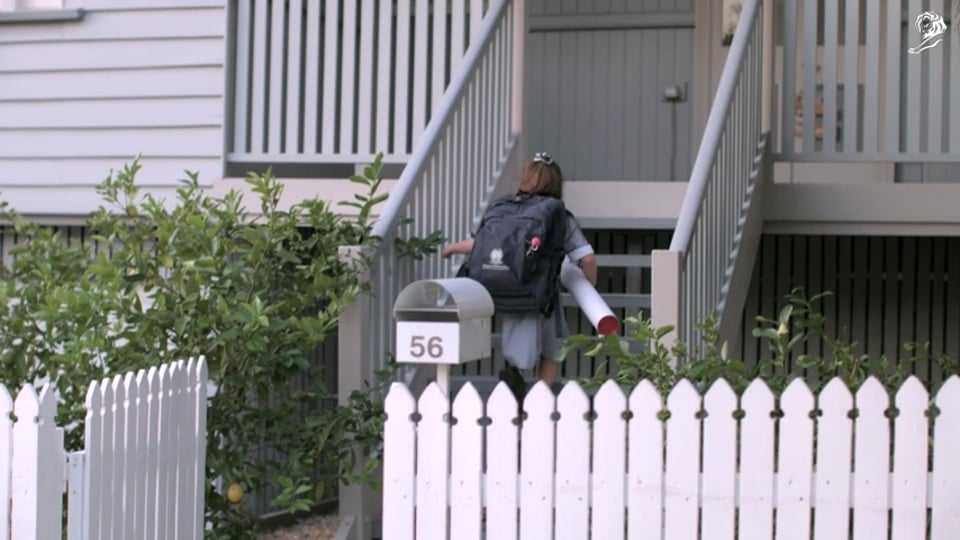
The ARSF turned mundane wheelie bins into high-impact road safety billboards by applying life-sized stickers of children. This hijacked a weekly neighborhood ritual to create a visceral visual trigger that forced speeding motorists to instinctively slow down in residential zones.
Turning Suburban Rubbish Bins Into Psychological Speed Bumps
The Illusion of Danger
To achieve the necessary "split - second" visual trigger, the team at GPY&R Brisbane and KIOSK Films developed hyper - realistic, life - sized stickers of children. These were not mere illustrations; they were designed to create a visceral, heart - in - mouth reaction from drivers. Director Siobhan Mulready and the creative team, including Carl Lough and Ash Kennedy, opted for high - quality, weatherproof, and UV - proof vinyl to ensure the illusions didn't fade under the intense Australian sun. The choice of the wheelie bin as a medium was a stroke of "ambient media" genius, utilizing existing infrastructure to create a rhythmic, weekly warning system that required zero media spend.
Zero Media Dollars and Global Reach
The campaign’s efficiency was staggering, generating over $400,000 USD in earned media value within just seven days of its April 2016 launch. By bypassing traditional billboards for a community - led model, the ARSF empowered residents to "protect" their own streets. This grassroots approach saw the initiative scale rapidly from Queensland to 12 other local councils. While critics initially feared the realism might cause "panic braking," ARSF CEO Russell White defended the design as a necessary real - time reminder in areas where 1 in 3 motorists habitually speed.
A Masterclass in Infrastructure
The project has since become a staple in advertising education, cited for its use of "infrastructure as media." By turning a mundane neighborhood ritual - putting the bins out - into a life - saving intervention, the agency shifted the psychological burden of road safety from the government to the individual. The stickers, priced between $114 and $159 AUD, effectively turned private citizens into active participants in public safety.
Creative Strategy Deconstructed
Company
A foundation dedicated to reducing road trauma through community education and innovative safety initiatives.
Category
Road safety ads often rely on graphic shock tactics or passive signage that drivers eventually tune out.
Customer
Parents feel powerless against speeding in their own neighborhoods and want a tangible way to protect their children.
Culture
The weekly ritual of bin collection provides a predictable, high-visibility opportunity to disrupt driver autopilot in residential streets.
Company
A foundation dedicated to reducing road trauma through community education and innovative safety initiatives.
Category
Road safety ads often rely on graphic shock tactics or passive signage that drivers eventually tune out.
Strategy:
Empower local communities to transform mundane infrastructure into proactive safety interventions that disrupt driver autopilot.
Customer
Parents feel powerless against speeding in their own neighborhoods and want a tangible way to protect their children.
Culture
The weekly ritual of bin collection provides a predictable, high-visibility opportunity to disrupt driver autopilot in residential streets.
Strategy:
Empower local communities to transform mundane infrastructure into proactive safety interventions that disrupt driver autopilot.
Results
The campaign saw an initial print run of 100,000 sticker sets claimed in just 3 days. Thousands more have been ordered since. Cities from all over Australia, including Gold Coast, Brisbane, Fairfield, Melbourne, Adelaide, and Monash, have joined the initiative. By the end of the year, millions of households are expected to have taken action to make their streets safer. The campaign received significant media coverage on major networks like Sunrise, ABC News, and 9 News, and generated a strong positive response on social media with numerous supportive comments and high engagement.
100,000
sticker sets claimed in 3 days
Millions
of households expected to participate
National
adoption by major Australian city councils
Strategy Technique
Build an Utility, Not an Ad
Instead of buying traditional media, the foundation provided residents with a physical tool to protect their own streets. The stickers functioned as a community-driven safety device that empowered parents to actively influence local driver behavior.
Explore Technique
Creative Technique
Hijack the Medium
The campaign transformed ordinary rubbish bins - a ubiquitous suburban object - into a temporary but powerful media channel. By using the weekly bin collection cycle, it created a rhythmic, unavoidable reminder for drivers exactly where they live.
Explore Technique
Craft Breakdown
The campaign's success lies in its brilliant use of an overlooked everyday object as a powerful communication tool, combined with high-quality, impactful visual design.
Identifying the 'untapped medium' of rubbish bins as a recurring, high-visibility touchpoint in residential areas is a masterstroke of non-traditional media placement.
The stickers themselves are expertly designed to be eye-catching and emotionally resonant, using life-sized imagery to trigger an immediate psychological response from drivers.
“The synergy between the unconventional media choice and the high-impact visual design creates a campaign that is both impossible to ignore and deeply meaningful.”