Save The Children: Paper Glasses
Save The Children and Santillana tasked Grey México with reducing school dropout rates in rural Mexico. They needed to address the hidden issue of undiagnosed visual impairment among low-income students who lacked access to expensive eye exams. The goal was to find a scalable, cost-effective way to screen millions of children and educate parents about the link between vision and learning.
Creative Idea
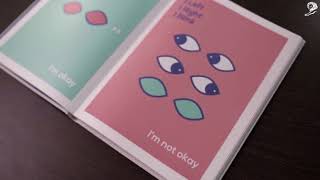
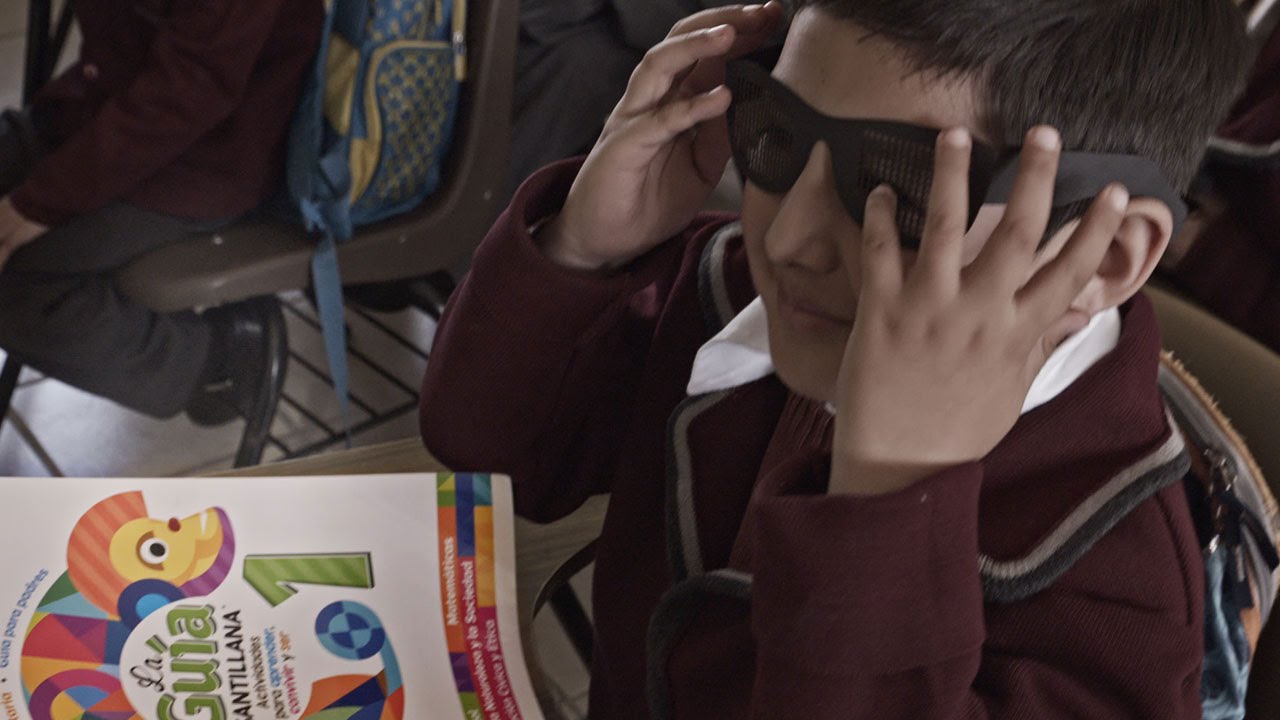
Textbooks were printed with perforated pinhole glasses to provide instant, low-tech vision screening.
By integrating pinhole glasses into the pages of school textbooks, the campaign provided a low-tech diagnostic tool that allowed children in remote areas to identify vision problems instantly, bypassing the high cost of professional optometry.
Turning Textbooks Into Life Changing Diagnostic Tools
The Physics of the Pinhole
The project relied on the Stenopeic Effect, a scientific principle where light passing through tiny perforations bypasses refractive errors to sharpen vision. By using cardstock instead of expensive lenses, Grey México transformed a standard school supply into a medical screening device. This low - tech approach addressed a staggering statistic: 75% of school dropouts in Mexico are linked to visual impairment. For many families in rural areas, a pair of prescription glasses can cost an entire month’s salary, making this paper alternative the first line of defense against educational failure.
Scaling Across Three Million Classrooms
The campaign achieved massive scale by partnering with Santillana, an educational publisher that integrated the glasses directly into their school guides. This allowed the team to reach 3 million children without the need for a traditional distribution network. The production, supported by García Bross and Look as Audio, focused on the children’s genuine reactions to seeing clearly for the first time. This authentic approach generated 4.5 million media impressions and approximately $2 million USD in earned media, proving that a simple product innovation could outperform high - budget celebrity endorsements.
A Global Blueprint for Education
What began as a local initiative in Mexico was designed for a global rollout to 120 countries through the Save The Children network. Chief Creative Officer Humberto Polar noted that the goal was to provide a tool that could change a child’s life instantly. By shifting the role of the textbook from a passive object to an active diagnostic tool, the campaign forced the industry to rethink how "low - tech" solutions can solve high - stakes social problems in developing nations.
Creative Strategy Deconstructed
Company
Santillana's massive distribution network of textbooks and Save The Children's commitment to child welfare and education.
Category
NGOs often rely on emotional storytelling or donation drives to address systemic issues like healthcare access.
Customer
Rural families who view poor school performance as a lack of interest rather than a treatable physical impairment.
Culture
The harsh reality that a pair of glasses costs a month's salary in many Mexican communities.
Company
Santillana's massive distribution network of textbooks and Save The Children's commitment to child welfare and education.
Category
NGOs often rely on emotional storytelling or donation drives to address systemic issues like healthcare access.
Strategy:
Repurpose essential distribution channels to deliver low-cost diagnostic tools that remove physical barriers to education.
Customer
Rural families who view poor school performance as a lack of interest rather than a treatable physical impairment.
Culture
The harsh reality that a pair of glasses costs a month's salary in many Mexican communities.
Strategy:
Repurpose essential distribution channels to deliver low-cost diagnostic tools that remove physical barriers to education.
Results
The campaign reached over 3 million children by integrating the diagnostic tool into Santillana school guides. It generated 4.5 million media impressions and achieved approximately $2 million USD in earned media coverage. Socially, the initiative addressed the root cause of 75% of school dropouts in Mexico, which are linked to visual impairment. The project was so successful it was slated for expansion to 120 other countries via the Save The Children network. It won prestigious industry awards including a Gold Cannes Lion in PR, a Bronze Cannes Lion in Promo & Activation, Gold at El Círculo de Oro, a Silver Clio Health Award, and a Silver Laus.
3M
Children reached
$2M
Earned media value
120
Countries in global rollout
Strategy Technique
Build an Utility, Not an Ad
Instead of just raising awareness about vision loss, the campaign created a physical tool that solved the problem of diagnosis, turning the media itself into the solution.
Explore Technique
Creative Technique
Unexpected Utility
It transforms a standard educational object into a functional diagnostic tool, providing immediate value to children who lack access to healthcare through a clever application of physics.
Explore Technique
Craft Breakdown
The campaign masterfully repurposes a scientific principle into a low-cost, high-impact physical product that transforms a passive textbook into a life-changing medical device.
The campaign redesigned the utility of a school textbook to provide an essential medical screening service to underserved populations.
The physical engineering of the cardstock glasses utilized the Stenopeic Effect to create a functional diagnostic tool without lenses.
By partnering with a major educational publisher, the agency bypassed traditional distribution barriers to reach millions of children directly.
The project leveraged a powerful social narrative and scientific innovation to generate massive earned media and global interest.
“The magic lies in the intersection of physics and publishing, where a simple design choice solves a complex socio-economic barrier to education.”