Free A Girl Movement: School For Justice
Free A Girl Movement challenged J. Walter Thompson Amsterdam to raise awareness about child prostitution in India and the lack of convictions. They needed to engage the public and pressure the legal system to stop traffickers from operating with impunity. The goal was to move beyond traditional charity advertising to create a lasting impact that would protect future generations of girls.
Creative Idea
Built a law school for survivors to prosecute their own traffickers and fix the system.
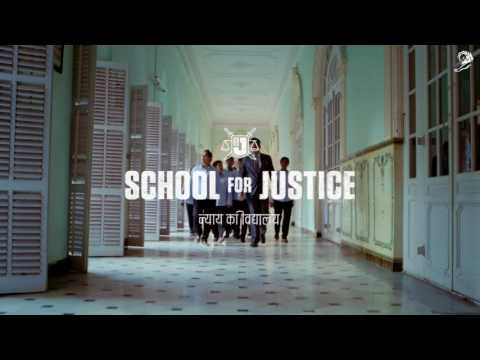
To end the impunity of child traffickers in India, the campaign established a real law school for survivors, empowering them to become the very prosecutors who would eventually bring their own abusers to justice through systemic legal reform.
Turning Survivors Into The Ultimate Prosecutors
From Awareness To Prosecution
The original brief requested a standard awareness campaign targeting Indian men, but J. Walter Thompson Amsterdam rejected it. Executive Creative Director Bas Korsten argued that awareness alone would not stop traffickers. Instead, the agency collaborated with legal experts to build a legitimate five - to - six - year curriculum in partnership with a top Indian law university. This shifted the narrative from "victimhood" to "prosecution," creating a functional NGO program rather than a traditional 60 - second spot.
Security And Academic Rigor
Because the school trains survivors to prosecute powerful traffickers, the physical location and the full names of the students remain strictly confidential to prevent retaliation. The inaugural class of 19 survivors (ages 19 - 26) included Lata, who escaped a brothel to pursue law and became the face of the launch film. The production, directed by Juliette Stevens of New Amsterdam Film Company, had to balance high - stakes storytelling with the safety of its subjects.
Global Scale And Stunts
The campaign sparked a national conversation in India, where child prostitution was previously a taboo topic. To maintain international pressure, Bollywood star Mallika Sherawat locked herself in a 12x8 foot cage at the Cannes Film Festival to symbolize the rooms where girls are held. The initiative has since expanded beyond India, with additional schools opening in Nepal and other regions. By targeting the "weakest link" in the justice system - the lack of specialized lawyers who understand the trauma of trafficking - the project proved that an agency's creative output could be a permanent social institution.
Creative Strategy Deconstructed
Company
A global NGO with the resources and mission to rescue and empower survivors of commercial sexual exploitation.
Category
NGOs typically focus on awareness films and fundraising rather than building long-term institutional infrastructure to fix systemic legal failures.
Customer
Survivors who felt powerless against a legal system that allowed their abusers to walk free with total impunity.
Culture
A growing global demand for brands to move from passive storytelling to taking direct, measurable action against social injustice.
Company
A global NGO with the resources and mission to rescue and empower survivors of commercial sexual exploitation.
Category
NGOs typically focus on awareness films and fundraising rather than building long-term institutional infrastructure to fix systemic legal failures.
Strategy:
Transform victims into the systemic solution to ensure justice through direct institutional empowerment and professional training.
Customer
Survivors who felt powerless against a legal system that allowed their abusers to walk free with total impunity.
Culture
A growing global demand for brands to move from passive storytelling to taking direct, measurable action against social injustice.
Strategy:
Transform victims into the systemic solution to ensure justice through direct institutional empowerment and professional training.
Results
The campaign achieved a massive global impact with a social reach of 1.1 billion. It generated significant engagement, with a 28% engagement rate. Notably, it successfully reached a 70% male audience, a key demographic for changing societal mindsets in India. The initiative received extensive media coverage from major outlets like The Hindu, Hindustan Times, BBC, Reuters, and The Guardian, effectively lifting the lid on the taboo subject of child prostitution.
1.1B
social reach
28%
engagement rate
70%
male audience reach
Strategy Technique
Build an Utility, Not an Ad
The campaign moved beyond awareness by building a functional legal pathway for survivors, proving that a brand's purpose is best served by creating tools that solve the root cause of an issue.
Explore Technique
Creative Technique
Turn Message into Product
Instead of just making a film about the problem, the agency created a tangible, long-term educational institution that functions as a permanent solution to the legal system's failure.
Explore Technique
Craft Breakdown
This campaign's craft is exceptional due to its bold experiential design and strategic media planning that turned a social issue into a tangible, long-term educational institution.
The creation of a literal, functioning law school as the core of the campaign is a masterclass in using real-world infrastructure to solve a social problem.
The campaign was expertly timed and targeted to reach Indian men and global media, ensuring the message broke through cultural taboos.
“The synergy between the physical creation of the school and the global media strategy turned a local initiative into a worldwide conversation on justice.”