Smart: Txtbks
Smart, the country's largest telecom, needed to address the significant burden of heavy, expensive textbooks for Filipino public school students. The goal was to provide an accessible, sustainable, and lightweight learning solution for families who couldn't afford modern e-readers, reinforcing Smart's mission of making text light and easy for all.
Creative Idea
Old phones and SIM cards became new, lightweight digital textbooks.
Smart transformed millions of old analog mobile phones and surplus SIM cards into "Smart Textbooks" by condensing official school texts into 160-character messages, making education accessible and lightweight for Filipino public school students who couldn't afford e-readers, turning a burden into a sustainable learning solution.
Turning Surplus SIMs Into The Worlds Cheapest E-Readers
160 Characters Per Lesson
To bypass the need for expensive tablets or data plans, the agency partnered with Vibal Publishing House to manually condense entire English, Math, and Science curriculums into 160-character SMS messages. These lessons were then programmed into the inboxes of thousands of inactive, surplus SIM cards. When inserted into a standard analog "feature phone," the inbox effectively became a digital library. This low-tech hack turned $10 "dumb phones" into functional e-readers for families living below the poverty line.
Weight Loss For Education
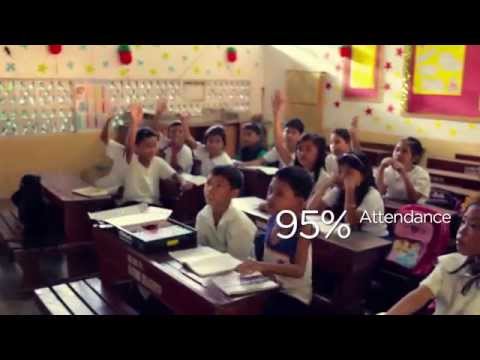 The physical impact on students was immediate. By replacing heavy hardbound volumes with a single SIM card, the project reduced the weight of school bags by 50% or more. This addressed a critical health crisis in Philippine public schools, where children often carried bags weighing half their body weight, leading to chronic back issues and scoliosis. Following the pilot, school attendance jumped to 95%, and average test scores in participating classes reached 90%.
Innovation Without The Internet
At the time of launch, 89% of the population in Metro Manila still relied on analog feature phones. Creative leaders Merlee Jayme and Eugene Demata focused on "democratizing technology" by repurposing electronic waste rather than demanding new hardware. The campaign's success proved that meaningful innovation does not require high-speed internet or the latest gadgets. The initiative eventually expanded beyond schools to provide digital storybooks by author Russell Molina to children in local orphanages and was later exported to schools in South Africa.
Creative Strategy Deconstructed
Company
Smart, the largest telecom, leveraged its mission to make text light and easy, along with its surplus SIM cards and infrastructure.
Category
The education category relied on heavy, expensive physical textbooks or unaffordable digital e-readers, creating a significant access barrier.
Customer
Students and families faced physical burden from heavy textbooks and couldn't afford e-readers, needing an accessible, low-cost digital learning solution.
Culture
A culture where old analog mobile phones were common for texting, alongside a pressing need for practical, low-tech educational solutions.
Company
Smart, the largest telecom, leveraged its mission to make text light and easy, along with its surplus SIM cards and infrastructure.
Category
The education category relied on heavy, expensive physical textbooks or unaffordable digital e-readers, creating a significant access barrier.
Strategy:
Leverage existing, accessible technology to democratize education and alleviate burdens for underserved communities.
Customer
Students and families faced physical burden from heavy textbooks and couldn't afford e-readers, needing an accessible, low-cost digital learning solution.
Culture
A culture where old analog mobile phones were common for texting, alongside a pressing need for practical, low-tech educational solutions.
Strategy:
Leverage existing, accessible technology to democratize education and alleviate burdens for underserved communities.
Results
The Smart Textbooks campaign led to several positive outcomes: - 50% lighter school bags for students. - 90% average test performance among students using Smart Textbooks. - 95% attendance rate in schools using Smart Textbooks. - Strong demand for expansion, with petitions and pledges from more schools and education sector members. - Plans for more subjects and grade levels to be converted into Smart Textbooks. - A system developed for schools to reproduce Smart Textbooks for free. - A planned nationwide rollout across the entire Philippines.
50%
lighter school bags
90%
average test performance
95%
attendance rate
Strategy Technique
Build an Utility, Not an Ad
Smart didn't just advertise; it created a tangible product - Smart Textbooks - that directly solved a critical educational problem. This utility provided a sustainable, low-cost learning solution for students in need.
Explore Technique
Creative Technique
Turn Message into Product
Smart condensed official school texts into 160-character messages. These messages were then programmed onto inactive SIM cards, effectively turning the messages themselves into a new, accessible textbook product.
Explore Technique
Craft Breakdown
This campaign's craft is exceptional in its innovative product design and strategic media planning, effectively addressing a critical social issue with a simple, scalable, and impactful solution. It leverages existing, ubiquitous technology in a novel way to bridge educational divides.
The core innovation lies in repurposing old SIM card technology and existing mobile infrastructure to deliver educational content, making it accessible and lightweight.
The transformation of textbook content into SMS format and the packaging of SIM cards as 'Smart Textbooks' demonstrates highly thoughtful and user-centric product design, tailored for the target audience's needs and existing tools.
The strategic choice to use existing, pervasive mobile phone technology and distribution networks (SIM cards) for educational content is a brilliant example of media planning, ensuring reach and impact in a resource-constrained environment.
The creative challenge of condensing complex textbook material into 160-character SMS messages required highly effective and concise copywriting, ensuring educational value despite technical constraints.
“The true magic of this campaign comes from the synergy between innovative product design, smart digital craft in adapting content for SMS, and strategic media planning that leveraged pervasive low-tech mobile phones, together creating a highly relevant and impactful educational tool.”