Sol Cement - SightWalks
Cemento Sol, collaborating with Circus Grey Peru, sought to enhance its brand image by demonstrating a strong commitment to social responsibility and urban inclusivity. They aimed to develop a tangible, impactful solution for the visually impaired community in Peru, addressing their navigational challenges and fostering greater independence.
Creative Idea
Numbered tactile tiles empowered visually impaired people to independently identify businesses.
Cemento Sol created "SightWalks," innovative cement tiles with numbered lines, to empower visually impaired individuals with independent navigation by allowing them to identify specific businesses, transforming sidewalks into accessible guides and fostering urban inclusivity.
Decoding the Sidewalk with Seven Lines
Two Years of Tactile R&D
The project required a rigorous two-year development phase to move beyond the century-old "stop and go" tactile standard. Industrial designers and engineers worked in a co-creation loop with the National Union of the Blind of Peru and the NGO "I am your Eyes." Every iteration was field-tested to ensure the depth and width of the grooves provided the precise haptic feedback necessary for white canes to distinguish between one and seven lines. To support the physical rollout, the brand distributed Braille brochures and launched a training program to teach the community how to "read" the new urban language.
Open Source for Global Scale
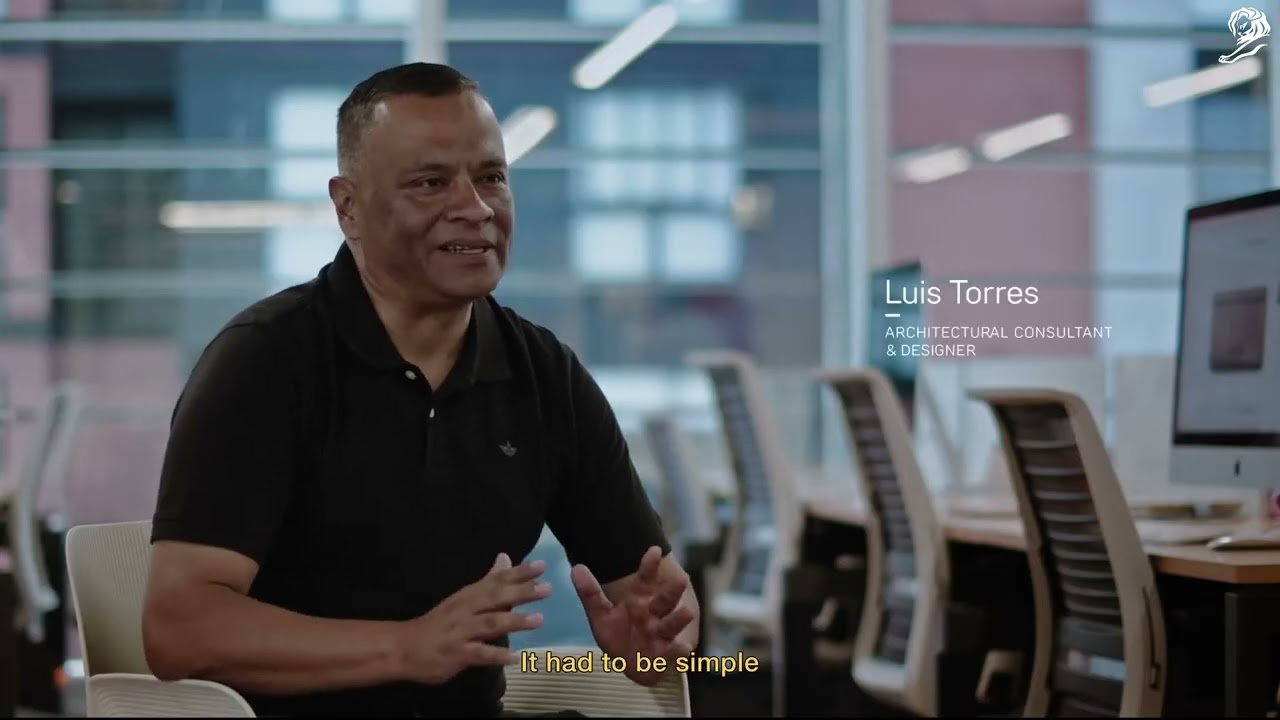 Despite being a commercial brand with a 130-year history, Cemento Sol and UNACEM made the strategic decision to not patent the design. By hosting the technical blueprints as open-source files on their website, they invited cities worldwide to adopt the system. This shifted the brand's perception from a commodity cement manufacturer to a leader in social infrastructure. The implementation covered 75,000 square meters in the Miraflores district of Lima, directly impacting over 500,000 visually impaired individuals in the region.
The Power of Invisible Design
The genius of the system lies in its subtlety. As Fura Johannesdottir, Design Lions Jury President, noted, the design is at its best when it is "invisible" to sighted pedestrians who walk over the tiles without distraction, while providing life-changing autonomy for those who need it. The numerical code is simple: 1 line for restaurants, 2 for banks, 3 for grocery stores, 4 for pharmacies, 5 for hospitals, 6 for bus stops, and 7 for hotels. This "counting" logic allows users to navigate the busiest commercial area in Peru without having to ask for assistance.
Creative Strategy Deconstructed
Company
Cemento Sol possessed the manufacturing capability and commitment to innovate cement products for social good and urban development.
Category
Traditional tactile paving offered directional guidance but failed to provide specific destination identification for visually impaired individuals.
Customer
Visually impaired individuals deeply desired independence and accurate, self-reliant navigation to identify specific establishments without assistance.
Culture
A global cultural shift towards greater accessibility, inclusivity, and smart city solutions created fertile ground for this innovation.
Company
Cemento Sol possessed the manufacturing capability and commitment to innovate cement products for social good and urban development.
Category
Traditional tactile paving offered directional guidance but failed to provide specific destination identification for visually impaired individuals.
Strategy:
Leverage product capabilities to create open-source utility addressing a significant social accessibility gap.
Customer
Visually impaired individuals deeply desired independence and accurate, self-reliant navigation to identify specific establishments without assistance.
Culture
A global cultural shift towards greater accessibility, inclusivity, and smart city solutions created fertile ground for this innovation.
Strategy:
Leverage product capabilities to create open-source utility addressing a significant social accessibility gap.
Results
+75,000 m² of implemented area (Source: Miraflores district). +500,000 people benefited (Source: CONADIS). The project received significant media coverage, being featured in publications like The Newspaper, BrandBrief (Korea), Shoot (France), Art Vibes (Italy), Designboom, DesignVid (Czech Republic), La República (Peru), Urban Creature (Thailand), Inova Social, DailyGizmo (Thailand), Taxi (Spain), and Topa Senace (Spain). It's described as a groundbreaking navigation system, an innovative project towards visually impaired independence, and a clear example of how innovation can transform lives. It's the first district to implement the new system and complements the current podotactile system. The system is an open-source project designed to help 285 million people around the world (Source: World Health Organization).
+75,000 m²
implemented area
+500,000
people benefited
285 million
people worldwide potentially helped
Strategy Technique
Build an Utility, Not an Ad
The campaign's core was a functional, tangible product - the SightWalks tiles - that genuinely solved a critical problem for visually impaired people. This utility inherently became the brand's most powerful message.
Explore Technique
Creative Technique
Invent a Complementary Product
Cemento Sol didn't just advertise; they designed and produced a new, open-source tile system. This product directly complements the existing universal tactile paving, addressing its core limitation.
Explore Technique
Craft Breakdown
The campaign's craft is exceptional in the tangible creation and widespread implementation of an innovative tactile navigation system, physically transforming urban sidewalks into a functional language for the visually impaired.
The core of the campaign lies in the masterful creation of a new, intuitive tactile language and system, where specific linear patterns were designed to communicate destination types, enhancing urban navigation for the visually impaired.
The large-scale fabrication and integration of over 75,000 m² of custom-designed tactile paving into existing city sidewalks demonstrates a significant feat of physical construction and meticulous urban planning execution.
“The seamless combination of the innovative system design with its meticulous physical production and widespread implementation created a highly functional and impactful urban solution.”