2025LEGOConsumer GoodsCase video
LEGO: Formula 1 Drivers Parade
The LEGO Group sought to partner with Formula 1 to reach new audiences. They faced the challenge of maintaining the sport's prestige while injecting the brand's signature playfulness. The goal was to create authentic, high-impact activations that resonated with both lifelong fans and new followers, proving that the brand understood the sport's culture while redefining how a partner could engage on the grid.
Creative Idea
Drivers raced life-sized brick cars, turning a mandatory, boring parade into pure, chaotic fun.
The LEGO Group injected play into the hyper-serious world of Formula 1 by replacing the standard, forgettable drivers' parade with a race of life-sized, brick-built cars, proving that even the most rigid sports need moments of unexpected, adrenaline-fueled fun.
Four Million Bricks and Twenty Unruly Drivers
Engineering Chaos in Kladno
The fleet of 10 life-sized, fully drivable LEGO Speed Champions cars was constructed by hand at the specialized model production facility in Kladno, Czech Republic. Each vehicle required approximately 400,000 LEGO bricks, totaling over 4 million bricks for the entire fleet. To ensure the project remained a surprise, the cars were packed into custom freight crates and flown directly to the Miami International Autodrome under strict secrecy. Once on track, these builds reached speeds of up to 20 km/h while carrying two full-grown Formula 1 drivers.
When Athletes Ignore the Rules
Despite the high-pressure environment of a Grand Prix, the drivers - including Lewis Hamilton, Charles Leclerc, and Max Verstappen - abandoned professional decorum. Ignoring the instruction to simply parade, they treated the track like a playground, taking shortcuts and intentionally bumping into one another. This chaotic display caused genuine concern for the LEGO engineering team but resulted in what Lewis Hamilton called "the best drivers' parade ever."
Global Reach and Legacy
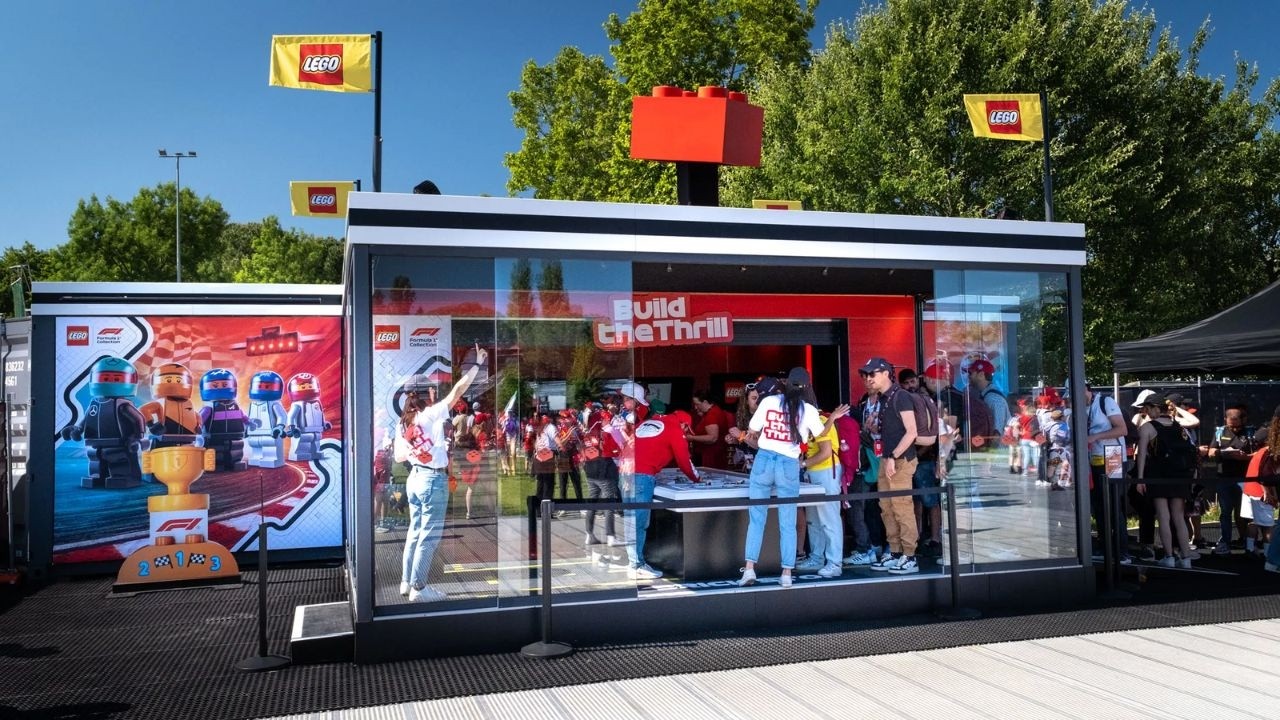
The campaign generated 34 billion potential PR earned impressions across global media. The success of the Miami activation led to a 48-minute documentary titled *Bricks on Track: Building the LEGO® F1® Drivers' Parade*, directed by Marcus Liversedge. The initiative’s impact was so significant that it prompted an expanded sequel for the 2026 British Grand Prix, featuring 22 individual LEGO minicars. Julia Goldin, Chief Product and Marketing Officer at The LEGO Group, noted that the parade proved both fans and drivers were eager for more playful, unexpected moments within the rigid structure of the sport.
4C Framework deconstruction
Company
The LEGO Group leveraged its global reputation for creativity and physical play to build life-sized, drivable replicas of F1 cars.
Category
Formula 1 typically adheres to strict, corporate-controlled rituals that prioritize heritage and precision over lighthearted, spontaneous fan engagement.
Customer
Fans and drivers craved more authenticity and fun within the overly serious, highly regulated environment of professional racing.
Culture
The sport's recent surge in popularity among younger, casual audiences created a cultural opening for more entertainment-focused, playful brand activations.
Company
The LEGO Group leveraged its global reputation for creativity and physical play to build life-sized, drivable replicas of F1 cars.
Category
Formula 1 typically adheres to strict, corporate-controlled rituals that prioritize heritage and precision over lighthearted, spontaneous fan engagement.
Strategy:
Inject play into rigid, high-stakes environments to humanize the brand and create memorable, shared experiences.
Customer
Fans and drivers craved more authenticity and fun within the overly serious, highly regulated environment of professional racing.
Culture
The sport's recent surge in popularity among younger, casual audiences created a cultural opening for more entertainment-focused, playful brand activations.
Strategy:
Inject play into rigid, high-stakes environments to humanize the brand and create memorable, shared experiences.
Results
The campaign successfully brought play to Formula 1 and drove significant business results, including recruiting over 236K new shoppers to LEGO.com.
236K+
New shoppers recruited to LEGO.com
4M+
LEGO bricks used to build 10 life-sized F1 cars
10
Life-sized brick-built F1 cars created
Strategy Technique
Break a Category Convention
Formula 1 is defined by intense, controlled competition that leaves no room for play. By identifying this rigid ritual as a blind spot, the brand successfully injected fun into a serious, corporate-dominated environment.
Explore Technique
Creative Technique
Break the Norm
The campaign disrupted the mandatory, static F1 drivers' parade by replacing trucks with drivable LEGO cars. This subverted a rigid, predictable sporting ritual into a playful, memorable spectacle.
Explore Technique
Craft Breakdown
This campaign excels through extraordinary physical production design and experiential execution, creating 10 fully driveable, full-scale brick F1 cars to disrupt an elite global sporting event.
Building 10 fully driveable, life-sized Formula 1 cars from over 4 million LEGO bricks capable of carrying actual drivers during an official F1 event is a staggering engineering and design achievement.
Seamlessly integrating interactive LEGO elements into high-profile F1 moments worldwide—from the drivers parade to the Las Vegas Sphere and track breakblocks—redefined live sports sponsorship activation.