Tigo-Une: The Payphone Bank
Tigo-Une challenged Grey Bogotá to increase brand loyalty and social impact among Colombia's unbanked population. These low-income workers, earning just $3.50 daily, were excluded from traditional banking. The goal was to find a way for Tigo-Une to provide financial services and inclusion to this segment using existing resources, ultimately helping them build credit and manage their daily micro-savings.
Creative Idea
Hacked obsolete payphones to function as digital micro-savings terminals for unbanked workers.
Tigo-Une transformed 13,000 obsolete payphones into digital micro-savings terminals, allowing Colombia's unbanked population to deposit spare change into digital accounts via analog hardware, turning a relic of the past into a vital tool for financial inclusion.
Hacking 13,000 Cast Iron Relics Into Banks
The Analog to Digital Hack
To bridge the gap between 20th-century hardware and modern finance, Grey Colombia utilized an Asterisk-based IVR (Interactive Voice Response) system. The production team, led by director José Maria Angel of La Octava, didn't replace the phones; they "hacked" the existing coin-collection mechanisms. By using DTMF (Dual-Tone Multi-Frequency) tones, the analog hardware could communicate directly with Tigo-Une’s central servers. This allowed users to deposit as little as 200 pesos - roughly seven cents - to pay utility bills or buy bus tickets via SMS.
Solving the Street Vendor's Burden
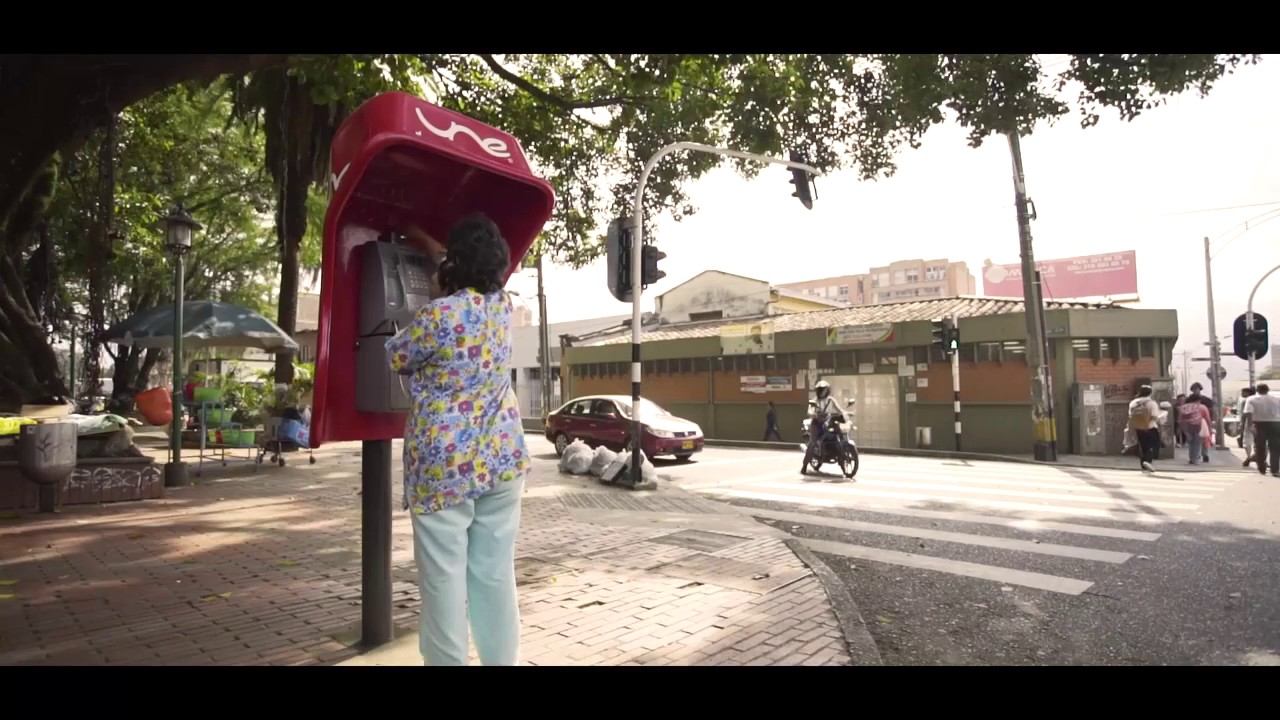 The project was born from a specific cultural observation: Colombian street vendors often ended their shifts with pockets full of heavy coins, making them prime targets for theft. Because traditional banks found small deposits unprofitable, these workers were effectively locked out of the financial system. The Payphone Bank turned this "dead" infrastructure into a "micro-savings" solution with no minimum balance or fees.
Scaling Social Utility
The impact was immediate and measurable. The campaign reached 8 million unbanked Colombians living on an average of $3.50 a day. Beyond simple deposits, the system allowed users to build a verifiable credit history, eventually qualifying them for microloans to purchase essential appliances like refrigerators. Sebastián Mallarino, VP Creativo at Grey Colombia, noted that the challenge was to use technology naturally to move people, rather than using it without a clear reason. The initiative achieved an engagement rate 145% higher than industry benchmarks, proving that brand purpose can function as a high-utility service.
Creative Strategy Deconstructed
Company
A vast network of 13,000 underutilized, cast-iron payphones across urban and rural Colombia.
Category
Traditional banks ignore low-income workers because their small, coin-based deposits are not profitable to process.
Customer
Unbanked workers need a safe, accessible way to save small change and build credit without fees.
Culture
The rapid digitization of the economy is leaving behind those without smartphones or formal bank accounts.
Company
A vast network of 13,000 underutilized, cast-iron payphones across urban and rural Colombia.
Category
Traditional banks ignore low-income workers because their small, coin-based deposits are not profitable to process.
Strategy:
Repurpose obsolete physical infrastructure to bridge the digital divide for the economically marginalized.
Customer
Unbanked workers need a safe, accessible way to save small change and build credit without fees.
Culture
The rapid digitization of the economy is leaving behind those without smartphones or formal bank accounts.
Strategy:
Repurpose obsolete physical infrastructure to bridge the digital divide for the economically marginalized.
Results
The campaign successfully transformed 13,000 obsolete cast-iron payphones into digital micro-savings terminals, providing financial services to a target audience of 8 million unbanked Colombians living on an average daily wage of $3.50. The initiative achieved an engagement rate 145% higher than the industry benchmark for digital campaigns. Users were able to deposit amounts as small as 200 pesos (approx. $0.07) to pay utility bills and purchase public transport tickets via SMS. This system allowed marginalized workers to build a verifiable credit history, eventually qualifying them for microloans for essential appliances like refrigerators. The project received the highest industry honors, including the Grand Prix in Product Design at Cannes Lions, a Gold Pencil at The One Show, and the Sol de Platino at El Sol.
13,000
Payphones converted to banks
145%
Higher engagement than benchmark
8M
Unbanked people reached
Strategy Technique
Build an Utility, Not an Ad
Instead of a traditional awareness campaign, Tigo-Une built a functional financial system that integrated into the daily lives of low-income workers, providing long-term value over temporary messaging.
Explore Technique
Creative Technique
Unexpected Utility
It repurposed a dying piece of urban infrastructure into a functional banking tool, solving a real-world problem for the unbanked through an unexpected and highly accessible medium.
Explore Technique
Craft Breakdown
The campaign masterfully 'hacks' 20th-century analog hardware using modern IVR and DTMF technology to solve a complex socio-economic problem through functional design.
It created a frictionless micro-savings ecosystem that integrated seamlessly into the daily lives of street vendors without requiring new hardware.
The use of Asterisk-based IVR and DTMF tones to bridge cast-iron relics with central digital servers is a brilliant example of creative engineering.
The physical transformation of 'dead' urban infrastructure into high-utility financial tools was recognized with a Cannes Grand Prix.
The campaign turned a mundane, outdated interaction—using a payphone—into a life-changing financial experience for the unbanked.
“The magic lies in the 'Analog to Digital' synergy, where obsolete physical infrastructure was repurposed via clever software engineering to provide modern financial inclusion.”