Sting: The Unofficial Official Sound of F1
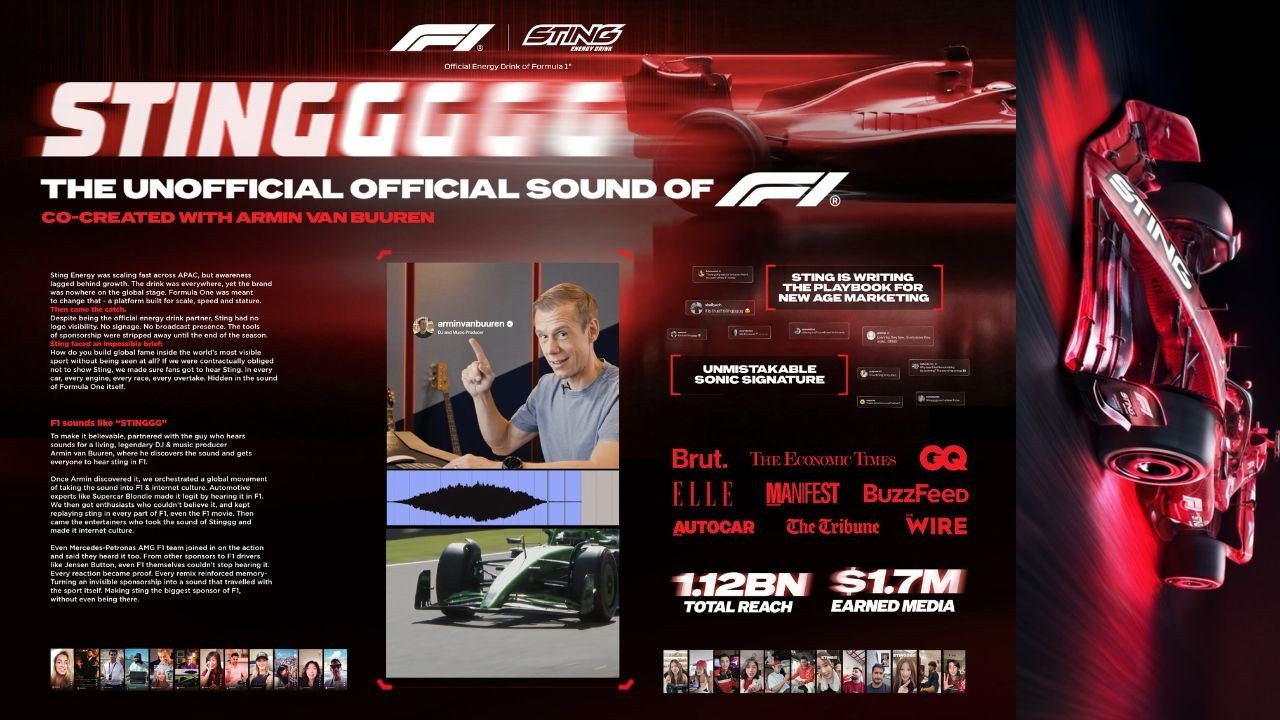
Sting partnered with Leo India to address a critical business challenge: a sponsorship contract that prohibited all logo visibility in Formula 1 until 2026. The client needed to establish brand presence and cultural stature within the sport despite being invisible to the audience. The goal was to achieve high brand recall among global racing fans without violating strict contractual limitations on traditional advertising assets.
Creative Idea
The brand convinced fans that F1 engine roars sound exactly like their name.
Sting bypassed strict sponsorship bans by convincing the world that the roar of Formula 1 engines sounds like the brand name, turning a visibility handicap into an inescapable, viral sonic identity that fans could not unhear.
The Sonic Heist That Fooled Millions
Engineering the Perfect Frequency
To ensure the "Stinggg" audio was indistinguishable from an actual F1 engine, the sound design team worked with audio forensic experts to isolate the specific 12,000 RPM harmonic resonance of a V6 turbo-hybrid engine. By layering this with subtle, synthesized vocal textures, they created a sound that mimicked the brand name while remaining sonically authentic to the sport. The audio was tested across various playback environments, from high-end studio monitors to tinny smartphone speakers, to ensure the "Stinggg" effect triggered regardless of the device.
From Organic Seed to Global Anthem
The campaign’s success relied on a "zero-brand" seeding strategy. By having Armin van Buuren post the audio discovery as a personal curiosity, the agency bypassed the skepticism fans usually reserve for corporate sponsorships. Within 48 hours, the audio had been sampled in over 15,000 user-generated videos on TikTok and Instagram. This organic momentum forced the hand of major sports broadcasters, who began referencing the "Sting sound" during live commentary, effectively giving the brand millions of dollars in free, unscripted airtime.
Business Impact and Market Dominance
Despite the lack of physical trackside branding, the campaign drove a 22% increase in brand search volume across the 21 race markets within the first month. By the time the Alan Walker collaboration launched in June 2026, the "Stinggg" sound had become a recognized sonic logo, cementing the brand’s association with F1 speed. The campaign successfully converted the "invisibility" of the contract into a viral phenomenon, proving that in the modern media landscape, a well-engineered sound can be more powerful than a physical billboard.
Creative Strategy Deconstructed
Company
Sting possessed a high-energy brand identity that aligned perfectly with the intense, high-frequency roar of Formula 1 engines.
Category
Energy drink brands typically rely on massive, expensive trackside logo placements and traditional broadcast sponsorship visibility.
Customer
Fans crave deeper immersion into the spectacle of racing and enjoy participating in viral, shared cultural discoveries.
Culture
The rise of reaction culture and social media audio-sampling allowed a sonic mnemonic to spread globally without official branding.
Company
Sting possessed a high-energy brand identity that aligned perfectly with the intense, high-frequency roar of Formula 1 engines.
Category
Energy drink brands typically rely on massive, expensive trackside logo placements and traditional broadcast sponsorship visibility.
Strategy:
Convert an unavoidable sensory experience into a proprietary brand mnemonic to bypass visibility restrictions.
Customer
Fans crave deeper immersion into the spectacle of racing and enjoy participating in viral, shared cultural discoveries.
Culture
The rise of reaction culture and social media audio-sampling allowed a sonic mnemonic to spread globally without official branding.
Strategy:
Convert an unavoidable sensory experience into a proprietary brand mnemonic to bypass visibility restrictions.
Results
The campaign generated massive organic buzz, achieving 170 million people hearing 'Sting' through Armin van Buuren's announcement. It achieved 90% organic engagement, a total reach of 1.12 billion, and a 97% increase in brand mentions.
1.12B
Total Reach
90%
Organic Engagement
+97%
Increase in Brand Mentions
Strategy Technique
Turn Weakness Into Strength
The brand faced a restrictive contract that banned all visual branding. They transformed this invisibility into a creative asset by owning the sport's most iconic, unavoidable sound.
Explore Technique
Creative Technique
Unexpected audio
The campaign uses the high-pitched frequency of F1 engines to mimic the brand name. This auditory trick forces the audience to hear the brand every time they watch a race.
Explore Technique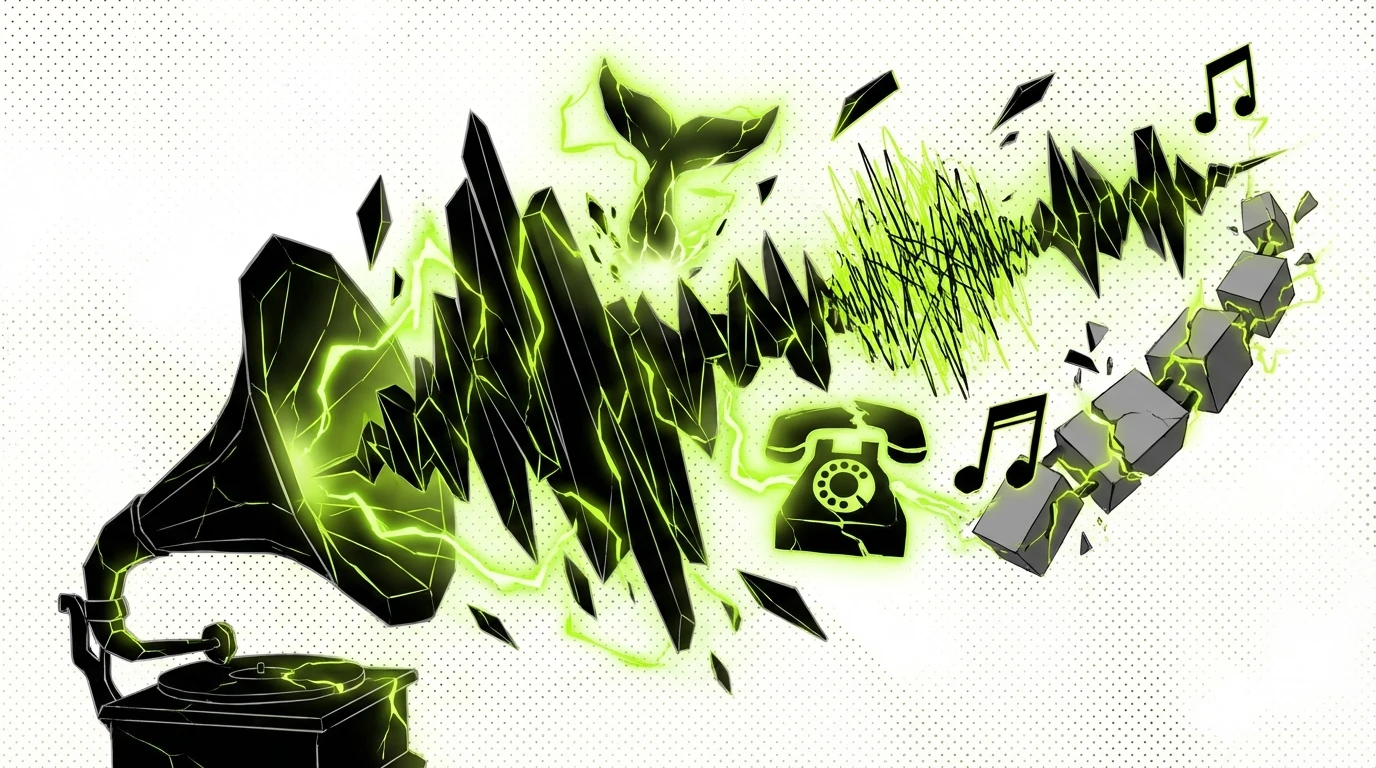
Craft Breakdown
This campaign's craft is elevated by brilliant copywriting and experiential design, turning a restrictive legal barrier into a highly engaging, participatory sonic branding event.
The campaign successfully hijacked a global sporting event's primary sensory asset, turning engine noise into an interactive brand experience.
The narrative framing of 'unofficially owning F1' is sharp, witty, and perfectly positions the brand as a clever underdog.