UN Women: The Autocomplete Truth
UN Women needed to dramatically raise global awareness about the pervasive, often unacknowledged, nature of gender inequality and discrimination. The goal was to shock a broad audience into confronting the reality of sexism, inspiring dialogue and action to advance women's rights worldwide.
Creative Idea
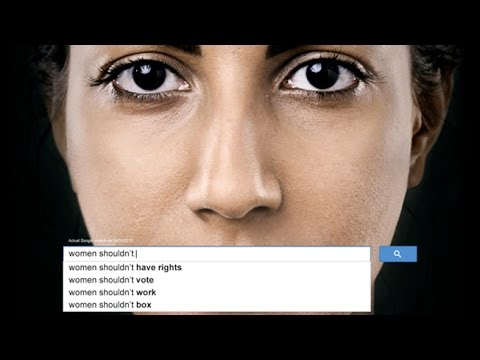
It used Google autocomplete to reveal shocking, widespread sexist search queries.
The UN Women campaign used Google's autocomplete feature to expose the shocking, undeniable prevalence of everyday sexism and discrimination against women, leveraging a ubiquitous digital tool to reveal a harsh cultural truth that resonated globally.
The Search Results That Silenced the World
A global snapshot of prejudice
To prove that the shocking search results were not a regional anomaly, the Memac Ogilvy & Mather team in Dubai coordinated with offices in London and New York to verify the data. They discovered a disturbing consistency across the globe. To capture a precise "snapshot" of the world’s collective mindset, all searches used in the final creative were conducted on a single day: March 9, 2013. The resulting visuals featured four models of Asian, Western, Middle Eastern, and African descent to emphasize that sexism is a universal crisis, not a localized issue.
The power of zero budget
 The campaign achieved a staggering 1.2 billion impressions and reached over 755 million people without a single cent of paid media spend. It became Adweek’s Most Shared Ad of 2013, generating 24 million Twitter mentions and sparking conversations in nearly 600 global news articles. Beyond the digital sphere, the creative even made an unexpected appearance during 2013 NASCAR races, proving its ability to permeate diverse cultural spaces.
Visualizing the unspoken
Art Director Christopher Hunt and Copywriter Kareem Shuhaibar designed the layout so the Google search bar physically covered the women's mouths. This served as a literal metaphor for how societal prejudice silences women's voices. The impact was so profound that it inspired over 50 parody and homage campaigns, including activations for LGBTQ+ rights. Ronald Howes, Managing Director at Ogilvy, noted that the "instant enthusiasm" for the work forced the agency to expand the project's scope almost immediately after launch.
Creative Strategy Deconstructed
Company
UN Women credibly advocated for gender equality, possessing the authority to highlight global discrimination and inspire action.
Category
Social advocacy campaigns often relied on statistics or emotional appeals, but rarely used raw, unfiltered, real-time public sentiment data.
Customer
Audiences often underestimated the extent of everyday sexism, needing undeniable proof to confront the pervasive, uncomfortable truth of societal biases.
Culture
The widespread reliance on internet search engines and the perceived objectivity of their autocomplete suggestions provided an undeniable cultural mirror.
Company
UN Women credibly advocated for gender equality, possessing the authority to highlight global discrimination and inspire action.
Category
Social advocacy campaigns often relied on statistics or emotional appeals, but rarely used raw, unfiltered, real-time public sentiment data.
Strategy:
Leverage unfiltered public data to expose societal biases, making uncomfortable truths undeniable and prompting urgent reflection.
Customer
Audiences often underestimated the extent of everyday sexism, needing undeniable proof to confront the pervasive, uncomfortable truth of societal biases.
Culture
The widespread reliance on internet search engines and the perceived objectivity of their autocomplete suggestions provided an undeniable cultural mirror.
Strategy:
Leverage unfiltered public data to expose societal biases, making uncomfortable truths undeniable and prompting urgent reflection.
Strategy Technique
Make the Invisible Visible
The campaign made the invisible, pervasive nature of gender bias visible by leveraging real-time Google search data. It starkly revealed societal prejudices that often go unacknowledged, forcing a confrontation with reality.
Explore Technique
Creative Technique
Expose the Hidden
The campaign exposed the hidden, widespread prejudices against women by using Google's autocomplete suggestions. This revealed the uncomfortable truth of societal attitudes, making the invisible problem undeniable.
Explore Technique
Craft Breakdown
This campaign's power lies in its brilliant use of authentic historical footage contrasted with modern digital craft, delivering a jarring and highly impactful message about persistent gender inequality.
The central idea of using Google's autocomplete suggestions to reveal shocking real-world biases is an incredibly clever and effective digital execution, making a profound statement through a familiar interface.
The rapid-fire historical montage is expertly cut, building momentum and emotion, and the abrupt cut to the Google search bar creates a powerful, jarring transition that underscores the message.
The concise and impactful on-screen text for historical achievements, contrasted with the stark reality of the Google search suggestions, delivers a powerful and memorable narrative without lengthy explanations.
The escalating, triumphant orchestral score perfectly amplifies the historical montage, making its sudden silence at the transition to the Google search bar even more effective in conveying a shift in mood and message.