StatBrand Strategy
Pricing power from brand is widely supported but rarely fully proven outside the UK
columns
fully replicated2
directional6
not tested3
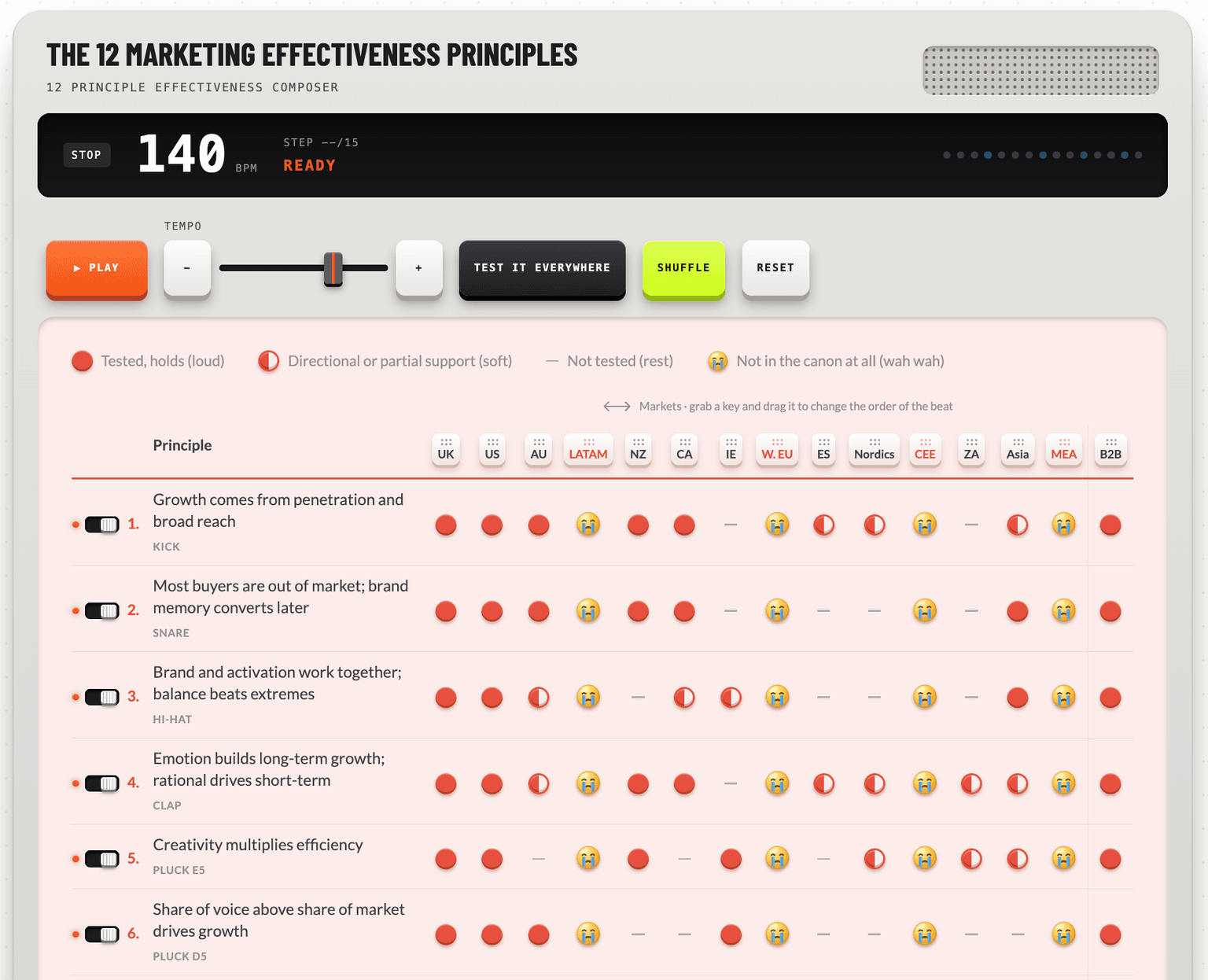
Pricing power comes from brand and emotion. It points the same way in 9 of 11 columns but is fully replicated only in the UK and New Zealand, which makes it one of the least-evidenced principles across markets.
The evidence
salience 4% and 3%Pricing power comes from meaningful difference, not from salienceThe Effectiveness Equation - Google Market Insights EMEA, with Kantar, Nielsen, Ekimetrics, Ipsos MMA, the Behavioural Architects and WARC1.39 vs 0.69Brands with pricing power command roughly twice the price of brands without itThe Effectiveness Equation - Google Market Insights EMEA, with Kantar, Nielsen, Ekimetrics, Ipsos MMA, the Behavioural Architects and WARCR² 0.76Brands with strong pricing power are measurably more resilient to price increases10 Charts to Make You a More Effective Marketer, 2026 Edition - Kantar UK Marketing Effectiveness Practice3.5% → 10.3%Pricing power kicks in only once brand building clears a thresholdIPA x Financial Times x EffWorks - IPA Effectiveness DatabankPrincipleEmotional campaigns are more profitable because people who feel good about a brand judge it as more valuable and accept paying more for it.Springboards Spark Sessions: Future Demand with James Hurman
We wrote about this

More from this source
PrincipleNo market has disproved the core effectiveness principlesPrincipleGrowth comes from penetration and broad reachPrincipleMost buyers are out of market; brand memory converts laterPrincipleBrand and activation work together; balance beats extremesPrincipleEmotion builds long-term growth; rational drives short-termPrincipleCreativity multiplies efficiencyPrincipleShare of voice above share of market drives growthPrincipleDuration and consistency compound; short-termism destroys valueStatTV- or video-anchored multichannel reach is the best-replicated effectiveness principlePrincipleLong-term effects match or exceed short-term onesPrincipleBigger brands earn bigger returns (double jeopardy)PrincipleThe medium itself signals brand quality