Facebook turns feed control into natural-language prompts, ElevenLabs tackles audio production, and Anthropic maps agentic workflows for brand teams.
The promise of total control versus the reality of human laziness
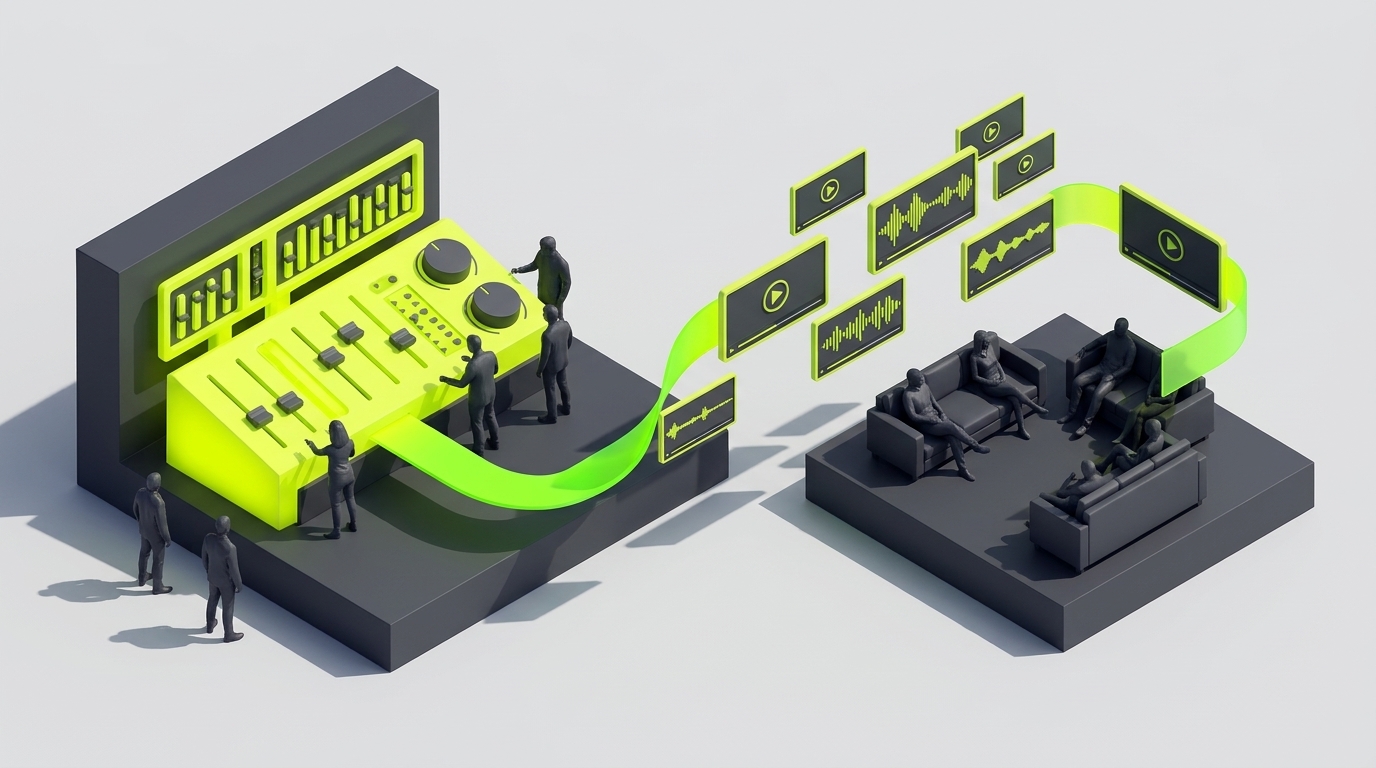
Every platform announcement this week points toward a single structural hypothesis: that audiences and marketing teams actually want to configure every detail of their experience. Meta promises users can build custom feed algorithms with simple text prompts, while tools like Krea and ElevenLabs offer real-time control over visual and sonic assets. It sounds empowering in a press release. In practice, behavioral science tells us that default settings win because cognitive effort is expensive. While these updates unlock real speed for creative production pipelines, the consumer side of the equation will likely default right back to passive scrolling by next Tuesday.
The AI updates shaping brand strategy this week
1. Facebook gives users natural-language feed controls
Facebook has launched custom feed controls allowing users to tune their algorithm using natural language. Instead of relying purely on passive engagement signals like watch time or accidental clicks, users can explicitly instruct the platform to show "more urban architecture, less political commentary."
For brand strategists, this is a shift in how category entry points function on social. If users actively filter out broad ad categories, reliance on algorithmic discovery becomes risky. Distinctive brand assets need to be recognizable within the first half-second, because user-defined feeds will shrink the window for cold-prospecting standard performance creative.
2. OpenAI eyes Hollywood licensing for Sora
OpenAI is negotiating licensing deals for Sora with film industry startups, attempting to integrate text-to-video generation into professional production workflows rather than keeping it as a standalone web consumer tool.
This move highlights the gap between generating a viral five-second clip and building standard campaign assets. For marketing directors, off-the-shelf video generators have hit a narrative ceiling. Licensing to production houses suggests the future of high-end brand assets isn't prompt-to-campaign automation - it's traditional film craft using synthetic models for background extension, location scouts, and pre-visualization.
3. ElevenLabs introduces Instant Soundtracks for automated audio
ElevenLabs released Instant Soundtracks, a feature designed to automatically generate dynamic music and ambient sound effects paired directly to video timing and emotional beats.
Audio is often the last item on a social media production brief, usually resolved by grabbing stock audio from a platform library. Automated scoring lowers production friction for mid-tier video, but it raises a distinctiveness challenge. If every brand uses the same reactive audio engines, sonic brand assets risk blending into a homogenous, platform-native hum.
4. Krea 3 Beta speeds up image iteration
Krea 3 Beta launched with 2K image rendering in under 8 seconds alongside multi-turn conversational edits, enabling designers to refine specific regions of an image without altering the full composition.
The value here isn't net-new creative ideation - it's the elimination of revision friction. Speeding up local asset edits changes agency economics. Teams can now test thirty variations of a moodboard or pack-shot composition in a single client meeting, shifting the bottleneck from pixel generation back to strategic evaluation.
5. Higgsfield AI pushes video limits with GPT-6 Astra
Higgsfield AI extended text-to-video generation beyond the 10-minute mark, utilizing GPT-6 Astra to maintain long-form narrative coherence and character continuity across complex scenes.
Generating ten continuous minutes of video is a technical milestone, but longer formats increase the cost of viewer boredom. Attention metrics across social channels consistently show that length without narrative tension leads to immediate drop-off. Brands should approach long-form synthetic video cautiously - extra minutes generated for free still cost money if nobody watches past second three.
6. YouTube rolls out conversational search on mobile
YouTube launched conversational search for mobile users in the US, allowing viewers to query video databases using open questions rather than keyword strings.
This alters search behavior inside the world's second-largest search engine. When search shifts from keywords to conversational intent, organic discovery depends heavily on how clearly a video's script and metadata answer specific user problems. Standard SEO tagging gives way to clear, structured verbal explanations within the content itself.
7. Anthropic maps the expansion of agentic workloads
Anthropic published economic research showing AI agents now run 6x more operational hours than human employees within monitored tech environments, corresponding with a measurable shift in junior hiring patterns.
Efficiency gains in production mean nothing if you automate the exact junior tier responsible for catching when a brand idea makes no sense.
For agency leadership, this trend exposes an organizational risk. Offloading junior research, slide formatting, and data deduplication to synthetic workflows cuts overhead in the short term. However, it also removes the traditional training ground for future strategists. Operational volume increases, but the strategic quality of the output still depends entirely on senior human judgment.
The Monday morning takeaway for strategy teams
Don't redesign your entire media mix to accommodate custom user algorithms or 10-minute video tools this week. Instead, audit your production pipeline for creative fatigue. Pick one repetitive execution task - like audio scoring for social variations or localized pack-shot edits - and run a controlled test using automated tools. Keep the saved hours for the part of the brief machines still can't do: finding a human truth worth building a campaign around.