The Cost of Dull priced the waste. Entertain or Die 3.0 measures the other side: +39% memory lift, 2.8x image lift, 17 of the top 30 brands with double the preference, and awareness that buys you no fun at all.
For two years we have had a very good answer to the question "why is boring advertising a problem". It costs money. A neutral ad needs more media to reach the same place as one people actually feel something about.
That answer wins the argument and then leaves the room. The client agrees dull is expensive, nods, and asks the obvious follow-up: fine, so what exactly do we buy instead, and how will we know it worked?
The third edition of Entertain or Die 3.0, from the agency Small W•rld and the brand tracker Tracksuit, is the first serious attempt I have seen at that follow-up. It measures the other side of the ledger.
Where the cost of dull left off
If you missed the earlier instalments: System1, eatbigfish and Peter Field showed that more than one in four ads get less reaction than a film of cows, that dull advertising is a media budget problem rather than a creative one, and that four perfectly sensible forces keep making everything beige.
All of that is about waste. It prices the hole. It does not tell you what the opposite of dull looks like as a property of a brand, something you could put in a tracker next to awareness and consideration.
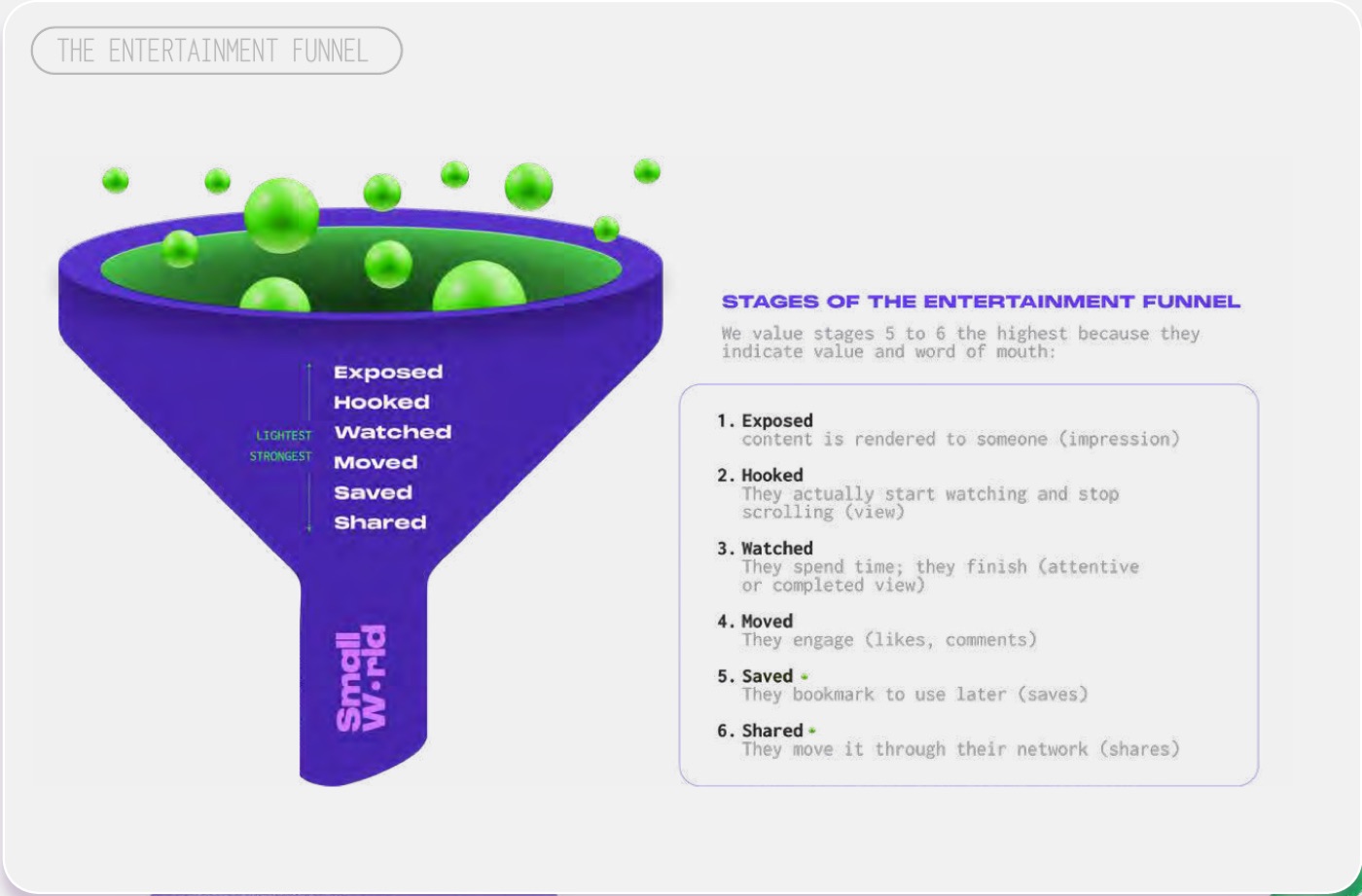
Entertain or Die tries to do exactly that. Tracksuit collected 16,200 survey responses from US consumers on 100 brands with more than 10% prompted awareness (media brands removed). The result is an Entertainment Index, a ranking of how entertaining people find each brand. The top of the 2026 list is full of chocolate and soap: M&M's, Reese's, Dove, Hershey's.
What the entertaining side earns
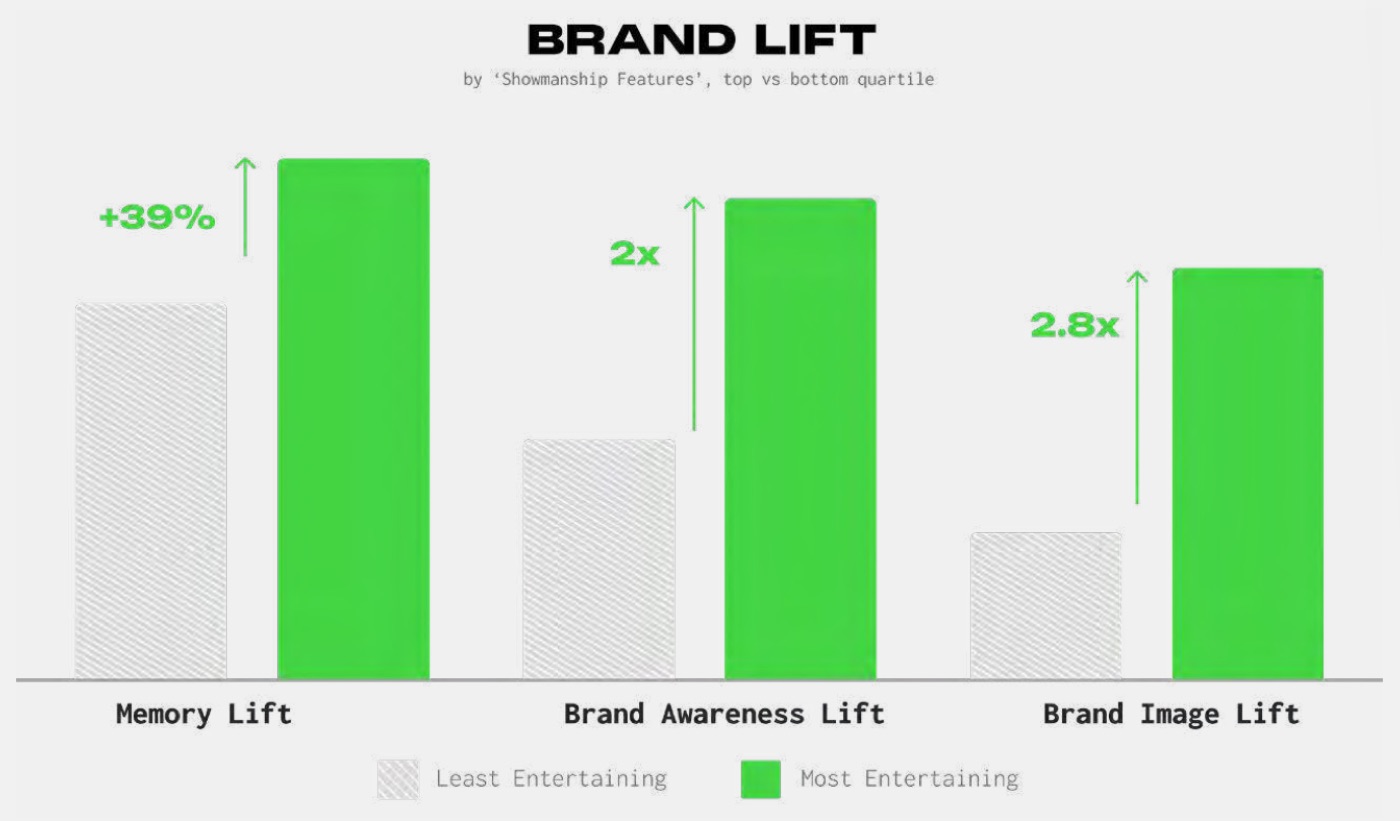
The first number is about ads. The report compares the top and bottom quartile of ads scored on showmanship features, and the most entertaining ones deliver 39% higher memory lift, twice the brand awareness lift and 2.8 times the brand image lift.
Source: Entertain or Die 3.0, Small W•rld x Tracksuit (2026), p. 8
The second is about the business. Of the 2026 top 30 brands with financial data (83% of them), only five reported a revenue decline and 47% grew by double digits, in a year when tariffs hit names like Porsche and Mattel. The year before, 97% of the top 30 grew.
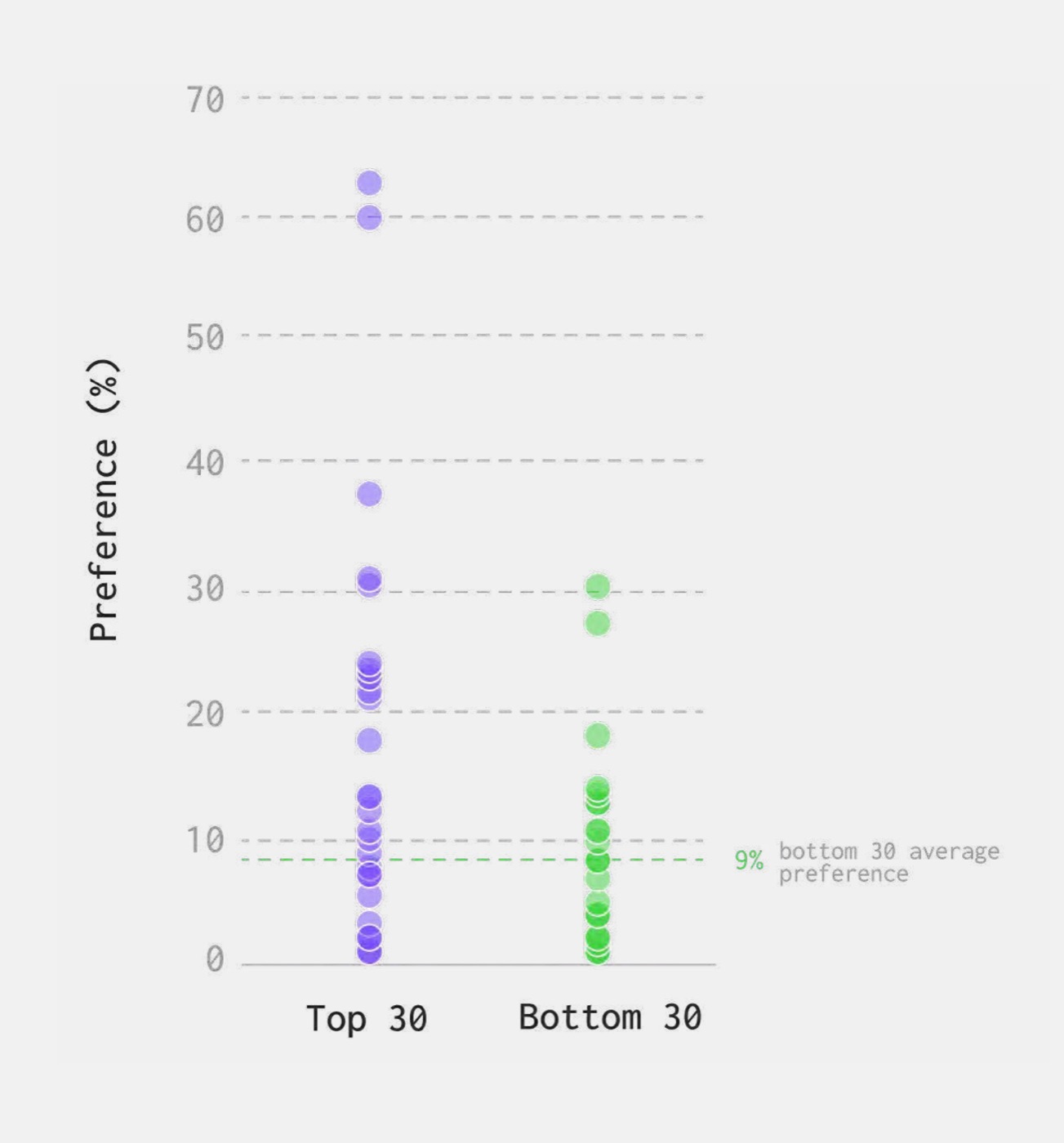
The third is the one I would put in front of a CFO. 17 of the 30 most entertaining brands are preferred by at least twice as many people as the bottom 30 average of 9%. Preference only stayed low for luxury goods and emerging brands, which have their own reasons.
Source: Entertain or Die 3.0, Small W•rld x Tracksuit (2026), p. 29, Tracksuit brand funnel data
Now the honest part. This is a correlation study written by an agency whose business is making entertaining work, and a lot of the case studies are its own clients. Big growing brands can also afford better ads. I would not read "entertainment causes 47% double-digit growth" into any of this. I would read "the brands people find entertaining are rarely the ones in trouble", which is a smaller claim and still a useful one.
Fame does not buy you fun
The finding I keep coming back to is the quiet one. Tracksuit found only a weak correlation between awareness and how entertaining a brand is, and brand love was not correlated with it at all.
That matters because of how most marketing plans are built. The unspoken assumption is that a big, well-known brand has earned some kind of cultural charm along with its reach. The data says no. Being a household name tells you nothing about whether anyone enjoys your company. If anything, the arrow may point the other way, with entertainment as a route to more awareness.
You can see it in the movers. Samsung (+56) and LEGO (+54) climbed fastest in the index. Duolingo, the brand everyone cites as the entertaining one, slipped by 19 after social leadership changes and its AI-first controversy. A reputation for being fun is a performance, and it can lapse like any other.
And at the other end, disruptor brands like Gentle Monster, Nothing and Vacation Inc. sit under 10% prompted awareness yet score above the average brand on entertainment. That is the kind of early signal a challenger can actually use.
Four things you can put in a tracker
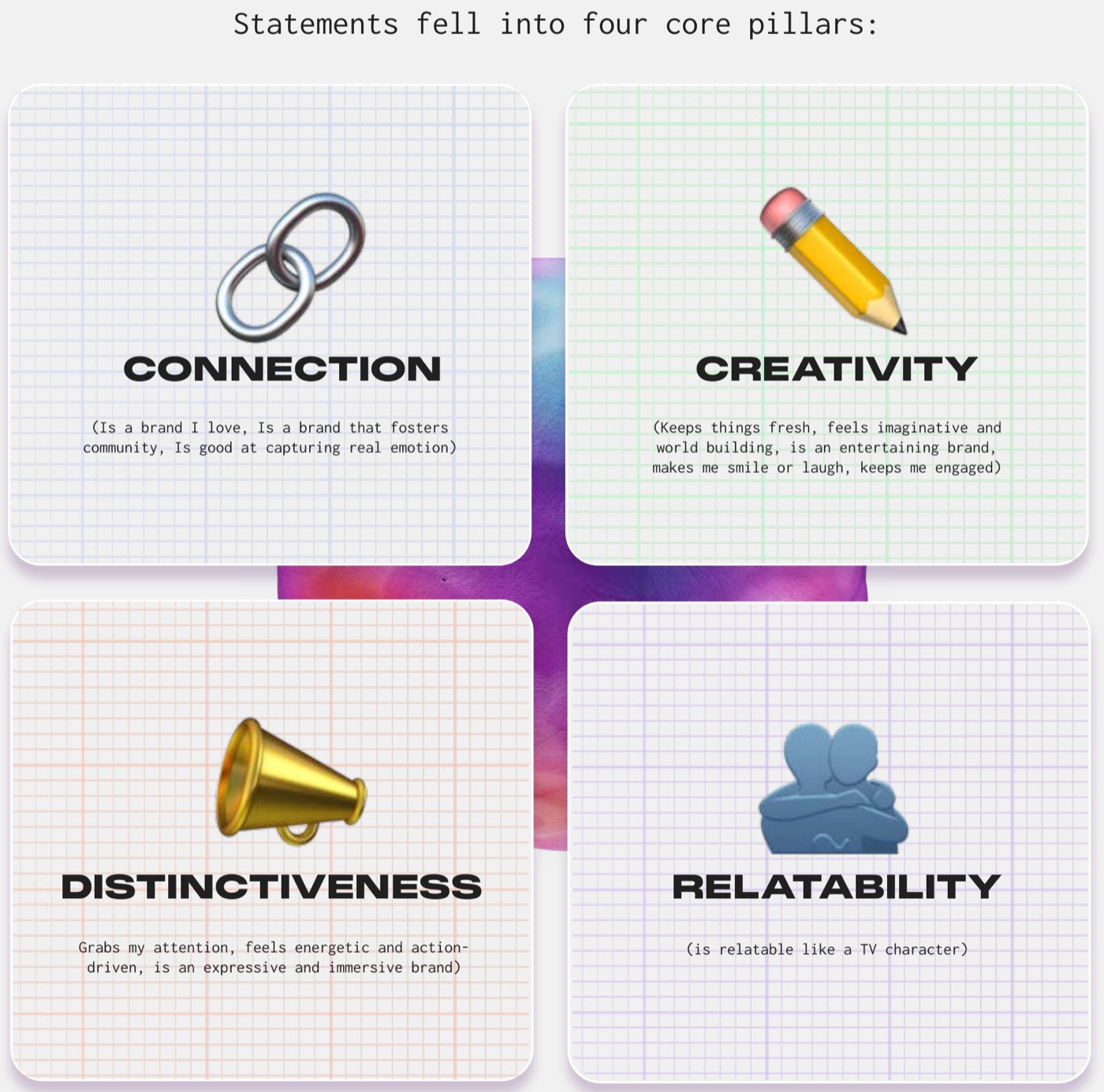
The useful bit for strategists is that "entertaining" stops being a mood. The index breaks it into four pillars, and the brands at the top score high on all of them.
Source: Entertain or Die 3.0, Small W•rld x Tracksuit (2026), p. 11
Connection means the brand feels loved, builds community and captures real emotion.
Creativity means it feels fresh and imaginative, builds a world and makes people laugh.
Distinctiveness means it grabs attention and feels energetic and immersive.
Relatability means it is "relatable like a TV character".
I have sat on enough Effie juries to know the usual failure. A brand scores beautifully on one of these, typically creativity, with one clever stunt, and then has nothing for the other three. The jury loves the film and then finds the data thin. A brand that is entertaining on all four is doing something structural, not lucky.
So here is the practical move. Put two or three of these statements in your next brand tracking wave, next to awareness. "Feels imaginative" and "relatable like a TV character" are the ones the top brands over-index on. You will not prove causation either, but you will finally have a number for the thing the creative team keeps asking you to defend.
From pricing the hole to digging the other way
The cost of dull gave us the case against. Entertain or Die gives us a first draft of the case for, with a way to measure it that does not depend on anyone's taste in a meeting room.
The obvious next question is how you actually make a brand that people choose to watch, at a budget smaller than Hershey's. That is the practical half, covered in the next post: fandoms, series, clips and one very simple rule for when to spend money behind a post.
Every figure from the report, with its source and page, sits in the Selfstorming wisdom library, next to the Cost of Dull data. And if your brief needs an entertaining angle before Thursday, the Creative Session will give you a first batch to argue with.