The working half of Entertain or Die 3.0: build from the edges in, make shows instead of spots, design for clipping, and only boost a post once shares hit 25% of likes. A cheap test is the best answer to the fear of bold work.
Duolingo's social team keeps several burner phones. Each one is set up with a different TikTok algorithm, so the team can see what a niche subculture sees when it opens the app.
It is the least glamorous research method imaginable, and it is the first step of the method in Entertain or Die 3.0 by Small W•rld and Tracksuit. The report's first half argues that entertaining brands earn more. The second half is a working method, and it is the part worth stealing.
The problem is not the stunt
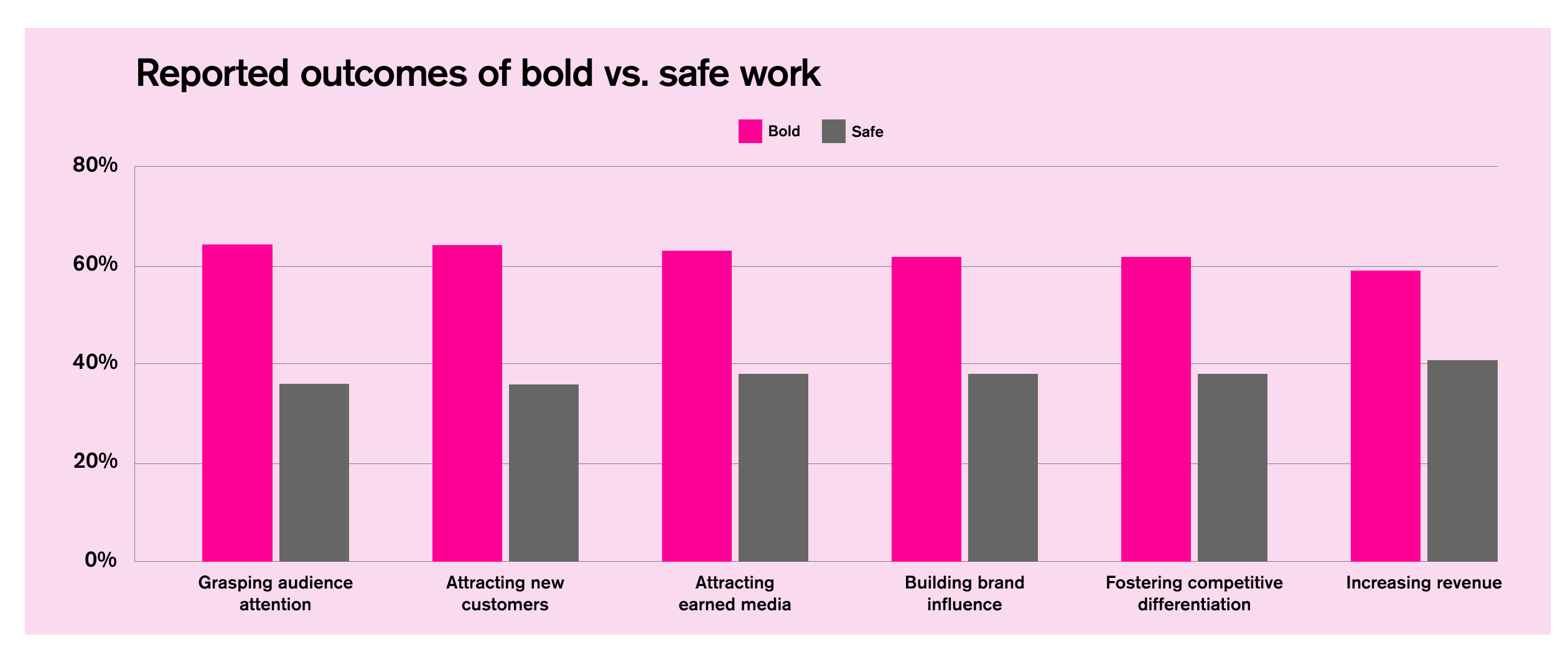
We already know where dullness comes from, and that every force behind it is a sensible decision on its own. Contagious and FleishmanHillard recently measured what caution costs inside the building, where bold work waits seven days for sign-off against three for safe work.
From the jury side I see the result every year. Plenty of entertaining work, almost all of it a one-off stunt. Brilliant film, big moment, then nothing, because there was never a system behind it. An entertaining brand is a habit, and a stunt is a one-night stand.
The report's method has four steps. Fandom mapping finds what entertains people. Performance art makes it. Discovery by design spreads it. Measuring what matters tells you whether it worked.
Start at the edges
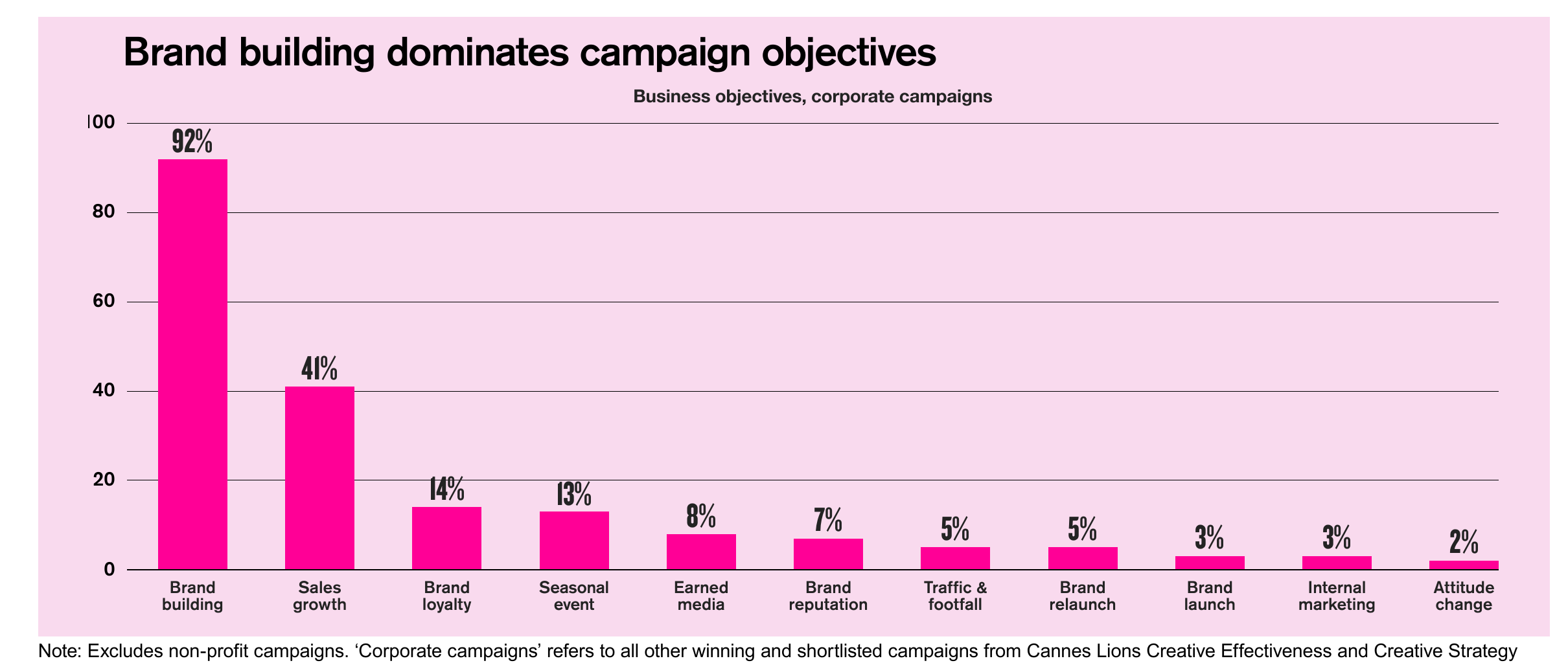
Instead of trying to reach everyone at once with a consolidated media buy, fandom mapping looks for smaller groups of people who are completely absorbed in something, and joins them. Meta's Peter Buckley calls it building brands "from the edges in". The report adds "(sorry Byron Sharp)", which is the funniest footnote I have read in a marketing report this year.
The rule that keeps this from turning into a sponsorship deck comes from McDonald's VP Jennifer Healan: "It's so important we're talking fan to fan, not brand to fan." Wimbledon did it in 2025 with posts on court aesthetics for design fans, players' cheat meals for foodies, and an Overheard series that let followers eavesdrop on spectators. It was still tennis, cut for people who do not care about tennis.
Shows, not spots
"Brands are TV networks," says Adam Faze of the social-first studio Gymnasium. The report calls it the telemorphosis of social: repeatable, TV-like formats that bring people back. Bilt scripted Roomies, one-minute-ish episodes about four roommates in New York with zero branding and hundreds of thousands of views.
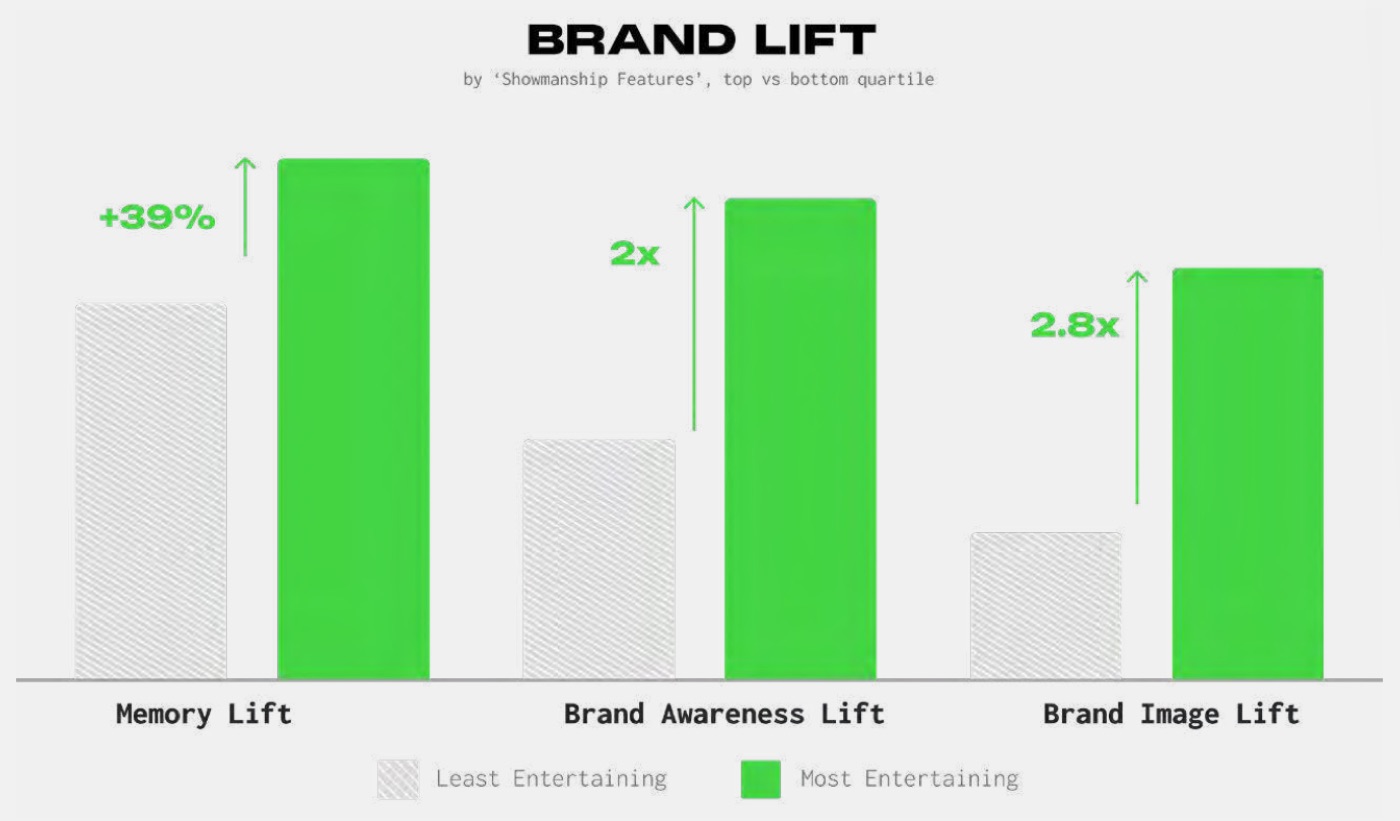
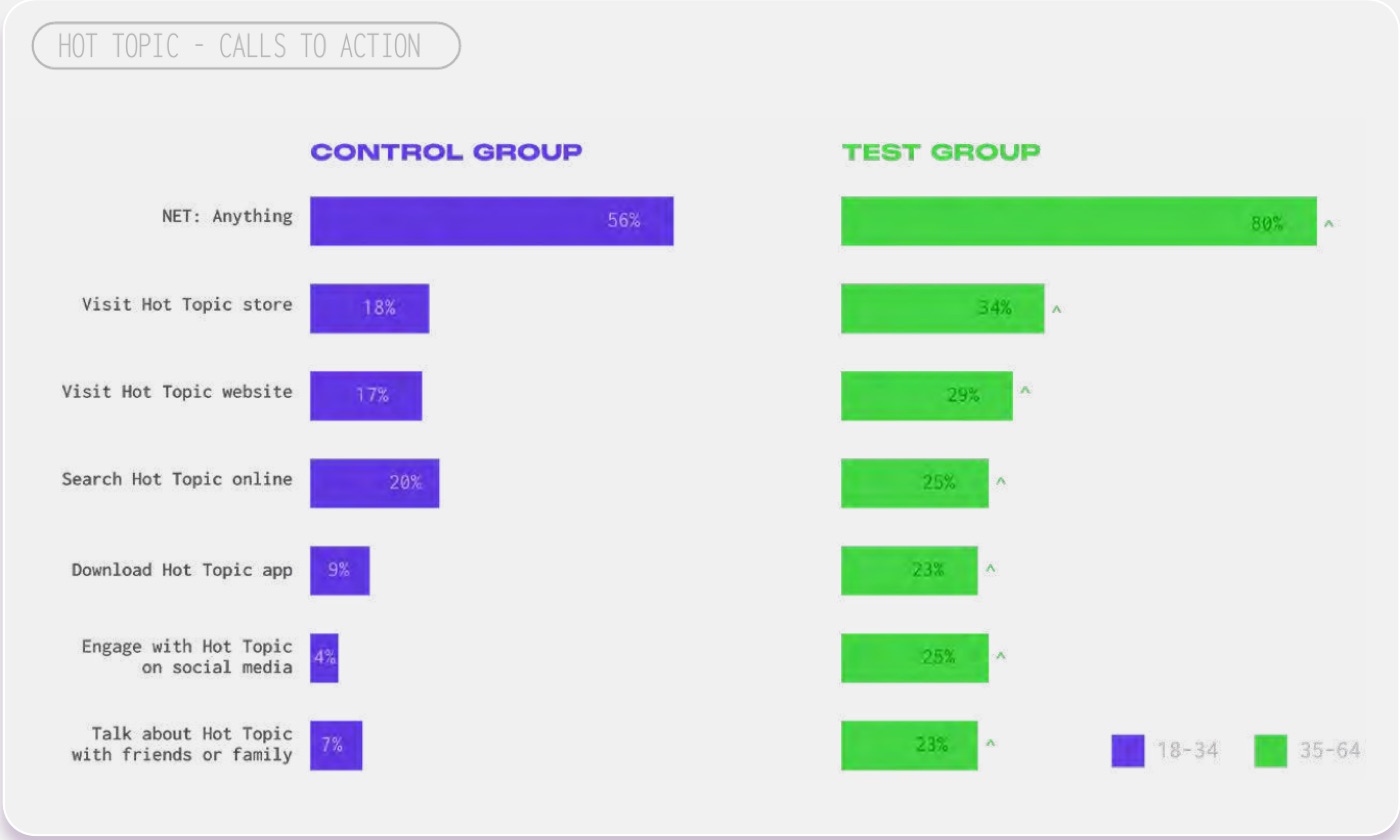
The best case is Hot Topic's Mall Rats, a campy TikTok sitcom that got 10m+ views. Small W•rld and Tracksuit ran a lift study on it, the kind usually reserved for TV, and intent to visit a Hot Topic store went from 18% in the control group to 34% among viewers.
Source: Entertain or Die 3.0, Small W•rld x Tracksuit (2026), p. 25
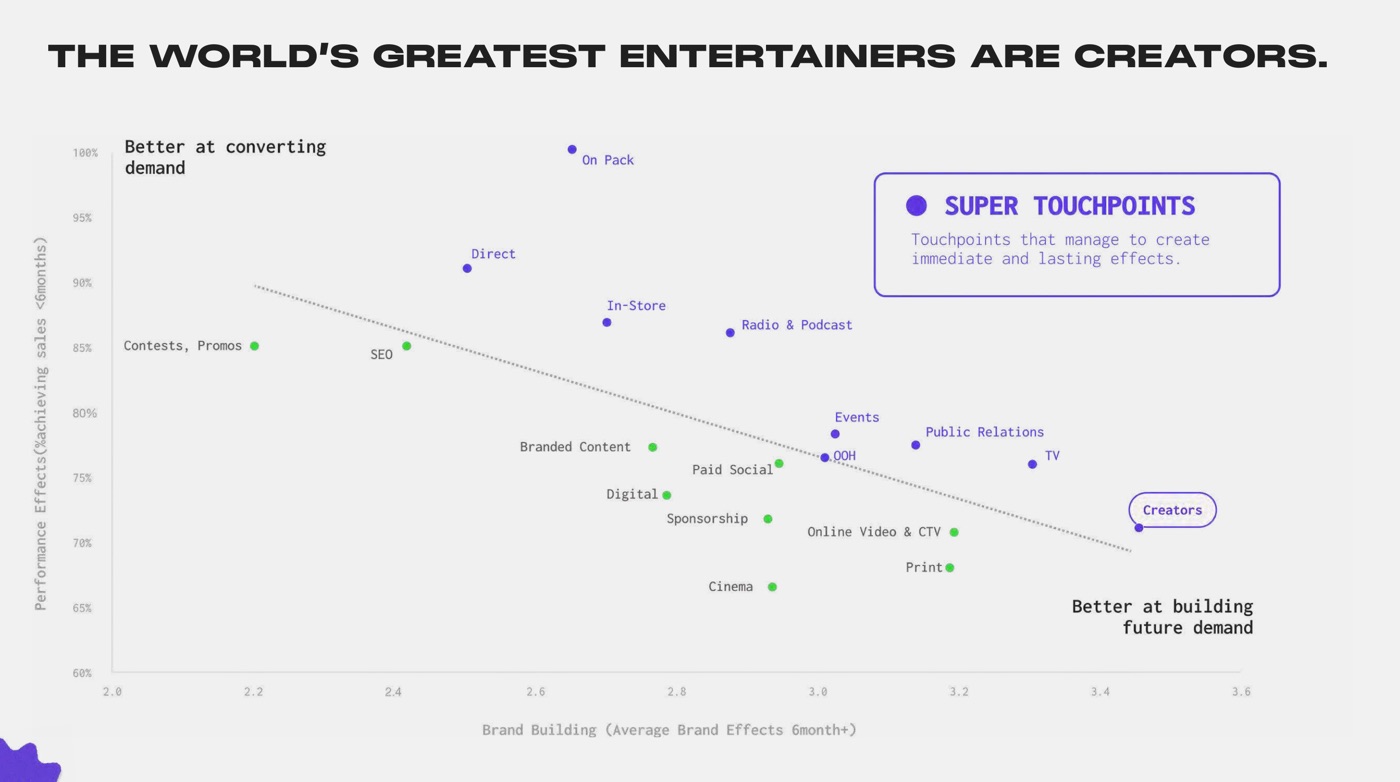
A series also does something a hero spot cannot. It repeats. Creators are recognisable before you see their face because of consistent formats, characters and sounds, and the report treats that consistency as a profit multiplier. That is also why creators keep showing up in the effectiveness data: System1 and the Effies found them to be the strongest touchpoint for building future demand across 1,250+ campaigns. We covered the creator side in the Creator Effectiveness Playbook.
Source: System1 & Effies, via Entertain or Die 3.0 (2026), p. 7
Design it to be clipped
"Clipping is the new syndication," says James Rowe of OBB. You make something long, and the best moments travel on their own. The French musician Rilès ran on a treadmill for 24 hours to launch an album. Ramp hired Brian Baumgartner, Kevin from The Office, as its CFO and livestreamed his first day. The report's verdict is "clip city".
The number that should worry every production budget is On's. Its Dreamers spot with Zendaya got 5m views on YouTube. The extra social content around it, bloopers and jokey Reels with stylist Law Roach, added another 45m+. The leftovers outdrew the main course nine times over.
The 25% rule
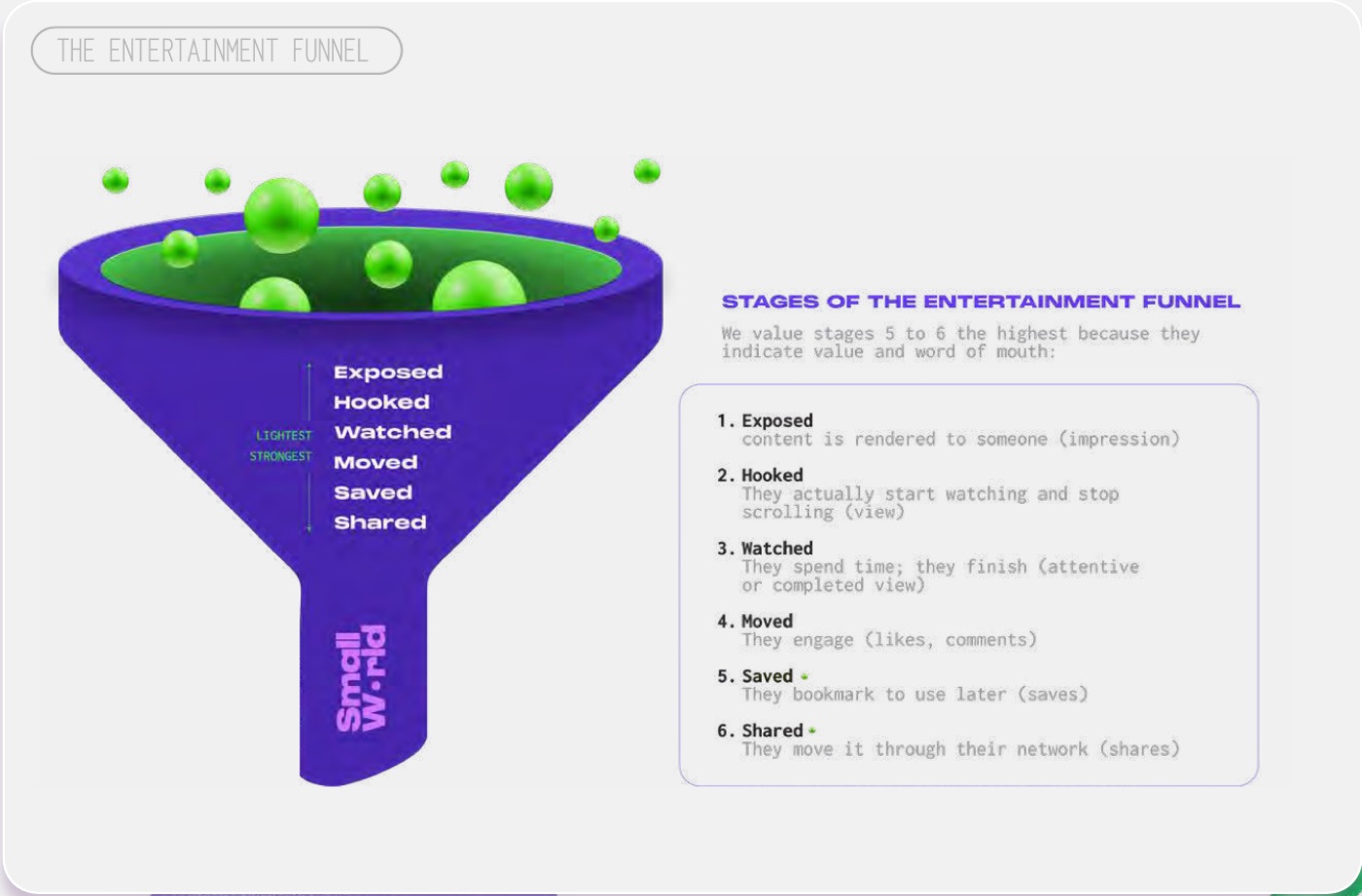
The measurement chapter is the reason I would hand this report to a client. Small W•rld's Entertainment Funnel runs from exposed to hooked, watched, moved, saved and shared. Impressions and even likes sit at the top, where the value is thin. Saves and shares sit at the bottom, where the word of mouth is.
Source: Entertain or Die 3.0, Small W•rld x Tracksuit (2026), p. 25
Then comes the rule. They only put paid money behind a post once shares reach at least 25% of likes, because at that point it is spreading on its own. Their Oatly Matcha Urgency Bag hit one share for every two likes. "Paid should amplify momentum, not try to create it."
Liquid Death runs the same logic as a ladder. Around $5k of social spend outside its usual audience. If save and share ratios hold, the idea becomes a YouTube pre-roll. If people do not skip it after the required five seconds, it can go to TV. It is the same loop Eucalyptus uses for creative graduation from a Meta ad to a TV campaign, run on shares instead of conversions. Their SVP of marketing Dan Murphy has one question for all of it: "Is it breaking through to places you can't get with a PR firm?"
Why this solves the courage problem
This is the part I think most people will read past. The usual fight about bold work happens in a meeting room, with taste against risk, and taste loses because it cannot show a number. The 25% rule and the $5k ladder move that fight out of the room. The bold idea gets a cheap test before it gets a budget, and the audience decides, not the most nervous person at the table.
That is a better answer to the fear of courage than another deck about bravery. Nobody has to be brave with $5k.
So pick one idea your team killed as "too much" this year. Cut it into something you can post, run it small, and check the shares against the likes. If it clears 25%, you have your argument. If it does not, you have saved yourself a TV budget.
All the figures from this report and from the Cost of Dull sit in the Selfstorming wisdom library. If you need a fandom angle or a series format for your next brief, start a Creative Session and argue with what comes back.