Contagious x FleishmanHillard analysed 118 Cannes Lions winners that turned live macro threats into brand growth: 92% brand-building, earned-first by design, 61% leading with information. The three hallmarks, three drivers and the diagnostic for your next post-mortem.
In January 2023, rioters stormed Brazil's Congress and paraded the stolen Federal Constitution as a trophy. Almost every brand did the sensible thing: nothing. Mercado Libre, the country's largest e-commerce platform, put every edition of the Constitution in its inventory on sale at 99% off within hours. The stock sold out in four hours, the Constitution became Brazil's best-selling book that week, and the move earned 1.5 billion impressions and $5.5m in media from $42k of spend.
That is not a lucky tweet. According to The Chaos Advantage, the new Contagious x FleishmanHillard study, it is a repeatable pattern. LIONS Advisory reviewed roughly 400 Cannes Lions Creative Effectiveness and Creative Strategy entries from 2023-2026 and found 118 campaigns that converted a live macro threat into business growth. The interesting part is what those 118 have in common - because it is teachable.
Three hallmarks, no heroics
Every qualifying campaign passes the same three tests. A defining condition: a clear external threat, real for consumers or the business, not a trend the brand invented to have something to say. Evidence-led urgency: data shows the threat is escalating, so the brand can act with data-informed confidence instead of vibes. And impact over inaction: the results show the brand building relevance on its own terms while competitors wait for permission.
Notice what is absent: nothing about courage as a personality trait. The chaos winners are not braver people; they are better prepared organizations.
This is brand building wearing a newsjacker's coat
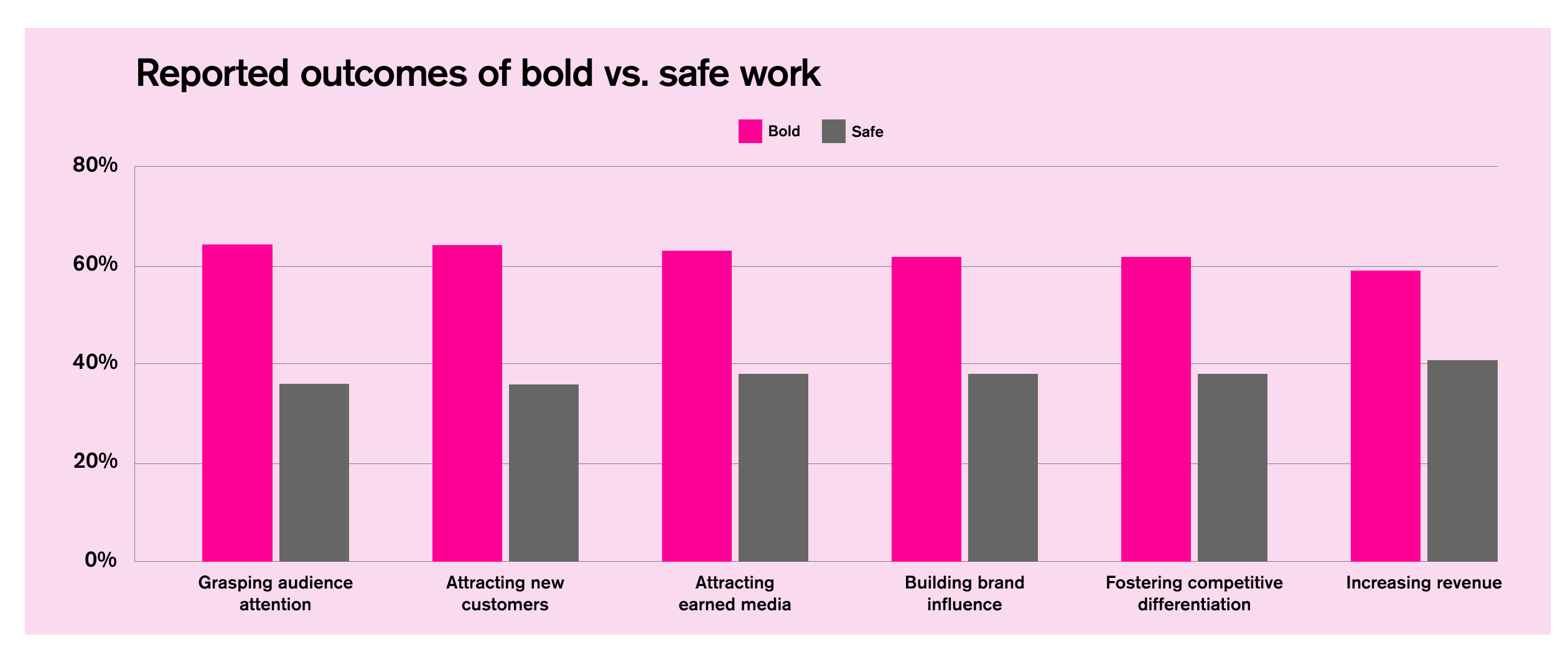
The lazy reading of moment-driven work is that it's tactical froth. The data says the opposite. Of the 118 campaigns, 92% carried brand-building objectives - most commonly equity (67%) and awareness (65%) - while seasonal activity (13%) and internal marketing (3%) barely register. Success gets measured in PR value (70%), awareness (56%), behavior change and brand equity (55% each); revenue and ROI show up in just 8% of cases.
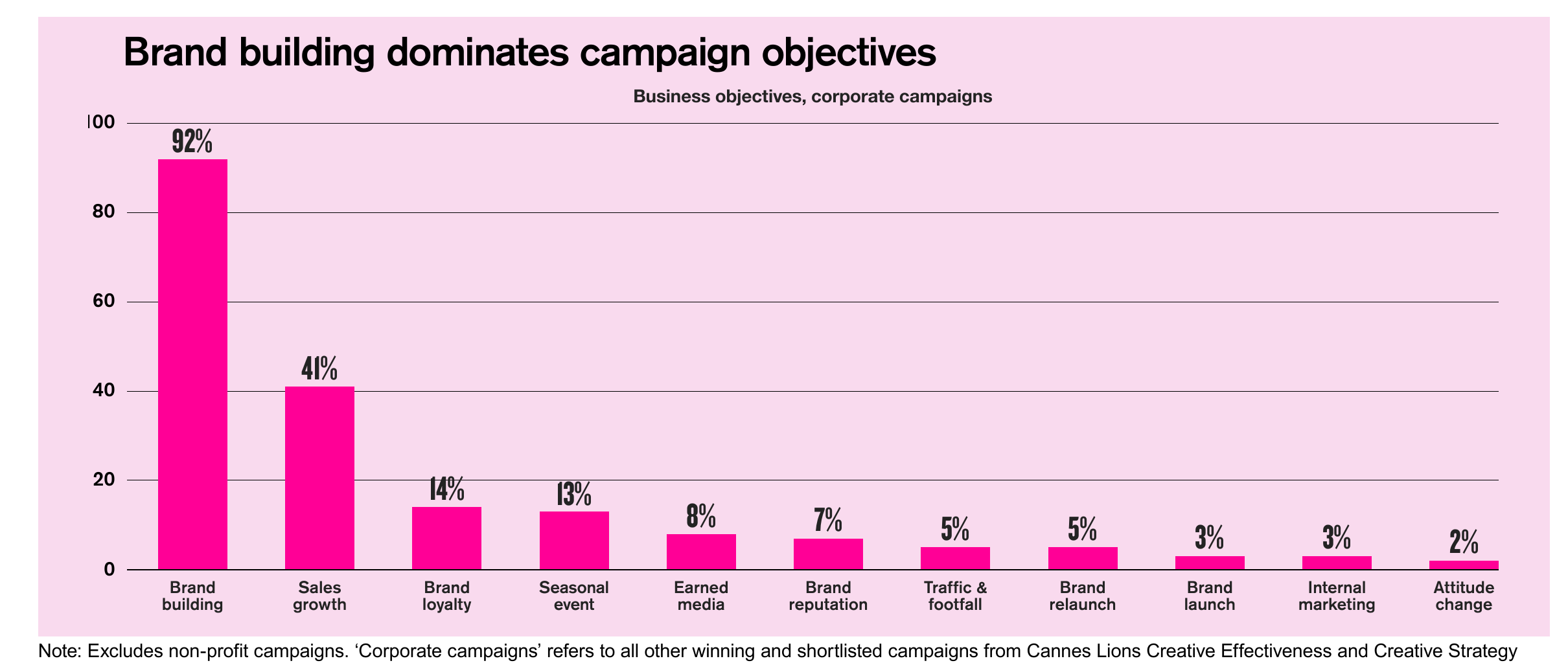
Source: Contagious x FleishmanHillard, The Chaos Advantage (2026)
The channel mix follows the same logic: earned-first by design. Owned media is the top lead channel (17%), with social (54%), PR and events (46%) and online video (39%) doing the support work. These campaigns are built to be discussed and shared, not broadcast.
The craft secret: add information, not noise
My favourite finding in the whole report: over 60% of the winning campaigns used an informative or educational creative strategy - nearly double the next approach. In calm times, leading with data is the boring 'System 2' move everyone scrolls past. In chaos, the logic flips: when people feel the ground moving, a new fact is the most arresting creative device available. The winners didn't comment on difficult conversations; they contributed to them - a piece of evidence, a proof point, a fact nobody had.
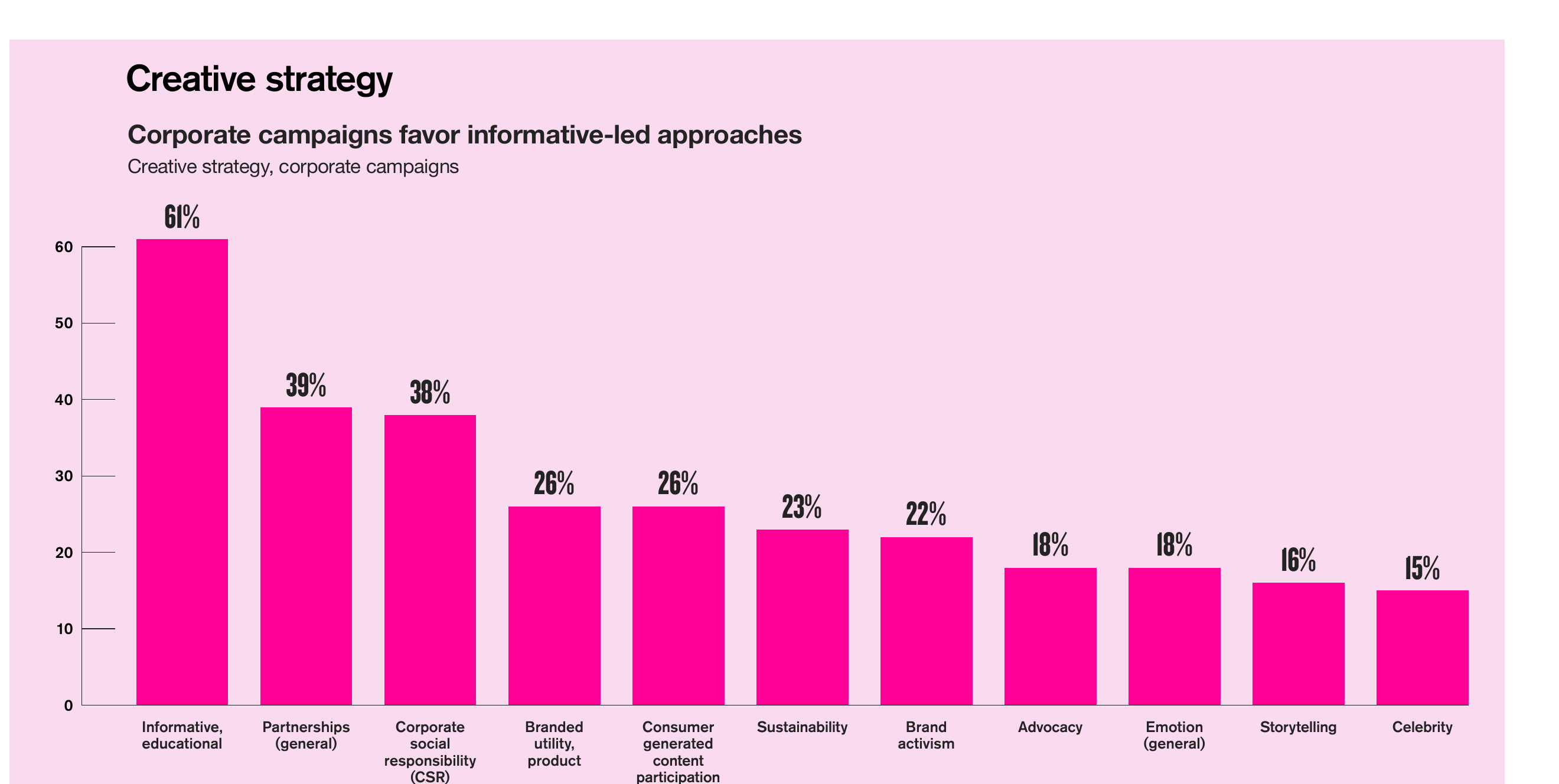
Source: Contagious x FleishmanHillard, The Chaos Advantage (2026)
O2's Daisy is the perfect specimen: with 7 in 10 Brits targeted by scammers, the telco built an AI grandmother who keeps fraudsters on the phone for up to 40 minutes. It added something genuinely new to the scam conversation - and collected 1.7 billion impressions from £20k, lifted scam-line awareness by 44% and prevented an estimated £3m in public losses.
Ziploc converted expired coupons into live offers during peak inflation and took its share of voice from 21% to 61%. Corona paid fishermen for plastic catch; Dove has been running the same play against every new beauty-pressure wave since 2004, to the tune of an estimated $28.34bn in incremental revenue.
The diagnostic: which driver are you missing?
The framework for applying all this has three drivers, and the report's diagnostic table is the most useful page in it. Right to participate: does the idea flow from what your brand is already known for? The audience grants that permission, not your strategy deck. Reason to watch: is the work sticky enough to hold attention? Dull work costs more because nobody watches it. Ability to execute: can your organization actually ship it in time?
Miss one and you get a named failure mode: never-shipped (dies in approval or arrives late), unattributed (visible, with no link to the brand), safely invisible (on-brand, signed-off, ignored). Miss two and you are down to missed opportunities, vanity projects or busy fools.
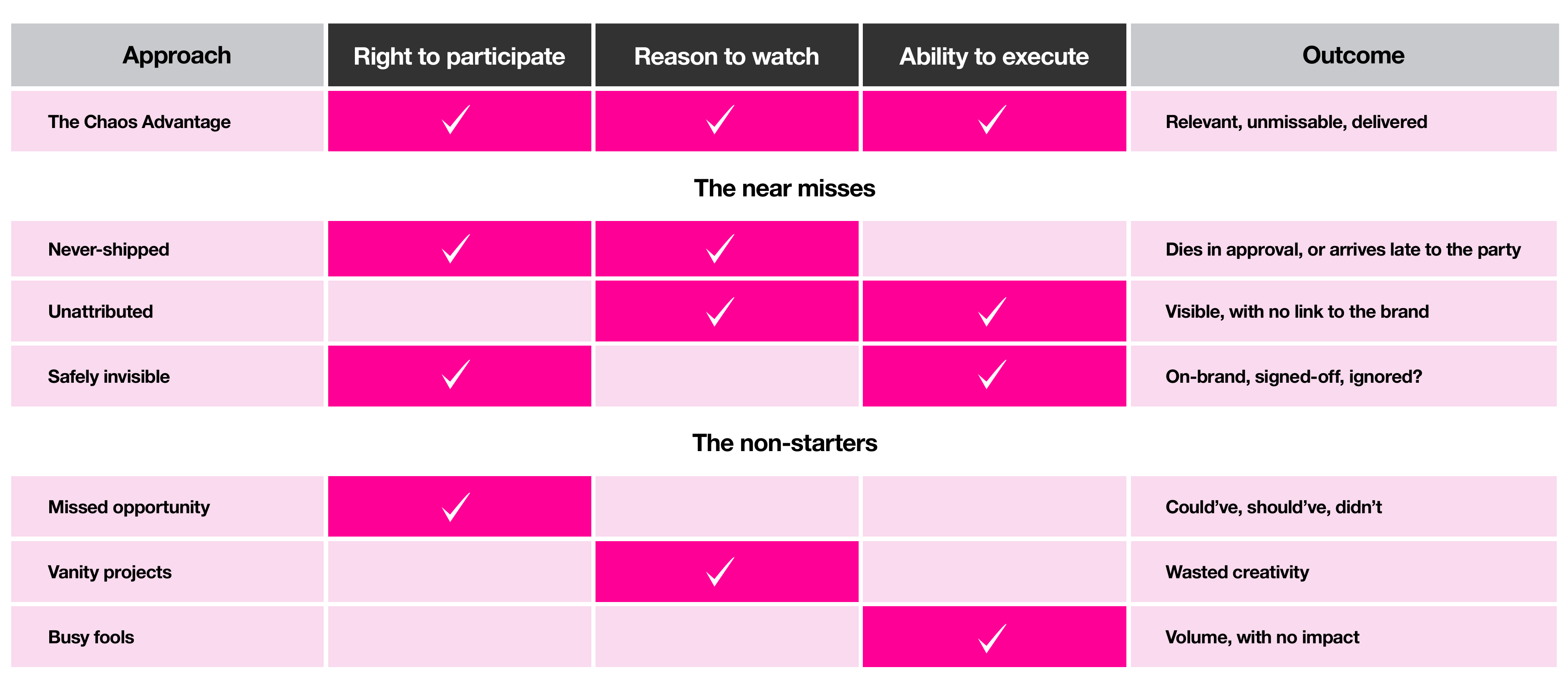
Source: Contagious x FleishmanHillard, The Chaos Advantage (2026)
I'd pin this table next to any campaign post-mortem. Most "the moment passed us by" stories in agencies I know are not creativity failures; they are a missing third column - the idea was good, the brand had the right, and legal was still reading the brief on day six.
Won before the moment arrives
Which leads to the report's quietest and most useful lesson: the Chaos Advantage is usually won in advance.
Mercado Libre could act within hours because the brand already knew what it stood for (free commerce needs democracy) and the path was clear. Dove never has to improvise a point of view, because it has been sharpening the same one for two decades. Know what you stand for, make something worth acting on, clear the path before the moment - that is the whole trick, and none of it can be done on the day.
That preparation is exactly the thinking work we obsess over at Selfstorming - a brand that has done its positioning homework and keeps its evidence organized can move while the window is open.
Chaos is not going anywhere. The queue of brands waiting for calmer weather is, conveniently, your head start.