Sales activation hits short-term targets 87% of the time and long-term profit 7% of the time. No digital-led campaign built very large pricing power at any budget. What the Hurman data says, and what it does not.
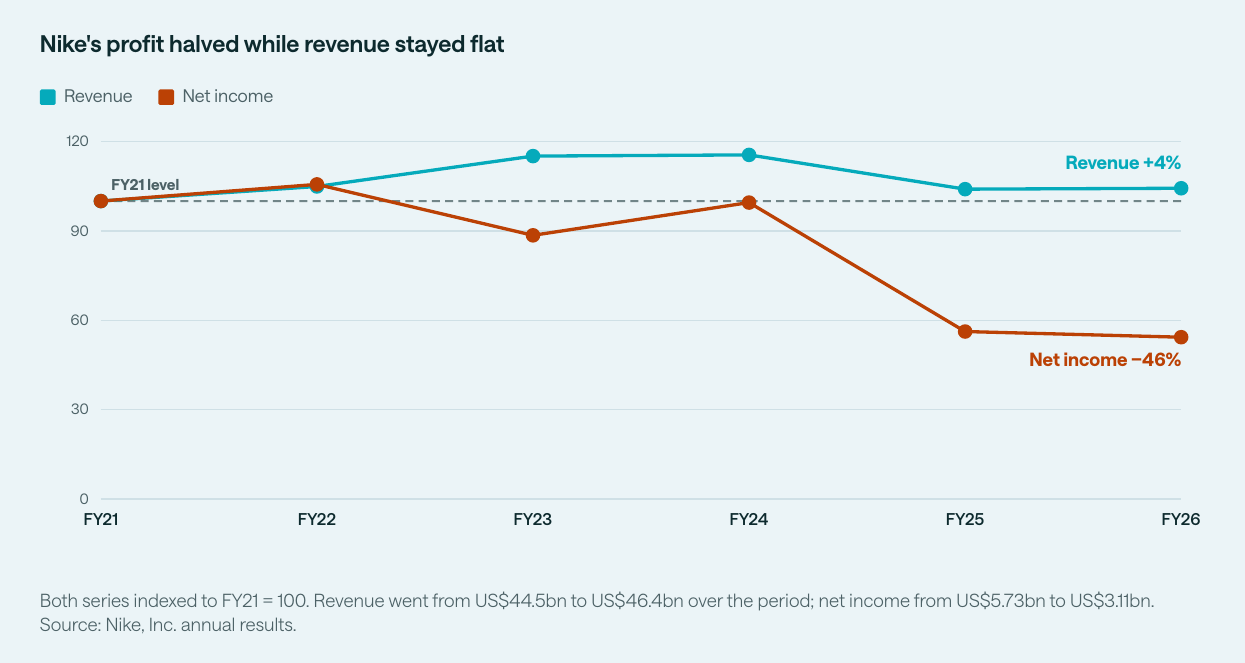
Nike's revenue is about where it was four years ago. US$46.7 billion in its 2022 financial year, US$46.4 billion in 2026. Its net income over the same period went from US$6.05 billion to US$3.11 billion.
Same sales, half the profit. James Hurman uses it as the most expensive illustration in The Funny Thing About Profit, his study of 217 New Zealand campaigns, and the report is careful about it. Nike's decline has several causes. Product cycle, China, inventory and damaged wholesale relationships are all on the list, and nobody can apportion them from outside.
The pattern the illustration stands for is in the data, though, and it is not kind to plans built on performance, influencers and user-generated content.
Activation works. It does not work on price.
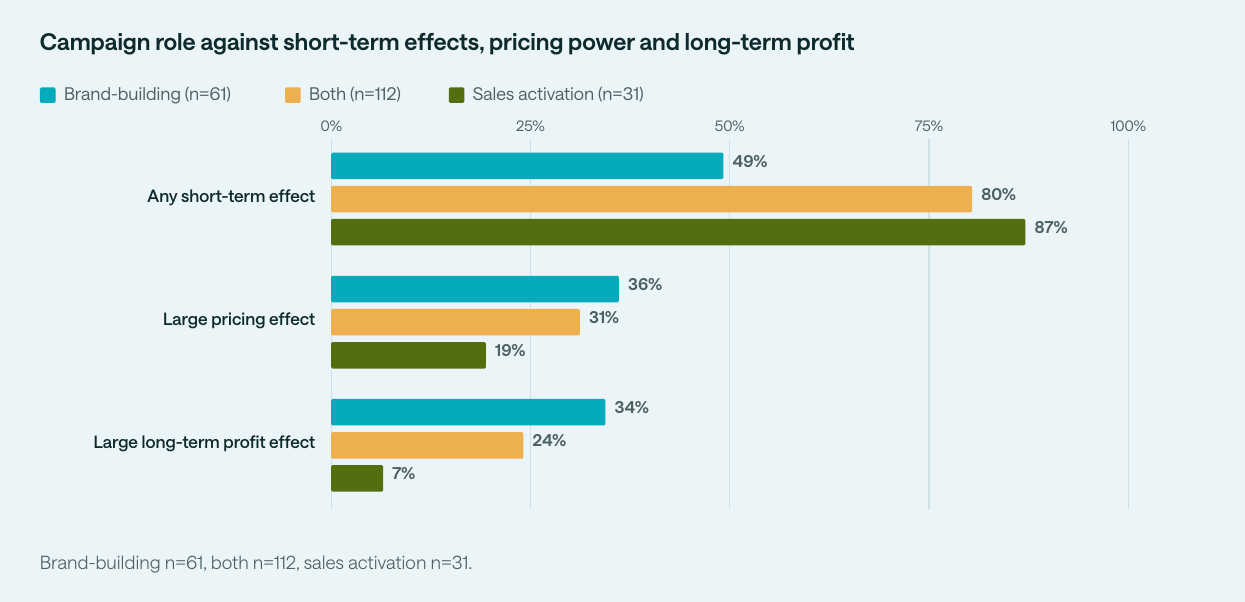
Start with the fair part, because the report does. Campaigns whose declared role was sales activation produced a short-term effect 87% of the time. That is the highest hit rate in the database. Brand-building campaigns managed 49%.
Source: James Hurman, The Funny Thing About Profit, Aotearoa Effectiveness Database / Commercial Communications Council NZ, 2026
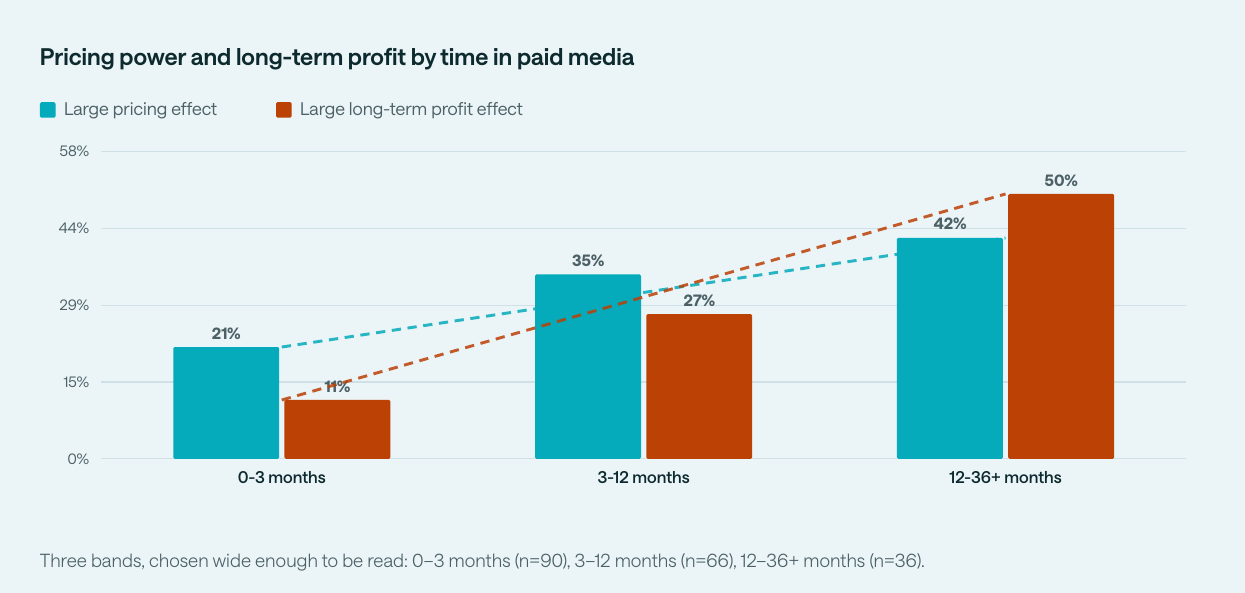
Then look at the other two rows. Activation campaigns produced a large pricing effect 19% of the time and a large long-term profit effect 7% of the time. Brand-building campaigns produced 36% and 34%.
Promotions and performance marketing move units this quarter. Often they do it by making the offer more attractive on price, which is the opposite of teaching the market to pay more. Hurman's verdict is the sentence to steal: "The error is not running them; it is running only them and then wondering why margin never improves."
What a digital-led plan has not yet done
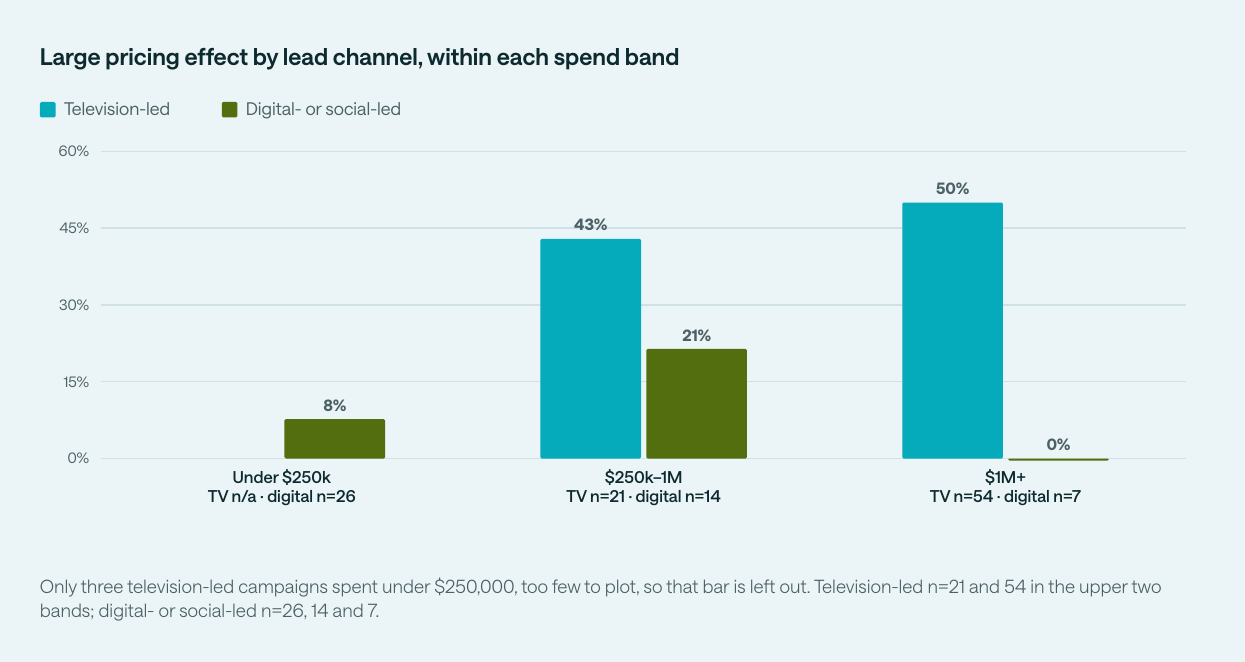
Forty-eight campaigns in the database led with a digital or social channel. Ten percent of them reported a large effect on pricing power. For television-led campaigns the figure is 47%.
The obvious objection is budget, so the report tests it. Twenty-one of the digital-led campaigns spent $250,000 or more. Between them they produced zero very large pricing effects and zero very large profit effects. Seven spent over $1 million. None of the seven produced a large pricing effect of any size.
Source: James Hurman, The Funny Thing About Profit, Aotearoa Effectiveness Database / Commercial Communications Council NZ, 2026
In the report's words, "nobody has yet demonstrated a digital-led route to pricing power at scale" in five years of New Zealand's best-documented work.
That is a finding about one job. On other jobs the same channels win. Digital-led campaigns are the best in the database at interaction and response (77%), at earned reach (52%) and at short-term ROI (50%). Paid search in the mix is associated with better short-term sales, 71% against 52%. The problem starts when a supporting channel becomes the whole campaign.
Borrowed feelings
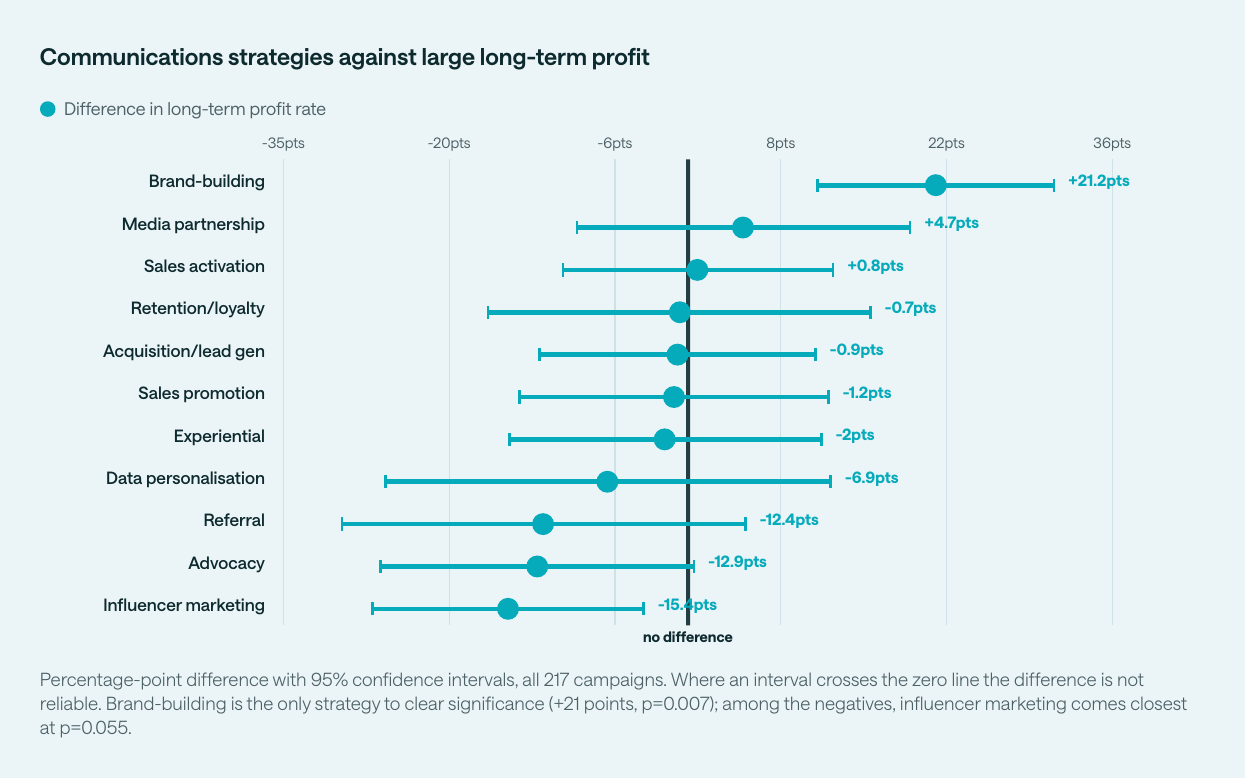
Of eleven communications strategies in the survey, brand-building is the only one with a significant positive link to long-term profit, at plus 21 points. Influencer marketing sits at the other end, at minus 15.
Source: James Hurman, The Funny Thing About Profit, Aotearoa Effectiveness Database / Commercial Communications Council NZ, 2026
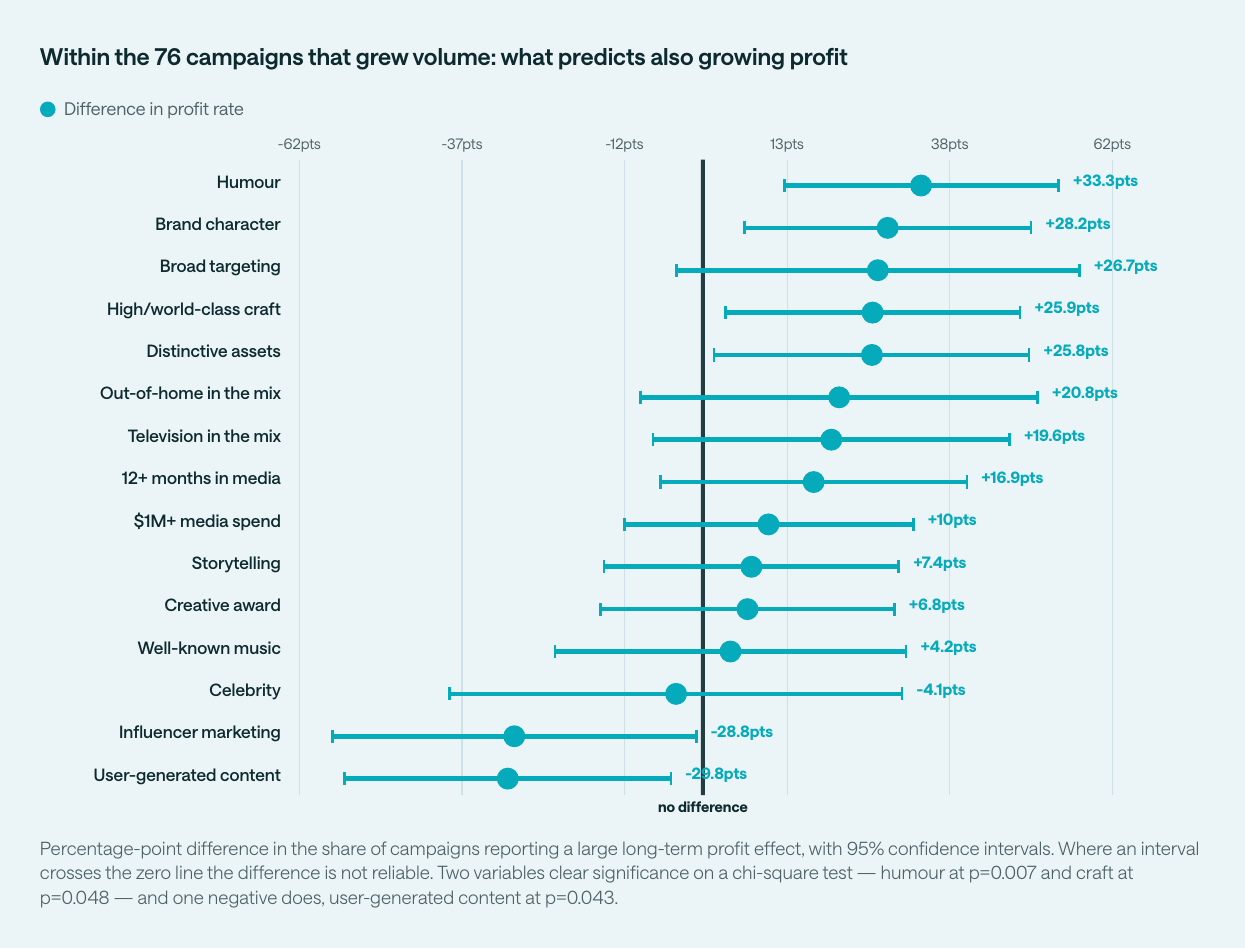
Among campaigns that grew sales, the picture is sharper. Those using influencers or user-generated content were about 30 points less likely to turn that growth into profit.
The report's explanation is structural. Influence is borrowed affect, and it is borrowed from someone who will lend it to a different brand next month. It does not pile up under your name the way a character or a long-running campaign does. It also tends to arrive in bursts, and pricing power is the slowest outcome in the database.
None of this says creators are useless. Our creator effectiveness playbook covers what they do well. It says they are not the line in the plan that defends your price.
The small-brand mistake
Back to Nike. In the early 2020s it reorganised its marketing around performance, influencers and direct-to-consumer selling, with one eye on how Hoka and On Running were growing.
Source: James Hurman, The Funny Thing About Profit, Aotearoa Effectiveness Database / Commercial Communications Council NZ, 2026
Hurman's reading is that Nike mistook the challengers' constraints for their strategy. Small brands use social and influencers to buy reach they cannot afford on broadcast. They sell direct while they climb the mountain of retail availability. Those are the things a brand does when it cannot yet pay for the marketing that lets big brands defend price.
His line: "The tactics that make a small brand bigger are not the tactics that keep a big brand big."
The lesson is not that digital is bad. A mix that suits a challenger with no pricing power to lose is dangerous for an established brand that has plenty.
What does the job instead
The report's answer is television with out-of-home. Campaigns using both reported a large pricing effect 40% of the time, against 17% for television without outdoor and 14% for outdoor without television.
Read that one with a raised eyebrow. The report was produced in partnership with oOh!media, which sells outdoor advertising, and the television-without-outdoor group is twelve campaigns. The wider finding stands on firmer ground: campaigns using three or more broadcast-style channels reached 41% on pricing power, and those using one or two stayed between 11% and 20%.
The rest of the usual caveats apply too. Effie entrants rated their own campaigns, the data shows association, and New Zealand is one market. It still agrees with what Tom Roach argues about doing both jobs, and with the report's headline finding on humour.
So here is a ten-minute exercise. Take your current media plan and write next to each line the job it is there to do. Sales this quarter. Leads. Reach. Then look for the line whose job is "lets us charge more next year".
If there is no such line, you now know where the margin went.