New data from 1,217 paid ads and $70M in spend proves creators build brands - but only if you measure what actually sticks.
If I have to sit through one more agency presentation that uses "impressions" as a proxy for brand love, I am going to throw my laptop into a canal. Let's be adults about this. A million teenagers scrolling past your video on their way to a dance trend is not a brand strategy. It is just a very expensive way to buy temporary custody of a screen.
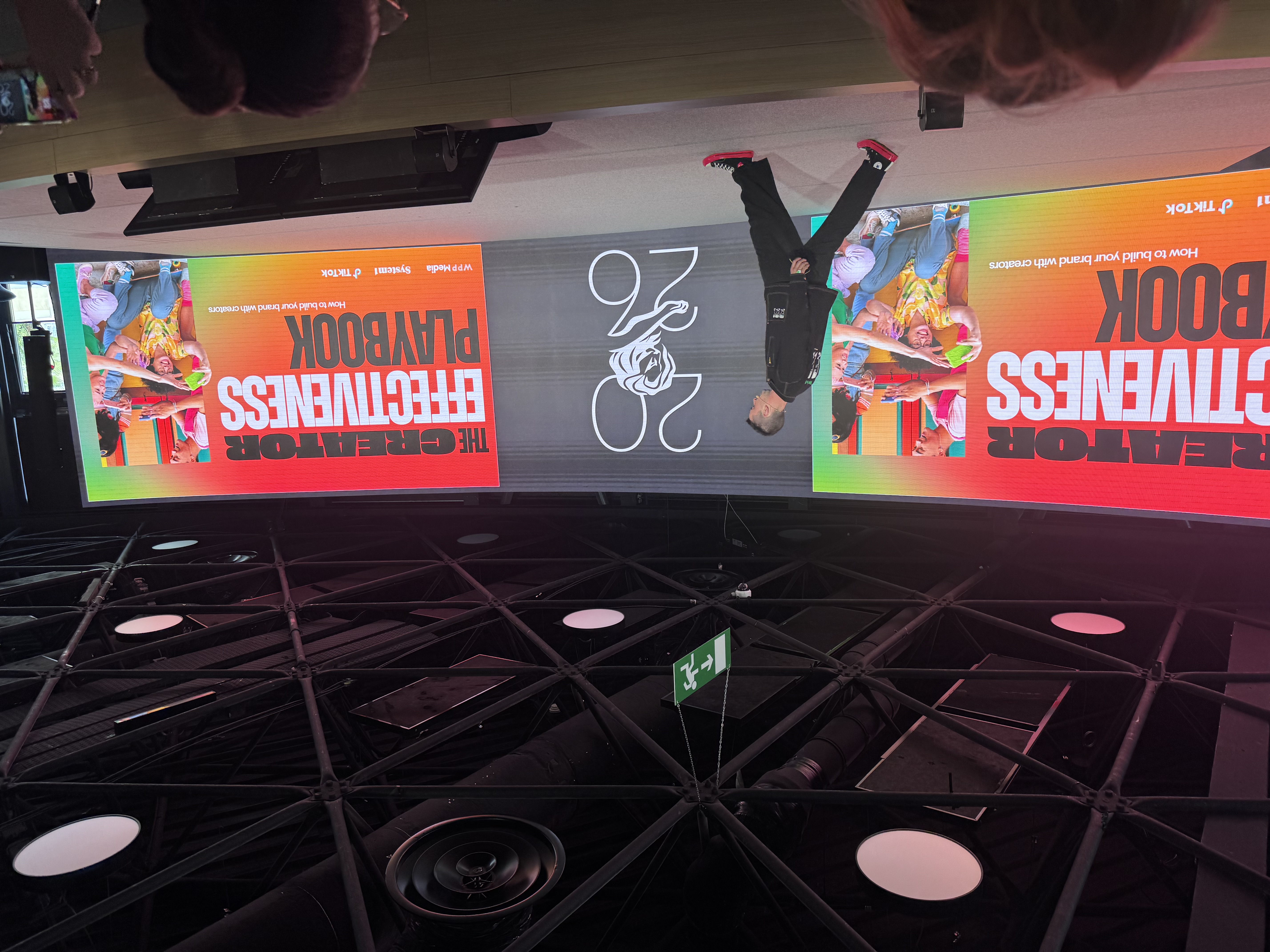
For years, creator marketing has lived in this weird, unaccountable sandbox. It was treated as a "social tactic" - a place where we throw some budget to look modern, measure it on likes, and hope for the best. But a massive new global study from WPP Media, System1, and TikTok has finally dragged creators into the cold light of marketing science. The dataset is serious: 1,217 paid ads, eight global markets, 183,000 users, and $70.5 million in real media spend.
The headline? Creators build brands. In fact, they build them exceptionally well. But the way most brands brief and measure them is actively killing their effectiveness.
---
The Shocking Long-Term Payback of Creators
Let's start with a contrarian truth. Most marketers think of social media as a short-term activation channel - a quick way to spike sales this weekend. But according to the IPA's Influencer Benchmarking databank, that is the exact opposite of where creators actually shine.
Over the long term, creators deliver an ROI index well ahead of standard paid social and carry the highest long-term multiplier of any channel measured - even nudging ahead of linear TV. According to The Law Of The Long And Short, brand building and activation do entirely different jobs. Creators, it turns out, are elite brand builders.
"If creator ads are going to build brands, they need to do more than earn attention, views, or engagement. They need to make the brand easier to remember later."
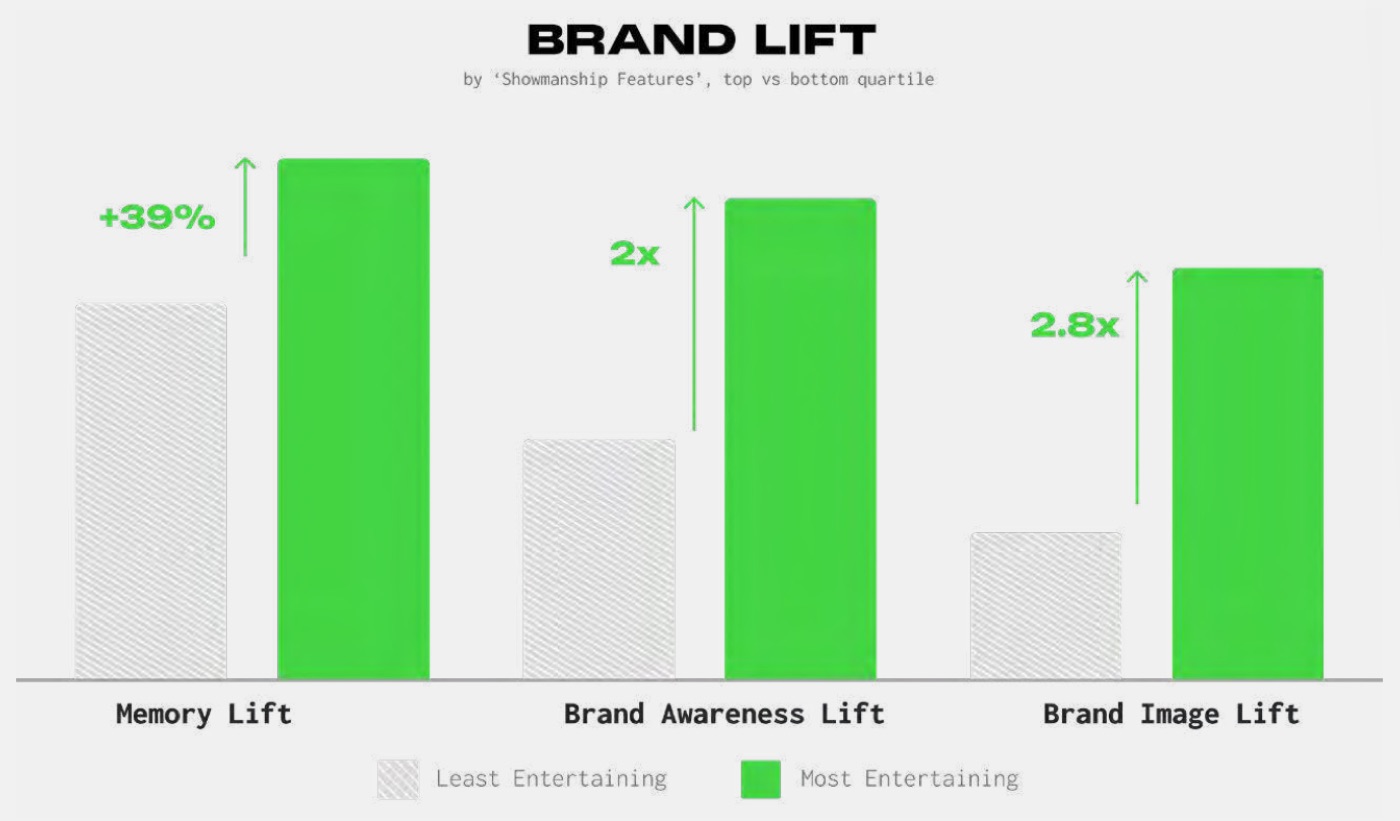
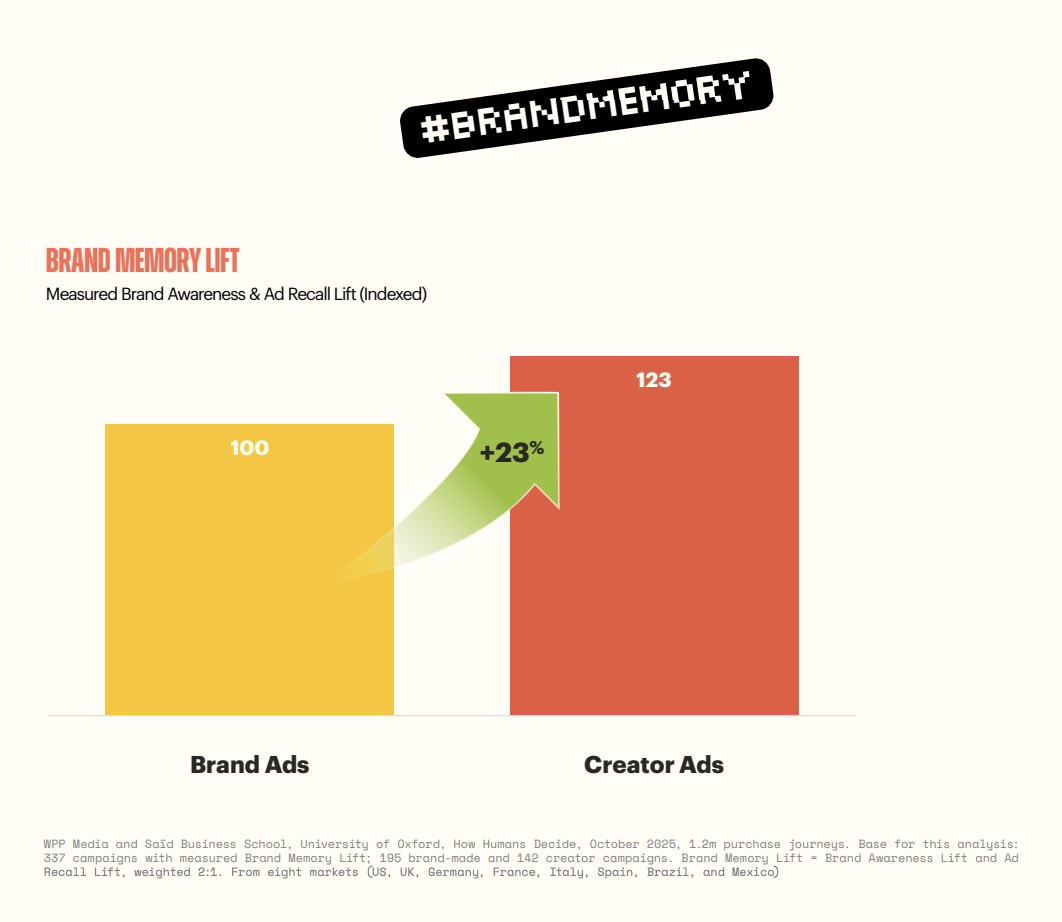
And when it comes to building memories, creator ads absolutely dominate. The data shows they deliver 23% more Brand Memory Lift than standard brand-made ads on short-form platforms. They are not a side dish; they are a super-touchpoint.
---
The Three Levers of Creator Brand Memory
If creators have the potential to build massive future demand, why do so many campaigns whiff? Because of a massive performance gap. An exceptional minority is carrying a highly mediocre majority.
To fix this, the playbook codifies creator impact into three distinct levers that drive actual brand memory. Let's break them down:
The Lever | What It Actually Means | How to Maximize It |
|---|---|---|
Creative Quality | Positive emotion paired with distinctive brand cues in the first 2 seconds. | Brief for entertainment, but make the brand's role undeniable from the start. |
Creator Fame | The share of your target audience that actually recognizes the creator's face or style. | Stop hiring micro-influencers with high engagement but zero actual cultural footprint. |
Brand Fit | Whether the audience believes the brand actually belongs in the creator's universe. | Avoid the cringe of forcing a serious B2B software brand into a chaotic comedy sketch. |
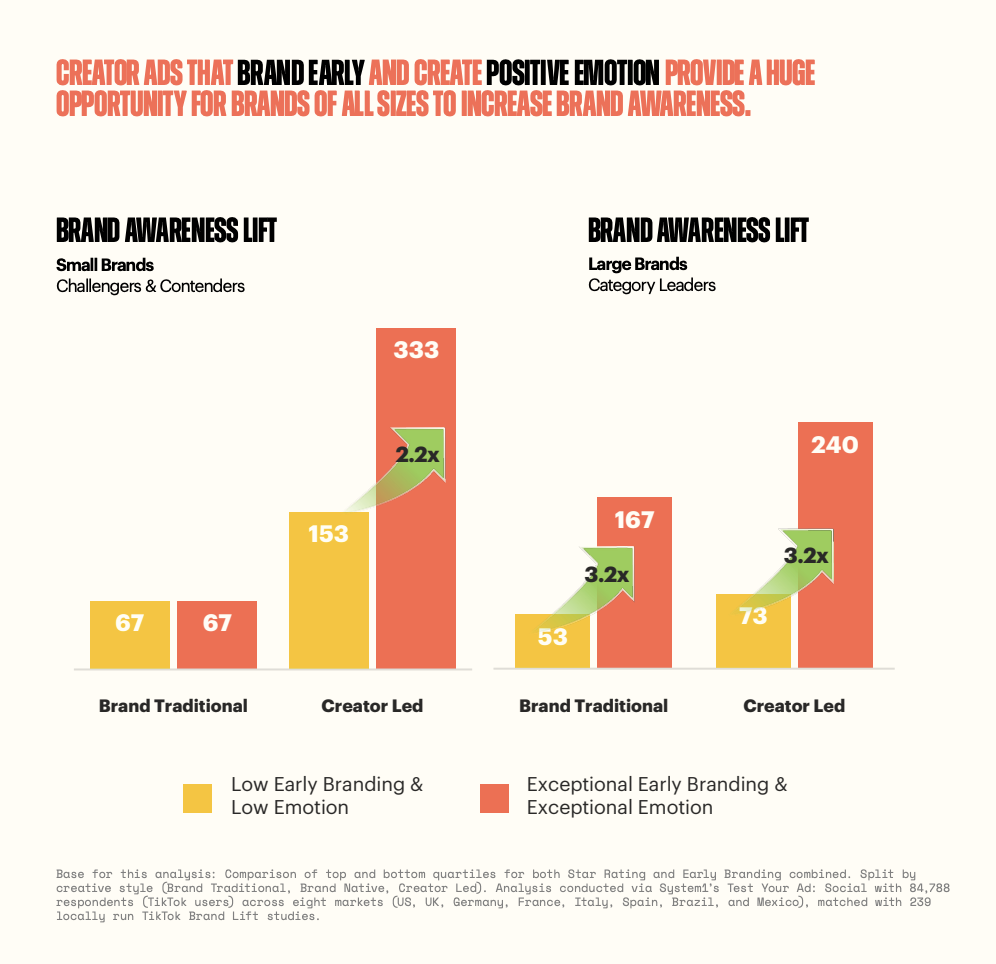
The most important discovery here is the relationship between emotion and branding. A creator ad that generates high positive emotion but hides the brand until the last frame is useless. It is charity work for the creator's personal brand, funded by your media budget. To build mental availability, you must brand early and entertain deeply.
---
Stop Measuring the Wrong Things
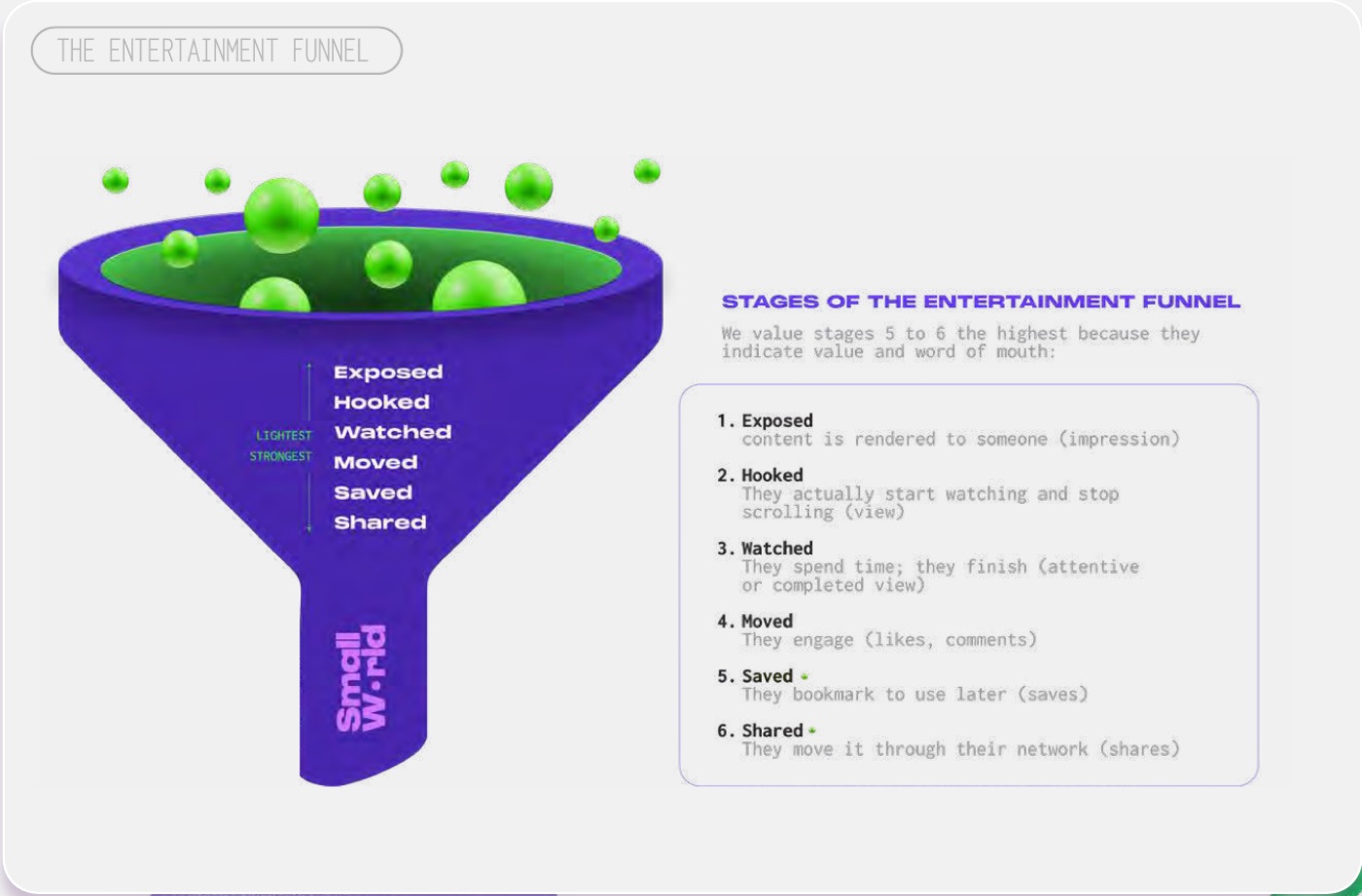
We need to talk about our obsession with engagement metrics. Likes, comments, and shares are what Rory Sutherland might call "legible but useless" data. They are incredibly easy to put into a PowerPoint deck, which is why brand managers love them, but they have almost zero correlation with long-term brand growth.
In fact, the study proved that Creative Quality explains Brand Memory Lift five times better than the best engagement metric. If you are still optimizing your creator spend based on click-through rates or comment volume, you are essentially letting the algorithm optimize your brand into oblivion. This is a classic case of The Law Of Over-Optimization - you test for what is easy to measure until your work becomes completely average and forgettable.
Think of the iconic campaign by Andrex, First School Poo. It succeeded because it addressed a highly relatable, unspoken human conflict with humor and warmth, building deep emotional memories. It did not rely on flashy social media tricks; it relied on human truth.
---
How to Brief Creators for Real Brand Impact
So, how do we apply this on Monday morning? It starts with how we brief. If you treat a creator like a production agency and hand them a rigid script, you strip away the very thing that makes them effective: their authenticity. But if you give them total freedom, they will forget to include your product. You have to set the ceiling, then let them play.
Set the Strategy First: Use the Get Who To By framework to define the exact behavioral shift you want. Do not let the creator decide what the strategic problem is.
Demand Early Branding: The brand must be integrated naturally within the first two seconds. If the creator objects, remind them of The Law Of Fluency - if the audience has to work too hard to understand who is talking, they will simply swipe away.
Focus on the Tension: Give the creator a real tension to play with. As we see in our Creative Strategy Techniques, tension is what gives an idea its teeth.
If you are struggling to find that perfect balance between strategic guardrails and creative freedom, try running a quick Creative Session or use our Hooks Session tool to generate high-performing hooks that creators can naturally adapt into their own voice. It beats staring at a blank document at 2 AM.
The math is simple. Creators have the attention; your brand has the commercial objective. Stop treating paid creator ads as a cheap social experiment and start treating them like the long-term brand-building engine they actually are.