I sat in the room at Cannes when System1 compared creator media buying to a casino. Here is the live argument - Abbott's fax-machine insult, the chart that killed engagement rate, and Gordon Ramsay's tale of two ads.
There is a moment in every Cannes session where the speaker says something the room did not pay 4,000 euros to hear. At The Creator Effectiveness Playbook launch, that moment came early, when Andrew Tindall of System1 put up a slide comparing creator media buying to a casino. Not as a compliment.
I was in the room, phone out, eyes open. We have already covered the playbook's headline numbers - 1,217 paid TikTok ads, 23.6 billion impressions, eight markets. This post is about what the PDF does not fully capture: the live argument, the jokes that carried the knives, and the Gordon Ramsay case study that should be taught in every briefing meeting.
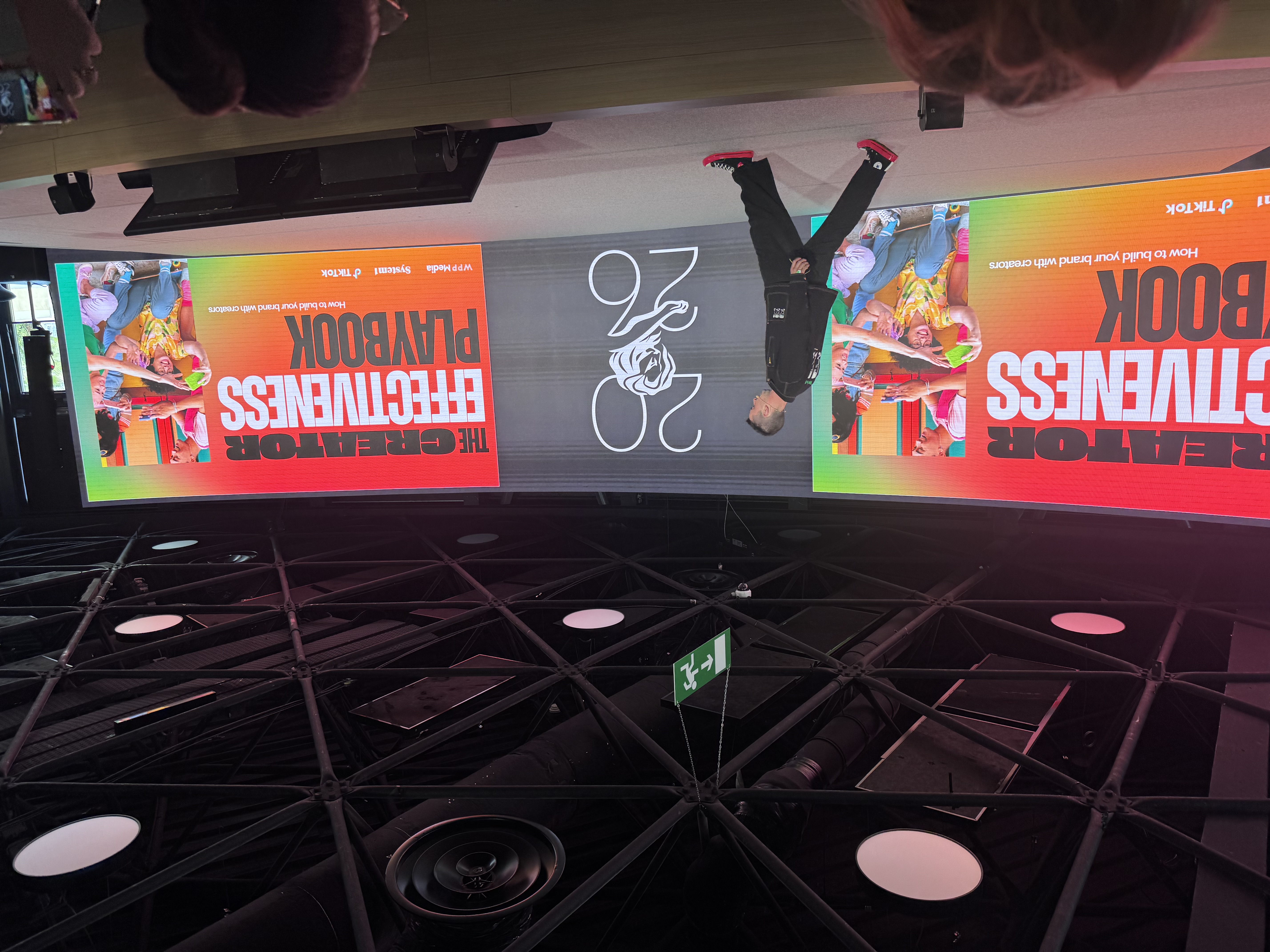
Source: The Creator Effectiveness Playbook session, Cannes Lions 2026. Photo: Martin Woska.
The naughty-marketer diagnosis
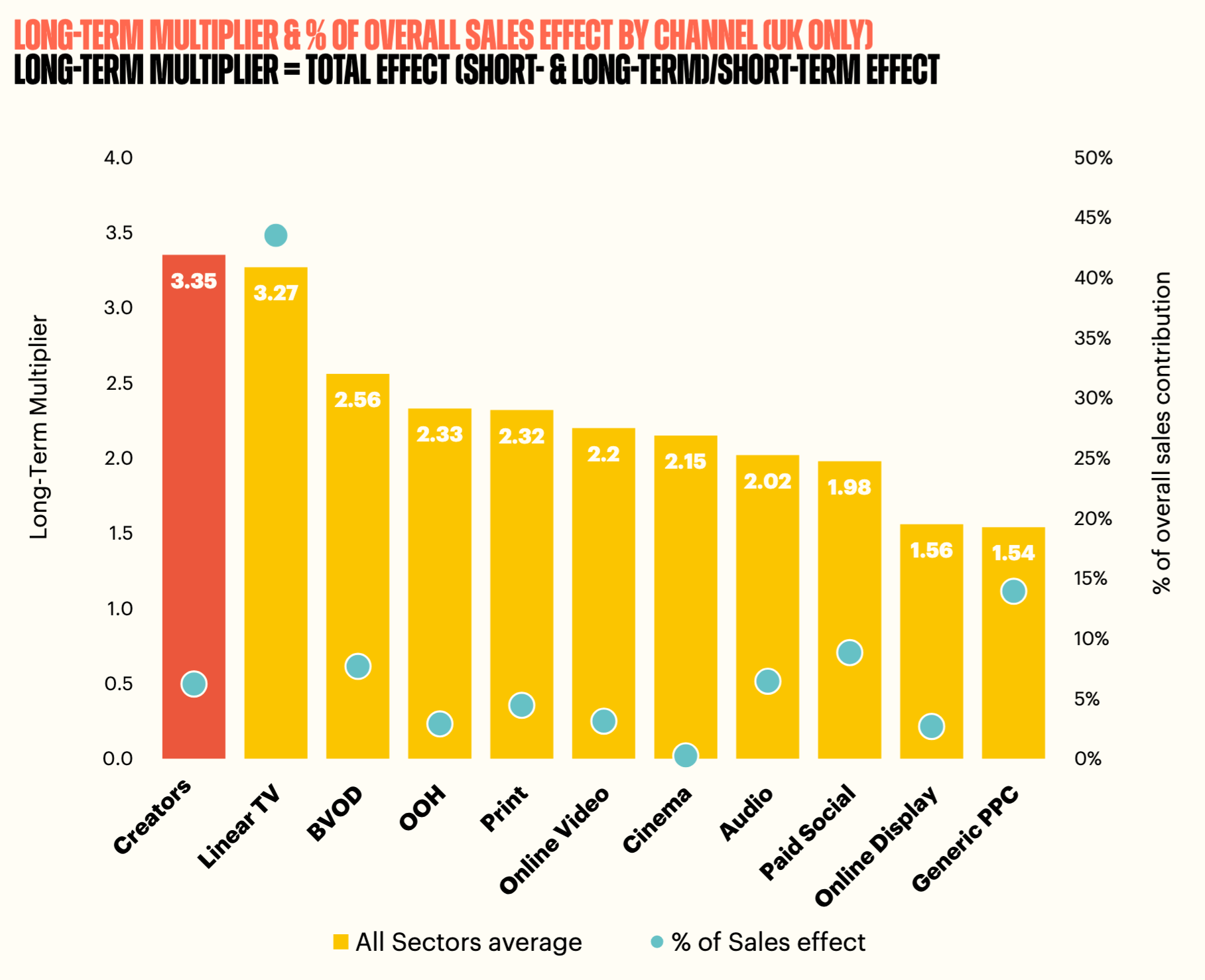
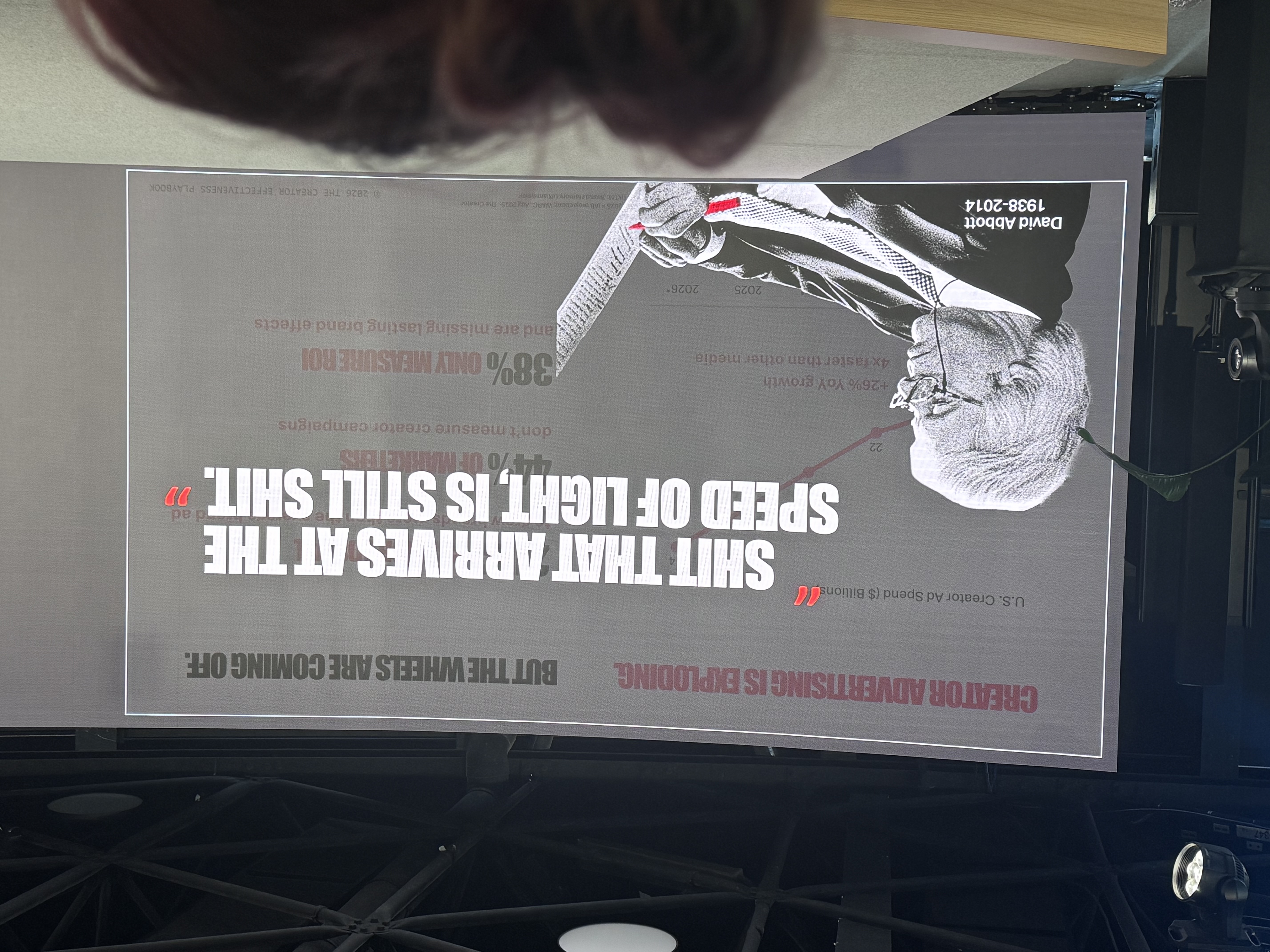
The setup is uncomfortable. US creator spend grows 26% a year - four times faster than other media. And yet two in three creator campaigns fail to build brand memories any better than an average brand ad. 44% of marketers do not measure creator work at all, and 38% measure only short-term ROI, which for a channel whose entire superpower is long-term brand building is a bit like judging a marathon runner on the first hundred metres.
Tindall's summary borrowed a line from David Abbott that got the biggest photo-flurry of the morning:
Source: The Creator Effectiveness Playbook session, Cannes Lions 2026. Photo: Martin Woska.
"Shit that arrives at the speed of light is still shit." Abbott said it about fax machines. It works even better about AI-accelerated content pipelines producing more creator ads, faster, with less thought. Btw. it's featured in every 4-th marketing presentation on earth this year :D
The casino, explained
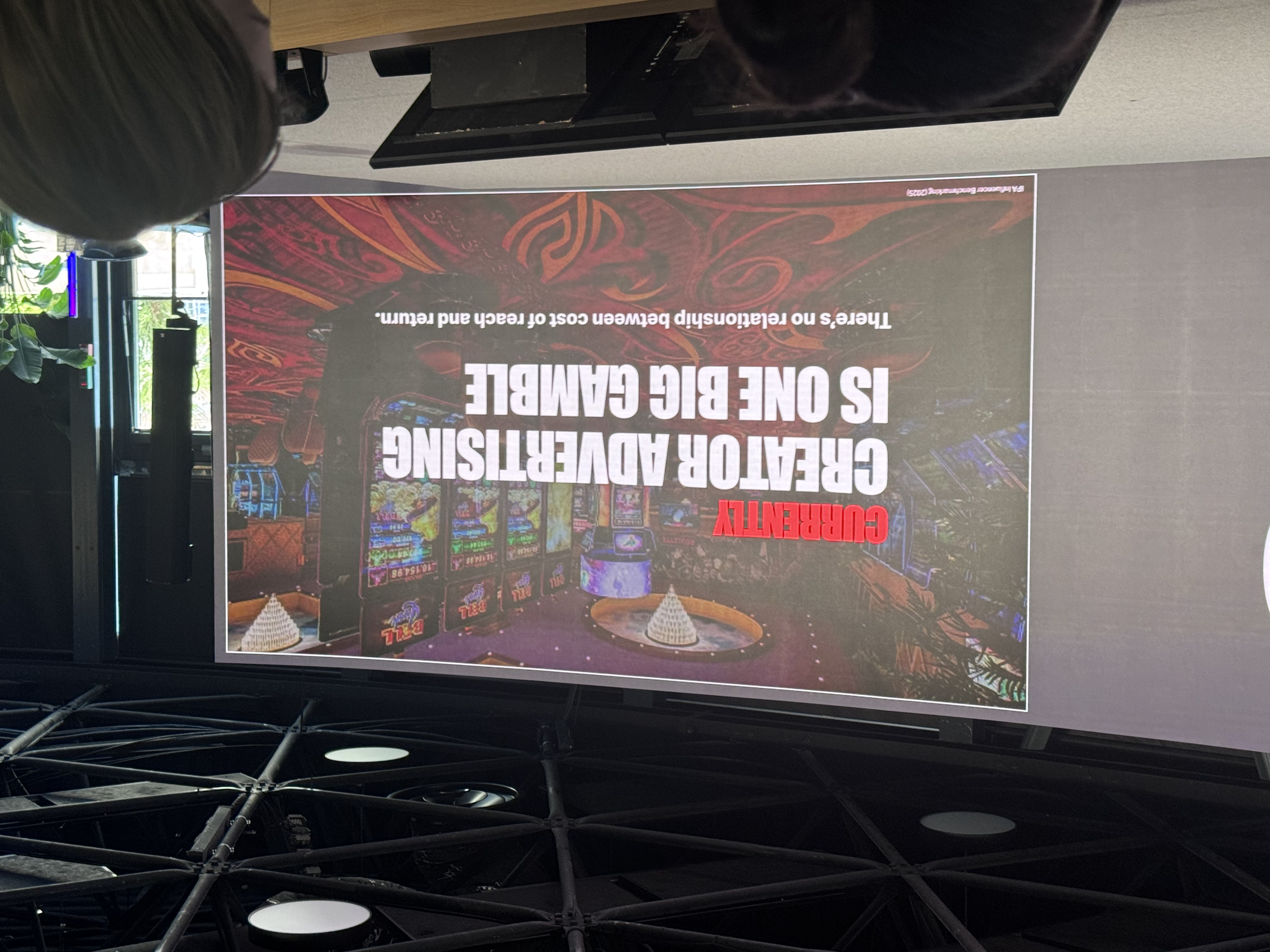
Here is the part that should terrify anyone signing off creator budgets. System1 and WPP Media looked for a relationship between media parameters - CPMs, spend levels, impression volumes - and actual brand outcomes. They found none.
Source: The Creator Effectiveness Playbook session, Cannes Lions 2026.
You can win big at a 1 pound CPM and lose half your money at 40 pounds. "It's like going to the casino," Tindall said. The channel has no shared planning language, so everyone plays roulette and calls the wins strategy. The playbook's whole purpose is to replace luck with the two things that actually predict outcomes: creative quality and strategic fit.
The slide that killed engagement rate
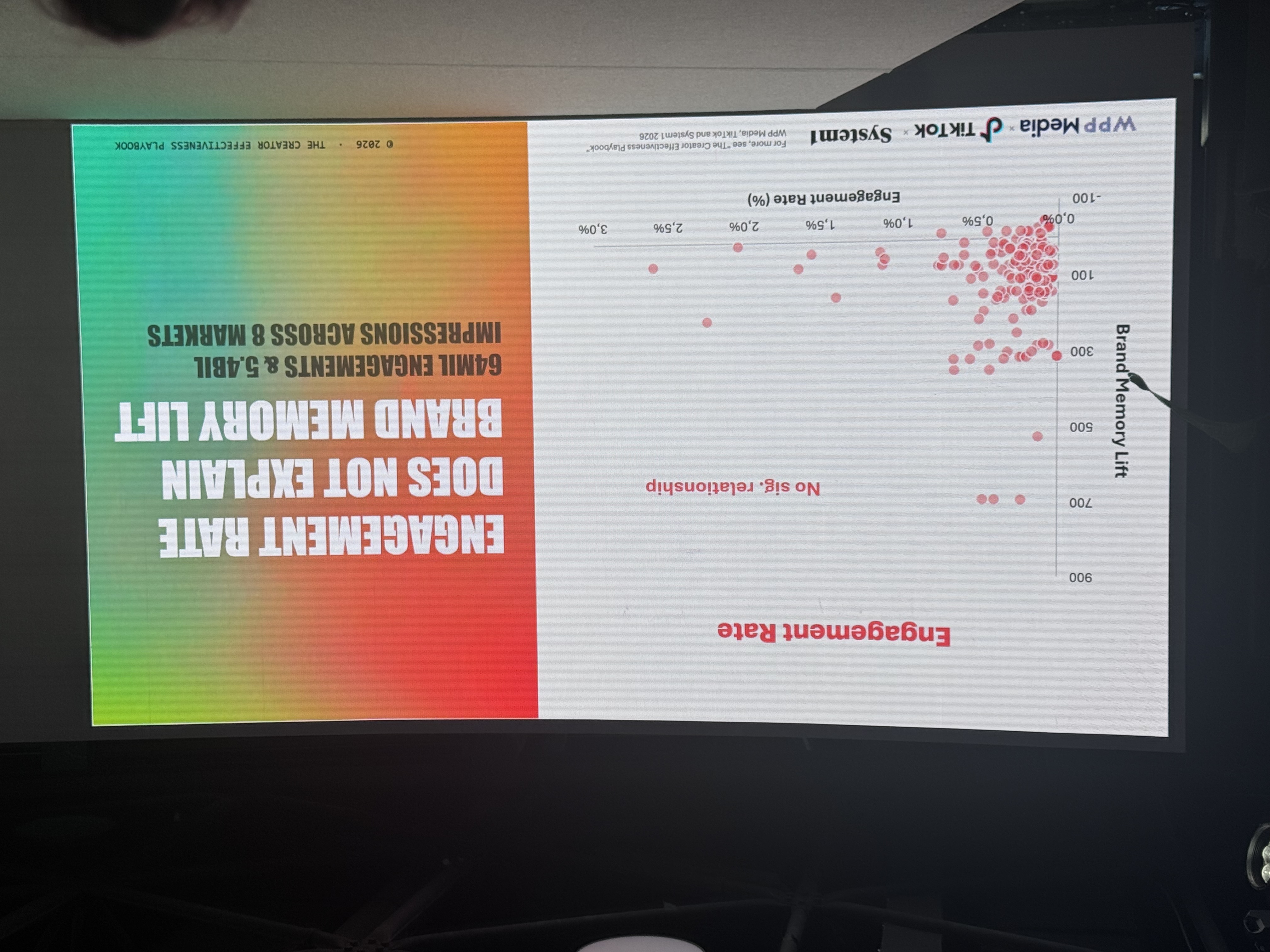
Then came my favourite piece of chart violence. A scatter plot of engagement rate against brand memory lift across paid creator campaigns. The correlation: zero. Not weak. Not "directional". Zero.
Source: The Creator Effectiveness Playbook session, Cannes Lions 2026.
"Can we all put engagement rate to bed today, please," Tindall asked a room full of people whose dashboards are built on it. There is a consolation prize: comment-to-like ratio, a proxy for deeper engagement, does explain a little. But creativity explains five times more. The takeaway he offered was almost old-fashioned: go back to making good ads and showing them to people.
Gordon Ramsay's tale of two ads
The best teaching moment of the session never made it into a stat. Two ads, same celebrity chef. In the first, Pepsi hires Gordon Ramsay: famous face, salesy script, brand slapped on early, zero trust in the man's own instincts. In the second, Ramsay sells his own olive oil: entertaining, native to the platform, barely branded at the open - because he understands what his audience actually wants to watch.
Neither ad gets it fully right. One has the branding and no entertainment; the other has the entertainment and hides the brand. The playbook's answer is that you need the balance - and it puts a number on where to start looking: an authentic fit between creator and brand is twice as important as how famous the creator is. Get brand fit, creative fame and creative quality right together and you quadruple brand lift. Most briefs start with follower counts. They should start with fit.
Say it and show it
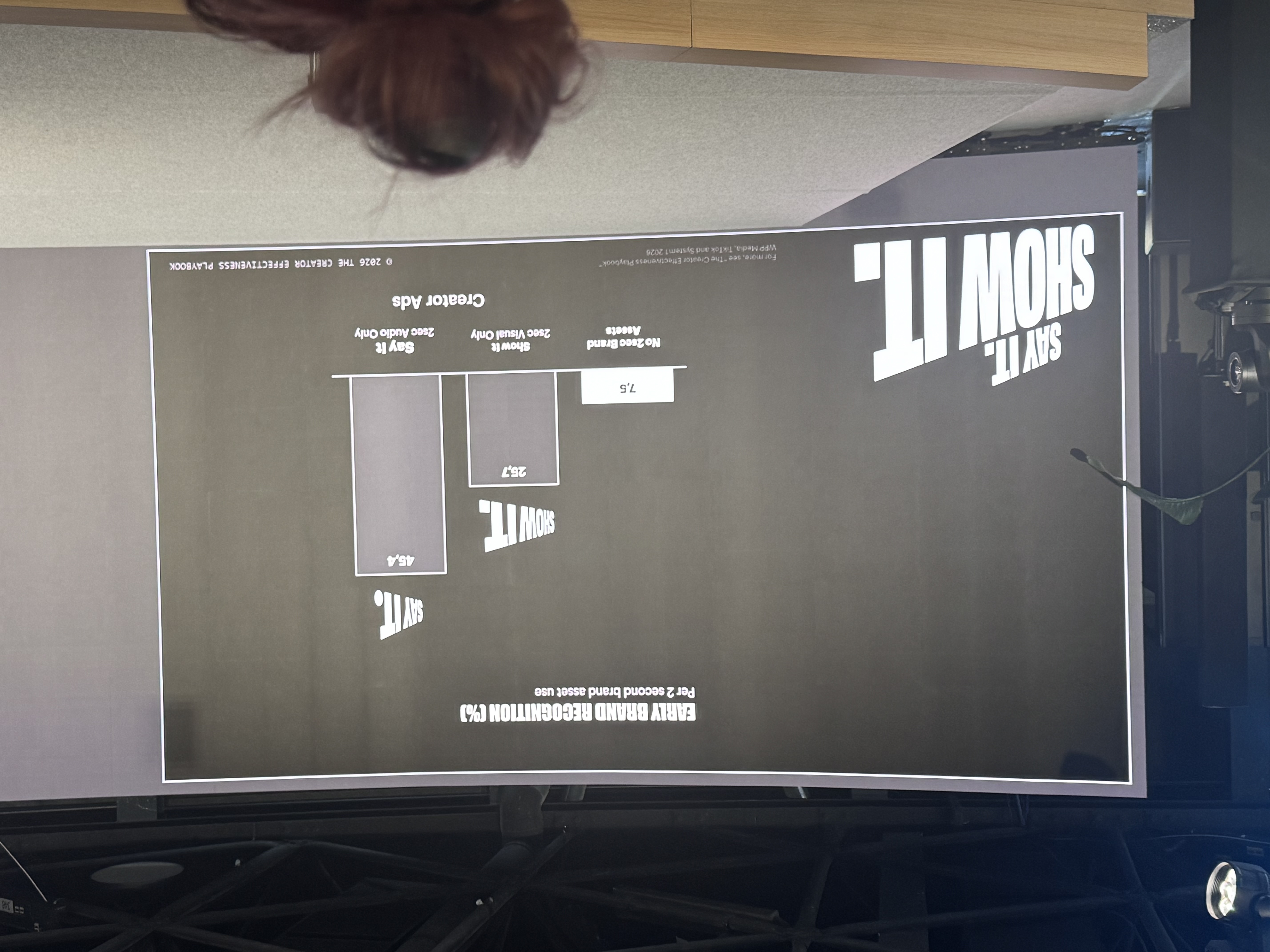
The last hygiene rule is so simple it is almost embarrassing. Brand early - and use both channels of memory. A visual distinctive brand asset in the first seconds lifts early brand recognition. An audio cue - including the radical act of the creator simply saying the brand's name - lifts it more. Both together work best.
Source: The Creator Effectiveness Playbook session, Cannes Lions 2026. Photo: Martin Woska.
Note what this is not: it is not "edit a logo onto the video". It is building the brand into the creative natively, the way the top 10% of creator campaigns do - the brilliant minority that generates four times more brand memory lift than the remaining 90% put together.
The quiet punchline
Strip away the TikTok data and the casino slides, and the playbook says something Byron Sharp and Mark Ritson agreed on at this very festival: emotion builds memory, distinctive assets compound, consistency beats novelty, and creative quality explains most of the variance. Creator marketing did not need new laws of advertising. It needed someone to check whether the old ones apply at feed speed.
They do. The casino was always beatable - you just have to stop playing the media odds and start playing the creative ones.