Surprise has a dosage. System1 data puts the sweet spot at roughly 80% happiness to 20% surprise, MAYA explains Google Glass vs Ray-Ban Meta, and Aldi shows what surprise looks like as a planned strategic discipline.
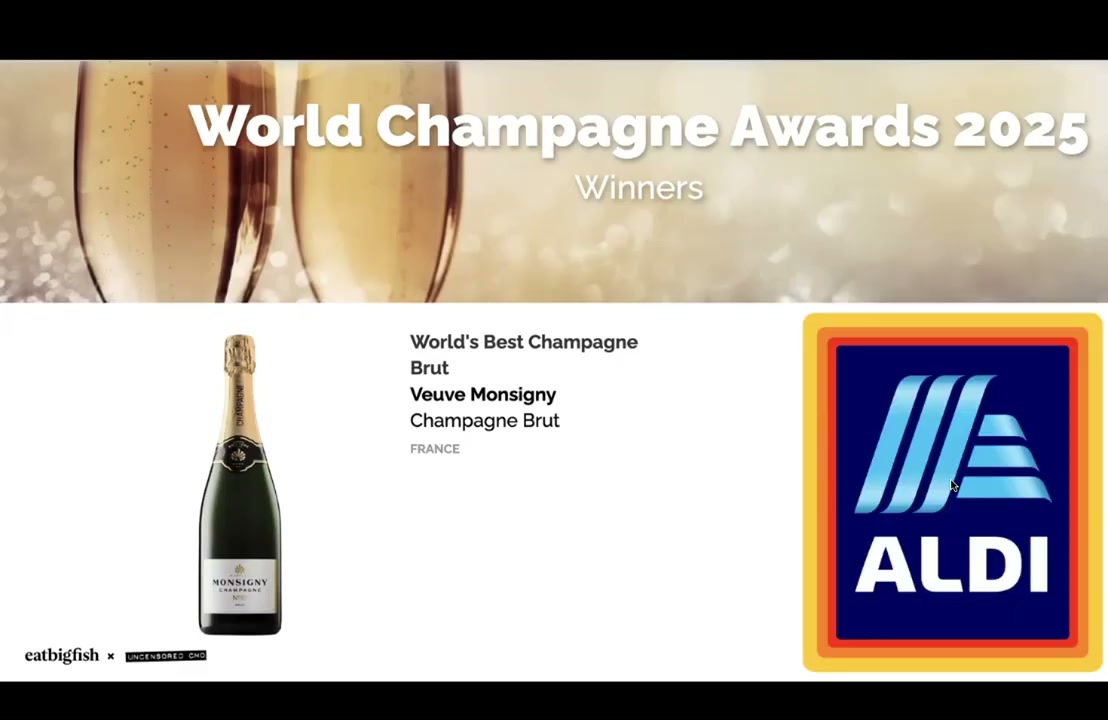
In 2025 a panel of judges at the World Champagne Awards tasted their way through the field and crowned a world's best brut: Veuve Monsigny. Fifteen pounds a bottle. Sold by Aldi.
Source: eatbigfish x Uncensored CMO webinar
Meanwhile, somewhere in a drawer, sits a pair of Google Glasses. Also surprising. Also famous. Dead.
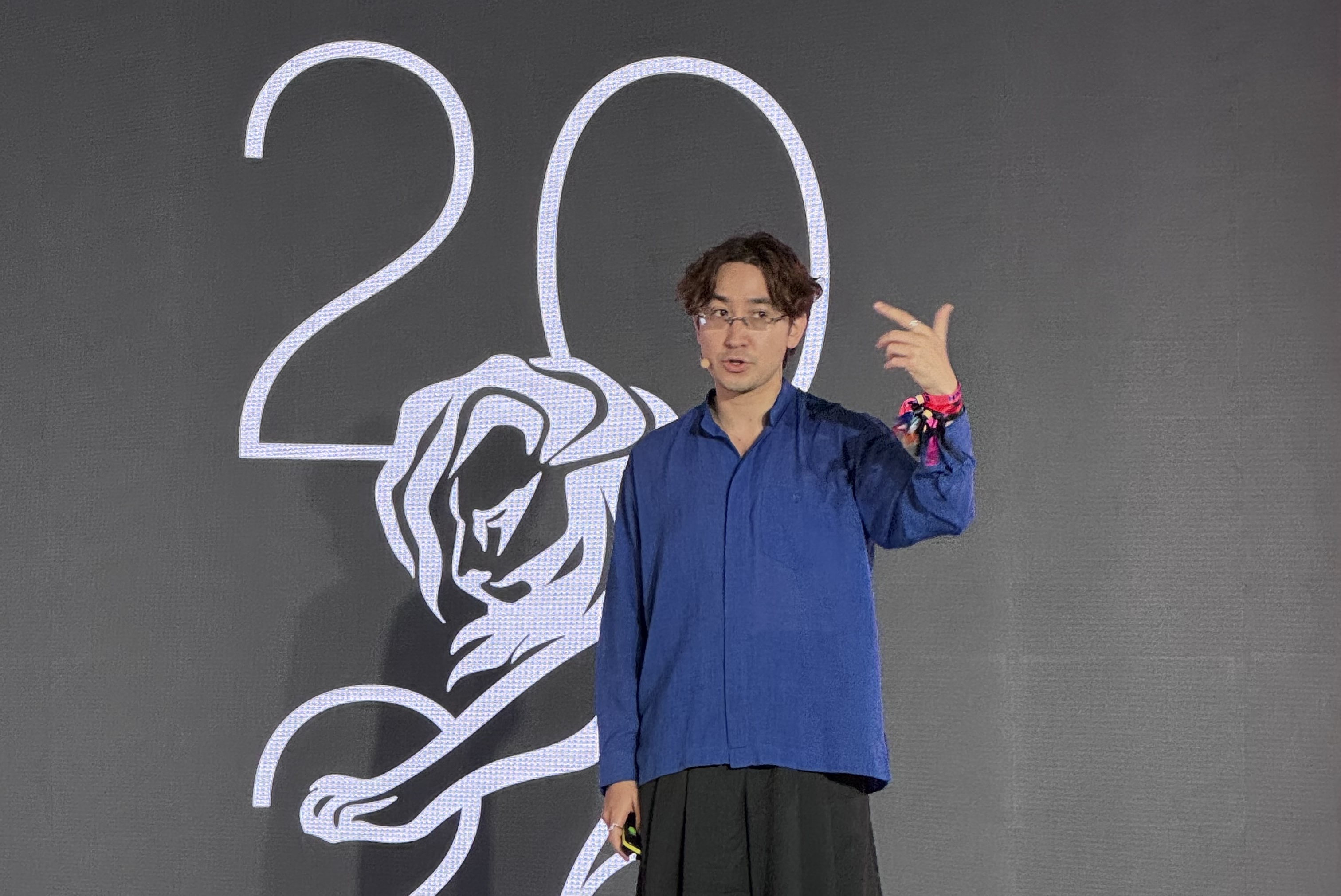
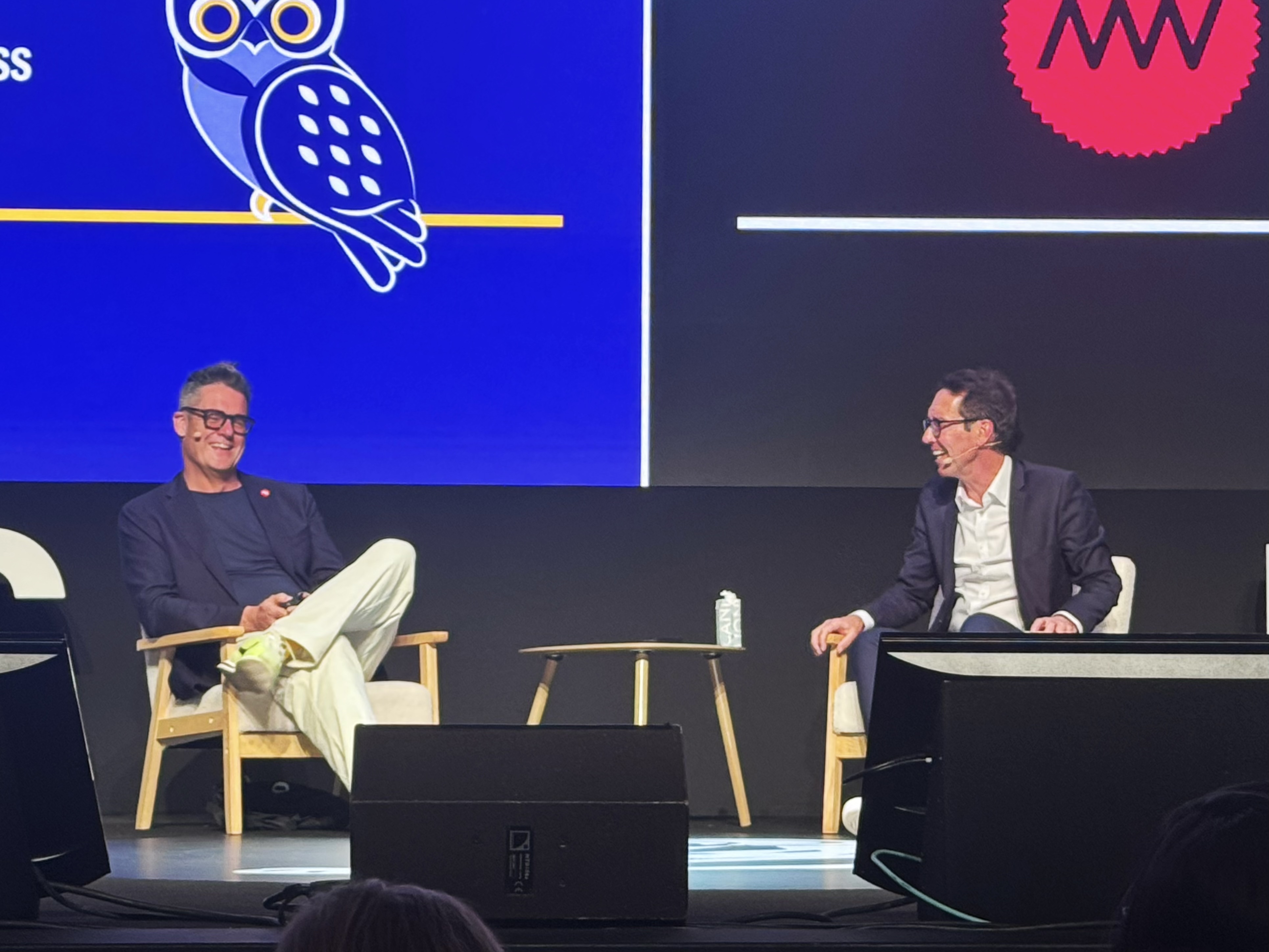
The difference between those two surprises is the most practical thing in Adam Morgan and Jon Evans's Startling Power of Surprise webinar, the online version of their Cannes 2026 session. Because it turns out surprise has a dosage. And the dosage has a number.
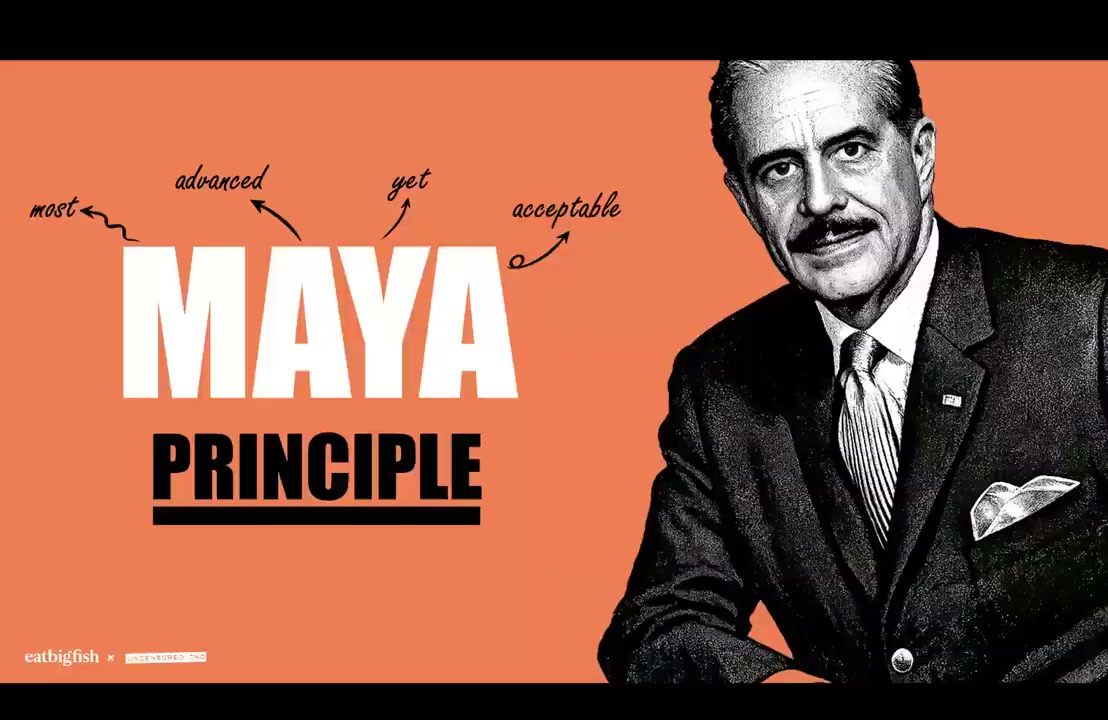
MAYA: most advanced yet acceptable
The principle comes from Raymond Loewy, the industrial designer who styled half of mid-century America: make it as advanced as possible, but no more advanced than people can accept. Google Glass failed the acceptable half of that sentence. Meta took broadly the same technology, hid it inside Ray-Ban Wayfarers - one of the most familiar objects on the planet - and suddenly cameras on your face were fine.
Source: eatbigfish x Uncensored CMO webinar
Uber ran the same play in reverse. Getting into a stranger's car is a genuinely alarming behaviour change, so the app buried the surprise under a duvet of familiarity: the driver's name, their photo, their reviews, a little car crawling toward you on a map. If you are launching something ordinary, build in surprise. If you are launching something surprising, build in familiarity.
The 80/20 Goldilocks zone
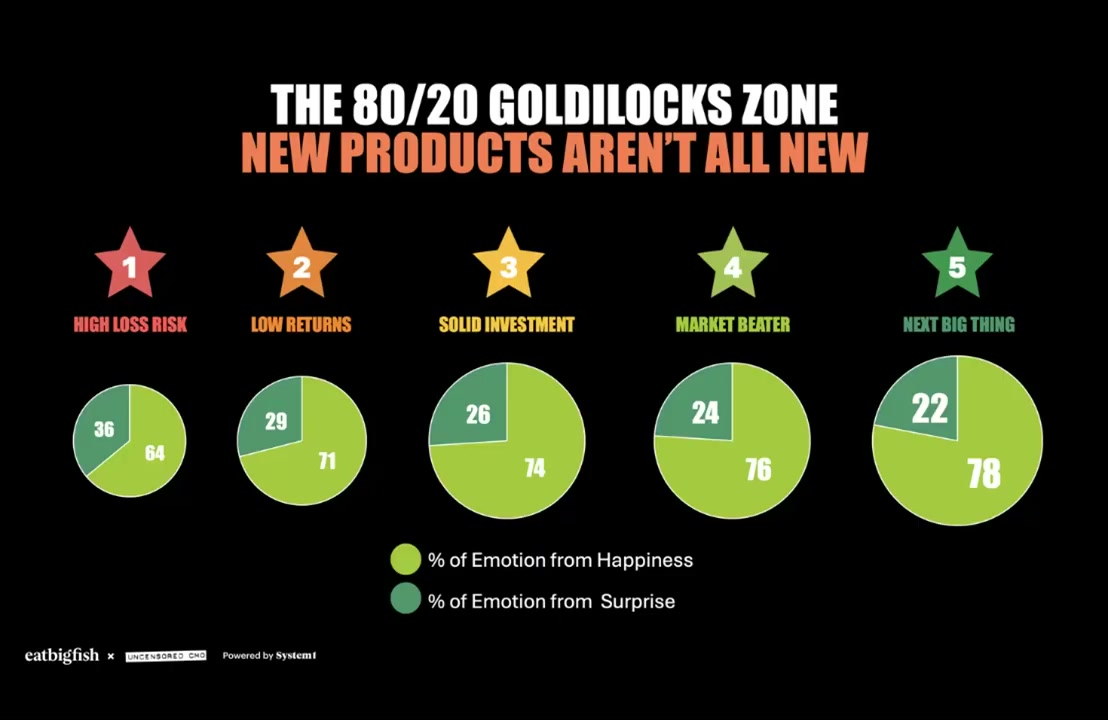
System1's innovation testing puts numbers on Loewy's hunch. Across product concepts scored one to five stars for in-market success, the emotional recipe shifts in a straight line: the riskiest failures run about 64% happiness to 36% surprise, while five-star "next big thing" concepts average 78% happiness to 22% surprise.
Source: System1 innovation database, via the eatbigfish x Uncensored CMO webinar
The same analysis on advertising lands in the same place: the most effective ads blend roughly 80% happiness with 20% surprise. Which quietly settles a very old creative argument. Surprise is not the meal. It is the seasoning that makes the meal unforgettable - and a plate of pure seasoning is a one-star concept.
Aldi: surprise as an operating system
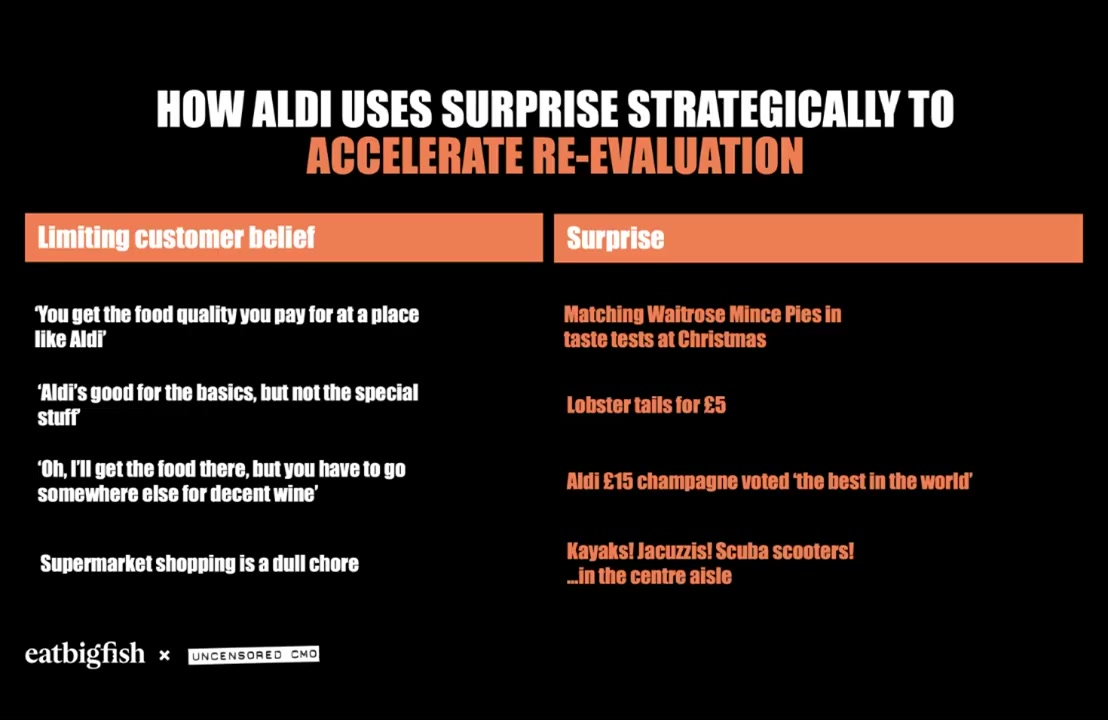
The champagne was not a lucky headline. It was a row in a table. Aldi, as Morgan tells it, runs surprise the way other retailers run range reviews: every limiting customer belief gets a planned puncture.
Source: eatbigfish x Uncensored CMO webinar
"You get the food quality you pay for" meets mince pies that match Waitrose in blind taste tests. "Fine for basics, not the special stuff" meets lobster tails for five pounds. "You need somewhere else for decent wine" meets the fifteen-pound world's best champagne. "Supermarket shopping is a dull chore" meets kayaks and jacuzzis in the centre aisle. Each surprise is aimed at a specific belief, and each opens what Morgan calls a chink of reappraisal - the Long Ohhh! that changes what you think the brand is for.
When they asked Kyrsten Halley, Aldi UK's former CMO, for the single most powerful method behind all this, she gave them a beautifully unglamorous answer: "discipline and rigour in your thinking. People are expecting champagne and crazy ideas. And it's not that. It's hard work, day in, day out." You cannot decide in November to beat Waitrose at Christmas. The surprise ships on time because it was planned like logistics, not like lightning.
I ran an agency long enough to find this the most quietly radical slide in the deck. Agencies sell surprise as inspiration, a eureka in a lift. Aldi treats it as a production schedule. Guess which one compounds. It is the same finding System1 reached about creative consistency: the boring disciplines are what make the exciting outcomes affordable.
The mechanism underneath: reward prediction error
Why does any of this work? Evans closes with the neuroscience of a vending machine. Wolfram Schultz, watching monkeys receive juice, discovered that dopamine does not fire when the reward arrives. It fires on the anticipation, and on the error between prediction and reality. Once a light reliably preceded the juice, the dopamine moved to the light. Deliver exactly what was predicted and the needle barely moves; deliver less and it drops.
For marketers the translation is uncomfortable and useful: advertising manufactures the prediction, the product delivers the reality, and the emotion lives in the gap. Manage the gap upward - give people a little more than they expected, as Monzo does when it pays you a day early - and you get delight and word of mouth. Overpromise, and the same machinery runs in reverse with the amplifier still switched on. Across 13,000 stated reasons for surprise in System1's Test Your Ad data, the most positive trigger is performance beyond expectations; the most negative is the service let-down.
Morgan and Evans handed these pills out at Cannes labelled RPE, "the most effective drug at Cannes". They were joking. The marketing laws that survive replication tend to start as jokes like that.
So: dose your surprise at about 20%, aim it at a named limiting belief, wrap the radical parts in something familiar, and schedule it like freight. The champagne, it turns out, was the least spontaneous thing in the store.